Cleveland Museum of Art
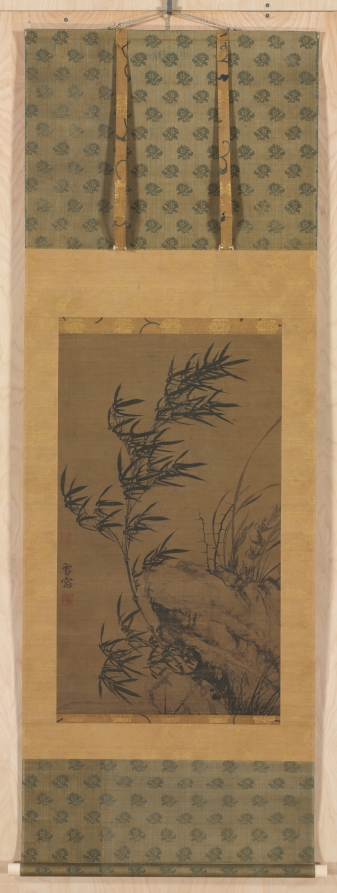
Bamboo in the Wind
PumingLinkedCulture matchlcp-4a29c71d9d43
- Date
- 1300s
- Medium
- Hanging scroll; ink on silk
- Culture
- China, Yuan dynasty (1271-1368)
- Department
- Chinese Art
- Institution
- Cleveland Museum of Art
- Object ID
- 130496
From the Cleveland Museum of Art record
Bamboo is an evergreen plant that does not break under the weight of snow or the force of the wind, and thus became a favorite motif in literati painting and Chan Buddhism as a metaphor for the virtue of not yielding to worldly temptations. Xuechuang, also known as monk Puming, was a native of Songjiang, near Shanghai, who spent his life as a monk in Suzhou. In 1338, he presided over Yunyan temple on Tiger Hill. Here, he masterfully depicts a bamboo gently bent in a subtle breeze. Puming’s paintings were revered in Japan and Korea. Bamboo, pine, and plum, often referred to as the "three friends of winter," are popular motifs in Chinese literati art.
The authoritative record is held by Cleveland Museum of Art. LinkedCulture surfaces this object and its connections; it does not alter institutional metadata.
Get printable QR codesHide QR codes
Open QR codes for this object page and the museum record. They stay collapsed until needed.
Provenance & credit
As published by the source institution. Coverage varies — not every institution's open-data feed includes ownership history.
- Credit line
- John L. Severance Fund
- Provenance
- Marquis Asano Nagakoto 侯爵 淺野長勳 [1842–1937], Hiroshima, Japan | ?–1953: (Howard Hollis & Company, Cleveland, OH, sold to the Cleveland Museum of Art) | 1953–: The Cleveland Museum of Art, Cleveland, OH
Related across collections
Semantically similar works from Cleveland Museum of Art and other institutions.