Cleveland Museum of Art
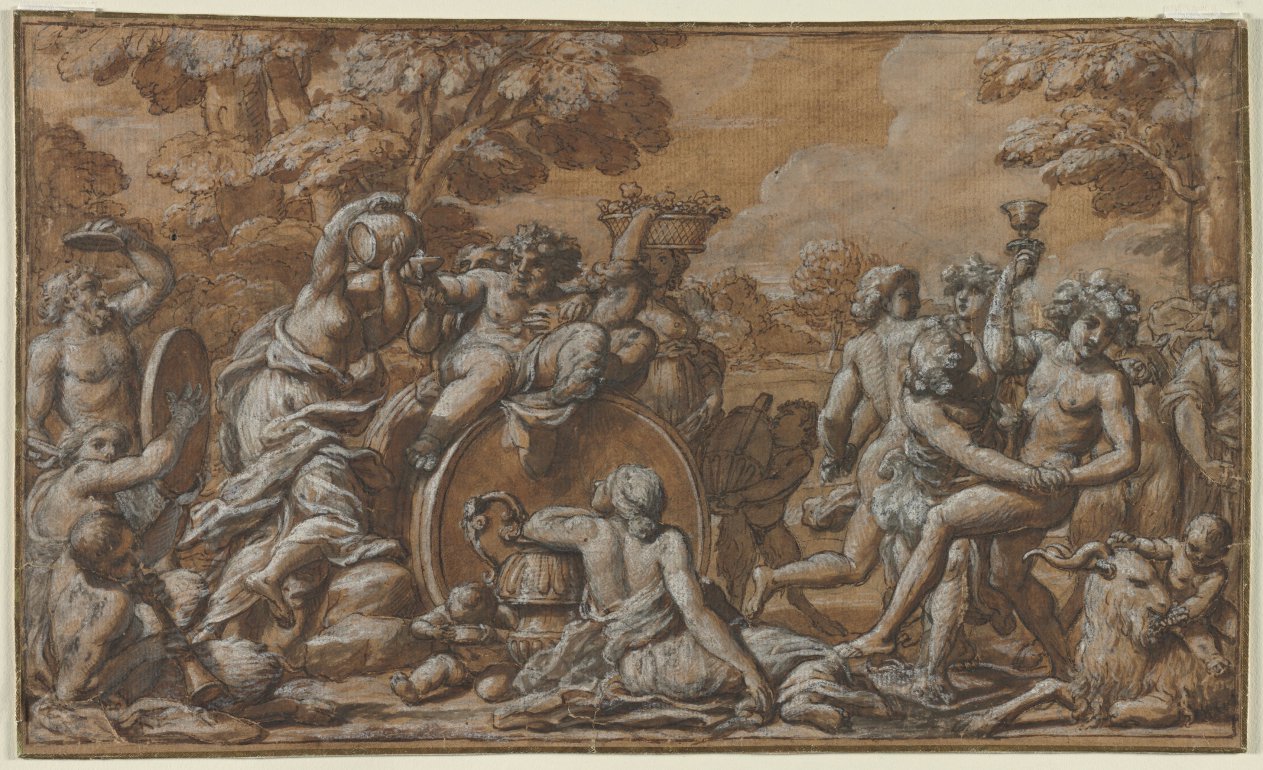
Bacchanal
Pietro da CortonaLinkedCulture matchlcp-3510a6c192f7
- Date
- mid-1600s
- Medium
- pen and brown ink and brush and brown wash over black chalk, heightened with white gouache; incised, framing lines in brown ink over traces of black chalk
- Culture
- Italy, 17th century
- Department
- Drawings
- Institution
- Cleveland Museum of Art
- Object ID
- 132136
From the Cleveland Museum of Art record
Here, a bacchanalia is in full swing with its required cast of characters: Bacchus, Roman god of wine, at right; Silenus, atop the wine barrel, always ready for another glass; and numerous bacchants consisting of maenads, satyrs, musicians, children, and a goat, all within an Italian landscape. This drawing may have been a design for a fresco or painting. Depictions of bacchanalia were often meant for dining spaces, where the elite of society could playfully mirror the revelries portrayed in their own enjoyment of food and wine. Goats were commonly associated with sinful behavior, making them a common element in Bacchic scenes.
The authoritative record is held by Cleveland Museum of Art. LinkedCulture surfaces this object and its connections; it does not alter institutional metadata.
Get printable QR codesHide QR codes
Open QR codes for this object page and the museum record. They stay collapsed until needed.
Provenance & credit
As published by the source institution. Coverage varies — not every institution's open-data feed includes ownership history.
- Credit line
- The Norweb Collection
- Provenance
- ?–1954: Emery May Holden Norweb (Mrs. R. Henry Norweb) [1895–1984], Cleveland, OH, given to The Cleveland Museum of Art, Cleveland, OH | December 4, 1954–: The Cleveland Museum of Art, Cleveland, OH
Related across collections
Semantically similar works from Cleveland Museum of Art and other institutions.