Cleveland Museum of Art
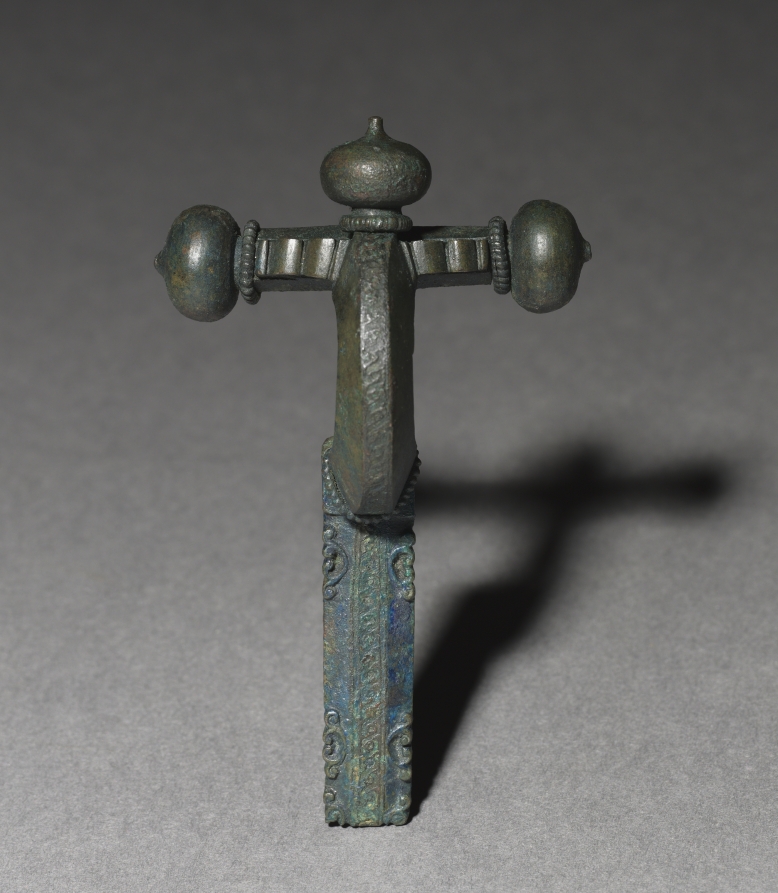
Crossbow Fibula
- Date
- c. 350–400
- Medium
- bronze, gilt-bronze, silver, and niello
- Culture
- Gallo-Roman or Romano-British, Migration period, 4th century
- Department
- Medieval Art
- Institution
- Cleveland Museum of Art
A fibula was a garment clasp that functioned somewhat like a modern safety pin. Since buttons were not used in antiquity, fibulae were used to keep a cloak closed. They were worn by both men and women, commonly on the right shoulder, and produced in various sizes and shapes. Because they were highly visible accessories, they often received decorative gilding, inlay decoration, or "onion"- shaped domes. Crossbow fibulae were introduced by the Romans and are named for their resemblance to the weapon. Decorative and technical features of this group suggest they may have been made in Roman-occupied Britain.
The authoritative record is held by Cleveland Museum of Art. LinkedCulture surfaces this object and its connections; it does not alter institutional metadata.
Get printable QR codesHide QR codes
Open QR codes for this object page and the museum record. They stay collapsed until needed.
Related across collections
Semantically similar works from Cleveland Museum of Art and other institutions.