Cleveland Museum of Art
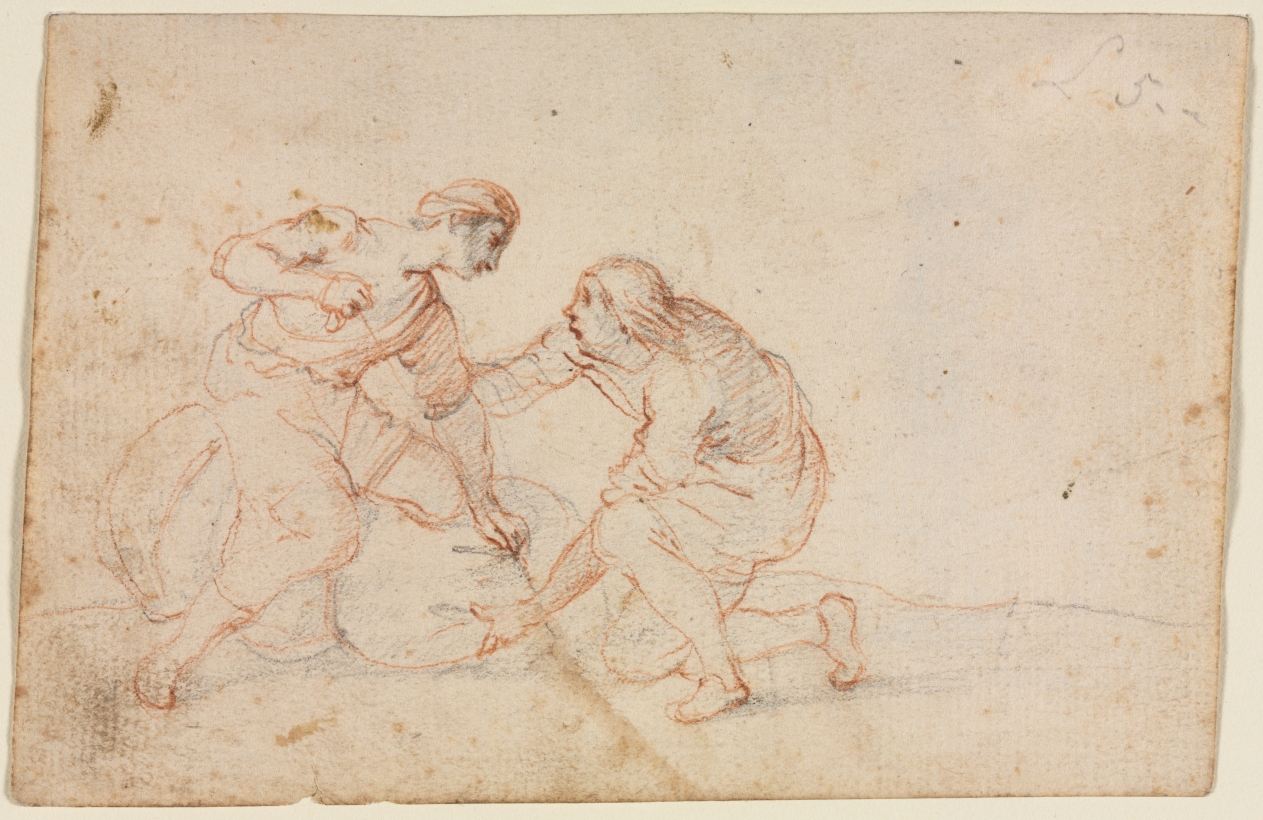
Two Men Tying a Bundle (recto)
AnonymousLinkedCulture matchlcp-035a52823fc1
- Date
- 1600s
- Medium
- graphite and red chalk
- Culture
- France, 17th century
- Department
- Drawings
- Institution
- Cleveland Museum of Art
- Object ID
- 135288
From the Cleveland Museum of Art record
In September 1883 Van Gogh left the bustling Dutch city of The Hague in search of open countryside in which to paint. He moved to Drenthe, a village in northeastern Netherlands that was virtually untouched by the Industrial Revolution. He described the barren terrain as supremely beautiful and serene: "What tranquility, what expanse, what calmness in this nature." With a limited palette of steely greens and cool blues, Van Gogh masterfully portrayed one of the region’s expanses of heath—"a vast plane vanishing into infinity"—illuminated by the lilac hues of the evening sky. Vincent van Gogh made this watercolor just over a year after beginning to work professionally as an artist.
The authoritative record is held by Cleveland Museum of Art. LinkedCulture surfaces this object and its connections; it does not alter institutional metadata.
Get printable QR codesHide QR codes
Open QR codes for this object page and the museum record. They stay collapsed until needed.
Provenance & credit
As published by the source institution. Coverage varies — not every institution's open-data feed includes ownership history.
- Credit line
- Gift of Mr. and Mrs. Herman Moss
Related across collections
Semantically similar works from Cleveland Museum of Art and other institutions.