Cleveland Museum of Art
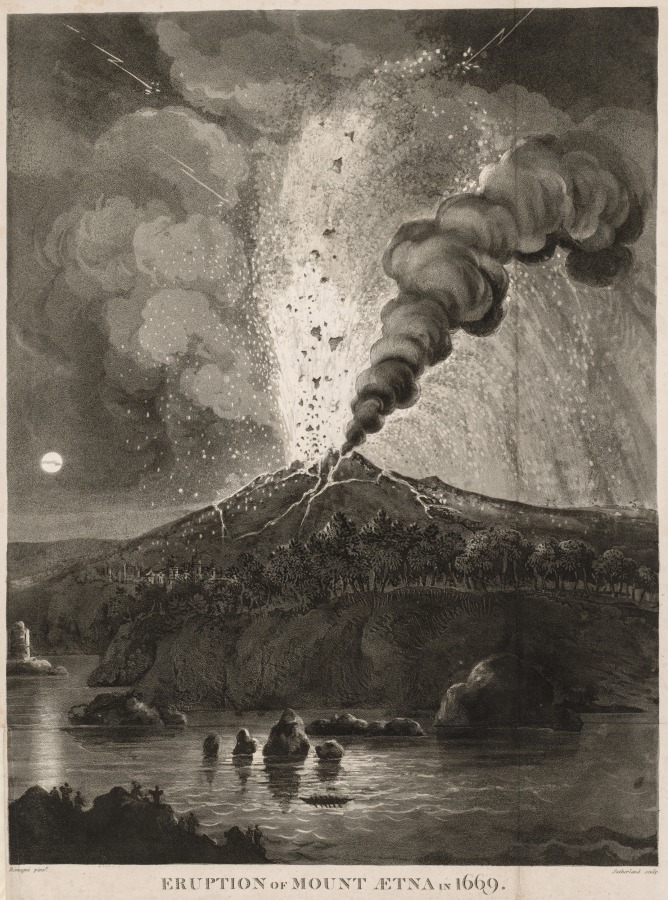
Eruption of Mount Aetna in 1669
Thomas SutherlandLinkedCulture matchlcp-b6c58dd2bee7
- Date
- 1809
- Medium
- aquatint with engraving
- Culture
- England, 18th century
- Department
- Prints
- Institution
- Cleveland Museum of Art
- Object ID
- 135761
From the Cleveland Museum of Art record
With the eruptions of Mount Etna and Mount Vesuvius in the 1700s, volcanoes entered the scientific and popular imagination of Enlightenment Europe. Scientists and philosophers theorized the origins of these spectacular displays; curious tourists visiting Italy wrote home with accounts of burning rivers and destroyed towns. The rediscovery of the ancient sites of Herculaneum and Pompeii, buried by Mount Vesuvius’s eruption in 79 CE, added further fuel to the fire. Attempting to capture the drama of these cataclysmic events, artists innovatively used the tonal range of aquatint and the white of the paper to evoke the dramatic effects of spewing hot lava and burning clouds of volcanic ash. Active volcanoes like Mount Etna and Mount Vesuvius were a popular destination for European tourists visiting Italy in the 1700s.
The authoritative record is held by Cleveland Museum of Art. LinkedCulture surfaces this object and its connections; it does not alter institutional metadata.
Get printable QR codesHide QR codes
Open QR codes for this object page and the museum record. They stay collapsed until needed.
Provenance & credit
As published by the source institution. Coverage varies — not every institution's open-data feed includes ownership history.
- Credit line
- Gift of Robert Hays Gries
- Provenance
- ?–1959: Robert Hays Gries [1900–1966], Shaker Heights, OH, given to The Cleveland Museum of Art, Cleveland, OH | December 19, 1959–: The Cleveland Museum of Art, Cleveland, OH
Related across collections
Semantically similar works from Cleveland Museum of Art and other institutions.