Cleveland Museum of Art
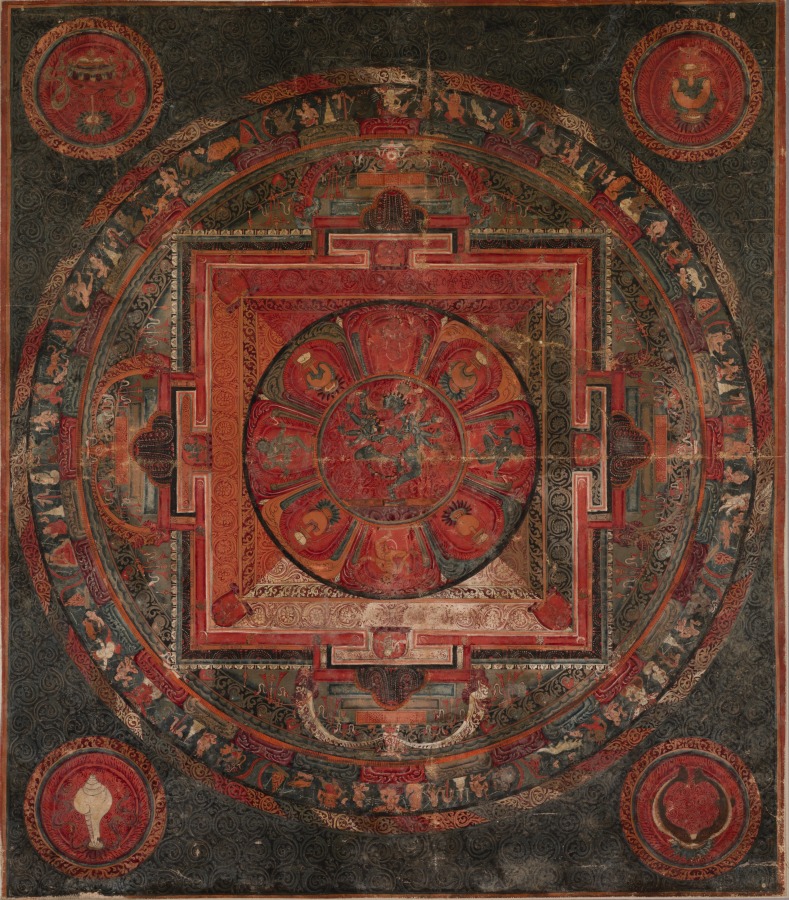
Mandala of Chakrasamvara and Vajravarahi
- Date
- late 1400s
- Medium
- Gum tempera on cloth
- Culture
- Nepal
- Department
- Indian and Southeast Asian Art
- Institution
- Cleveland Museum of Art
- Object ID
- 136335
From the Cleveland Museum of Art record
A mandala is a two-dimensional diagram of a palace-like structure, viewed from above. This mandala depicts the abode of a 4-headed, 12-armed figure who personifies a major tantric Buddhist text, the Chakrasamvara-tantra . He dances in the bliss of sexual union with his consort, the red Vajravarahi, in the central circle, which is equivalent to the penthouse of their palace. Through guided meditation, practitioners can visualize entering through each of the four gates to experience the beauty of the enlightened realm. The outermost ring of cremation grounds indicates that one must overcome fear of death before reaching the realm of enlightenment. In the corners are four auspicious symbols (clockwise from top left): umbrella (an emblem of royalty), pot (referencing abundance), pair of fish (symbol of productivity), and conch shell (indicating the eradication of obstacles).
The authoritative record is held by Cleveland Museum of Art. LinkedCulture surfaces this object and its connections; it does not alter institutional metadata.
Get printable QR codesHide QR codes
Open QR codes for this object page and the museum record. They stay collapsed until needed.
Provenance & credit
As published by the source institution. Coverage varies — not every institution's open-data feed includes ownership history.
- Credit line
- James Parmelee Fund
- Provenance
- ?–1960: C.L. Bharany, Calcutta [Kolkata], India, sold to the Cleveland Museum of Art | 1960–: The Cleveland Museum of Art, Cleveland, OH
Related across collections
Semantically similar works from Cleveland Museum of Art and other institutions.