Cleveland Museum of Art
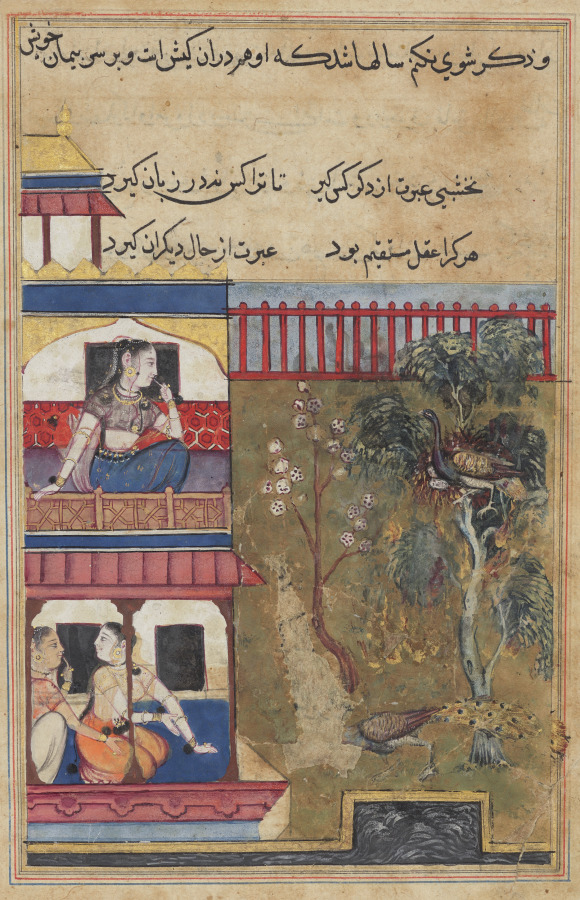
The queen of Rum watches the peahen prefer to burn rather than abandon her eggs while the peacock flees the nest, from a Tuti-nama (Tales of a Parrot): Thirty-ninth Night
- Date
- c. 1560
- Medium
- gum tempera, ink, and gold on paper
- Culture
- Mughal India, court of Akbar (reigned 1556–1605)
- Department
- Indian and Southeast Asian Art
- Institution
- Cleveland Museum of Art
The queen of Rum sits in the upper balcony of her palace watching the fire in her garden with shock. Two female attendants observe the action from the room below. The cowardliness of the peacock in the face of danger convinced the queen of the disloyalty of men. As a result, she vowed to never marry. Rum is the Arabic name of Rome and once designated the Byzantine Empire.
The authoritative record is held by Cleveland Museum of Art. LinkedCulture surfaces this object and its connections; it does not alter institutional metadata.
Related across collections
Semantically similar works from Cleveland Museum of Art and other institutions.
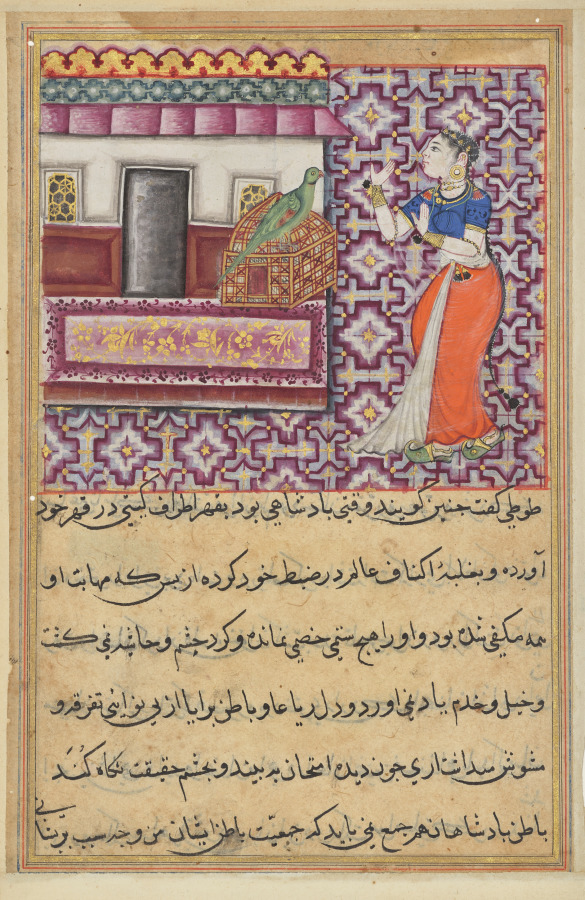
The parrot addresses Khujasta at the beginning of the fiftieth night, from a Tuti-nama (Tales of a Parrot): Fiftieth Night
Cleveland Museum of Art
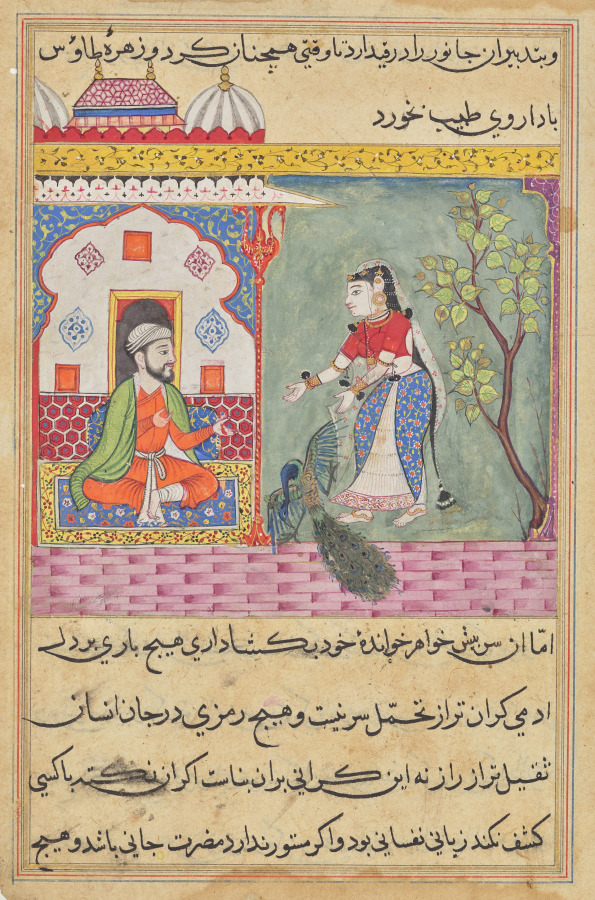
The Brahman’s wife who killed a peacock and ate its gallbladder on the physician’s advice, from a Tuti-nama (Tales of a Parrot): Nineteenth Night
Cleveland Museum of Art
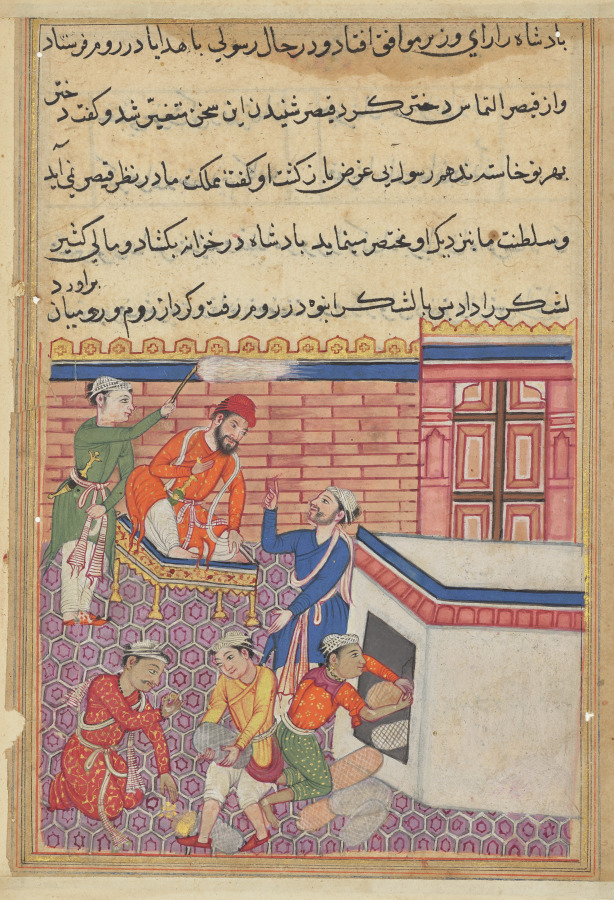
The king’s emissary being provided with gifts for his mission to Rum in order to seek the hand of the emperor’s daughter in marriage, from a Tuti-nama (Tales of a Parrot): Fiftieth Night
Cleveland Museum of Art
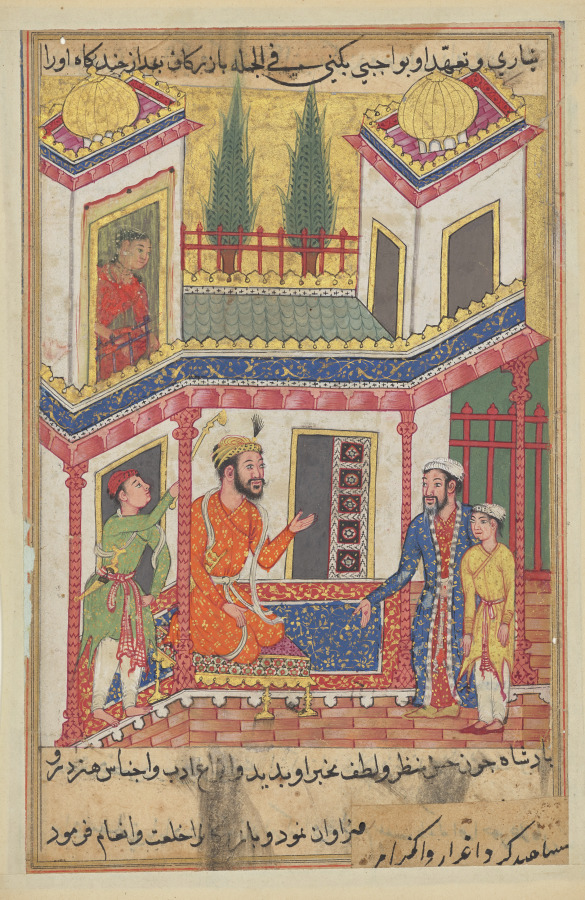
The merchant returns bringing a young slave who is really the son of the princess of Rum, now married to the king, from a Tuti-nama (Tales of a Parrot): Fiftieth Night
Cleveland Museum of Art
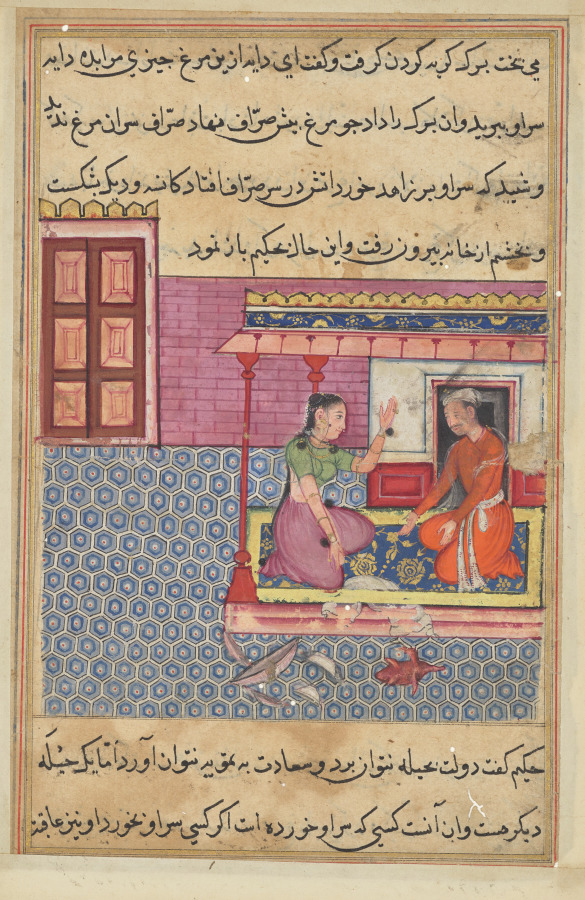
The pious man’s wife offers the seven-colored bird as food to her lover, but not finding its head, he breaks the pot and bowl in anger, from a Tuti-nama (Tales of a Parrot): Fifty-second Night
Cleveland Museum of Art
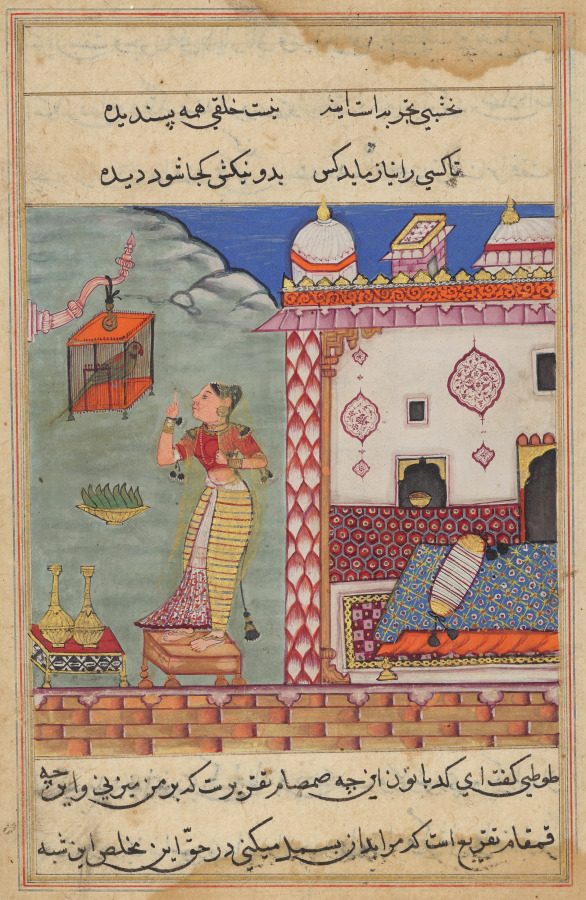
The Parrot Addresses Khujasta at the Beginning of the Twenty-seventh Night, form a Tuti-nama (Tales of a Parrot)
Cleveland Museum of Art
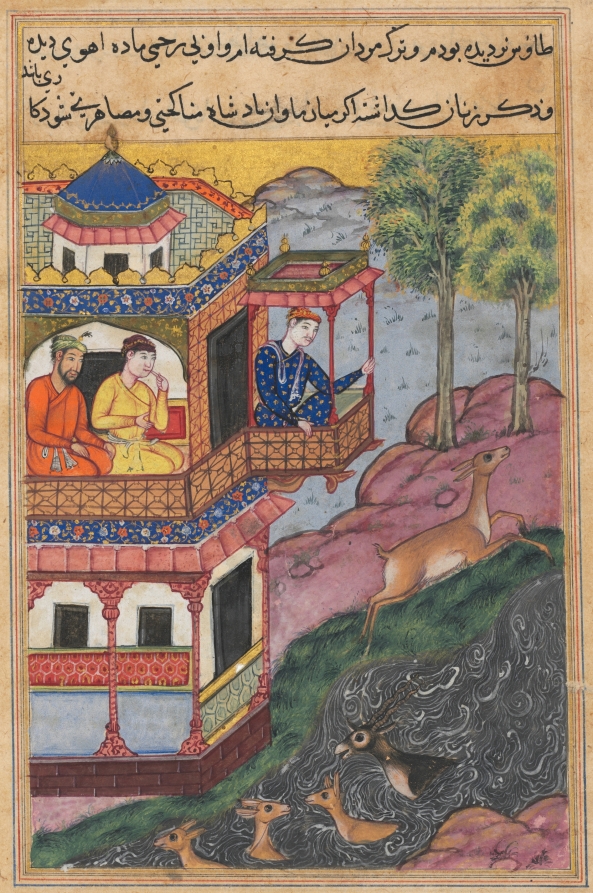
The painting made by the vizier of the emperor of China for the queen of Rum, from a Tuti-nama (Tales of a Parrot): Thirty-ninth Night
Cleveland Museum of Art
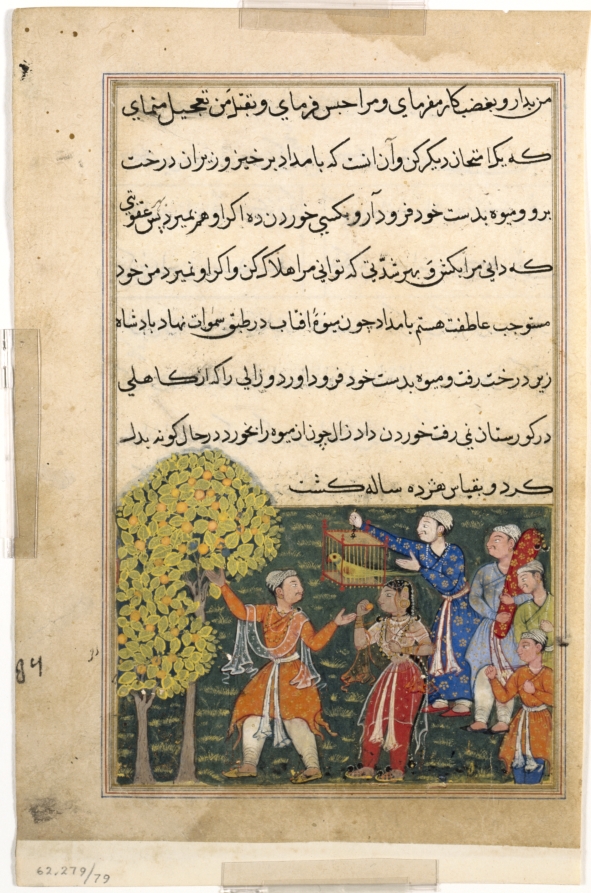
The king plucks fruit from the Tree of Life with his own hands and feeds it to a lady, from a Tuti-nama (Tales of a Parrot): Ninth Night
Cleveland Museum of Art
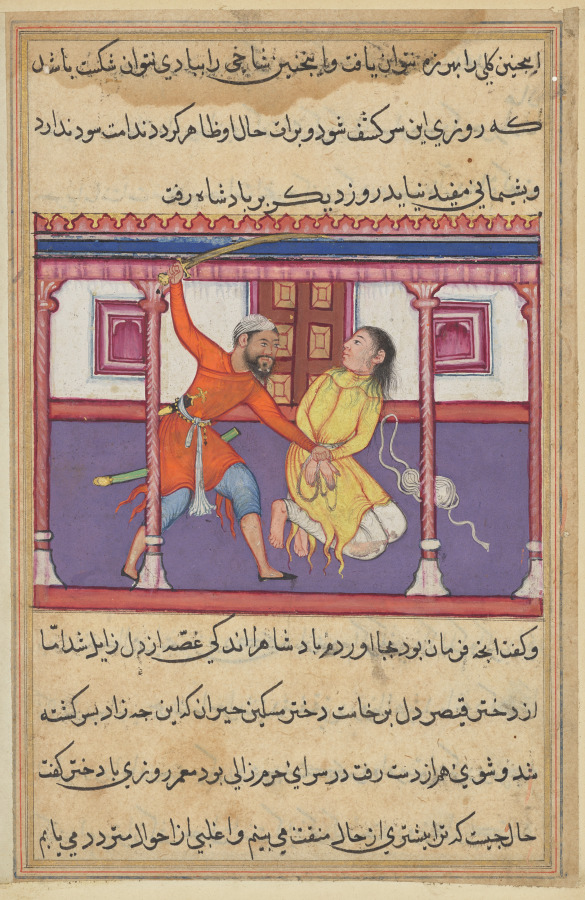
The guard spares the life of the slave when he learns that he is the son of the princess of the Rum, from a Tuti-nama (Tales of a Parrot): Fiftieth Night
Cleveland Museum of Art
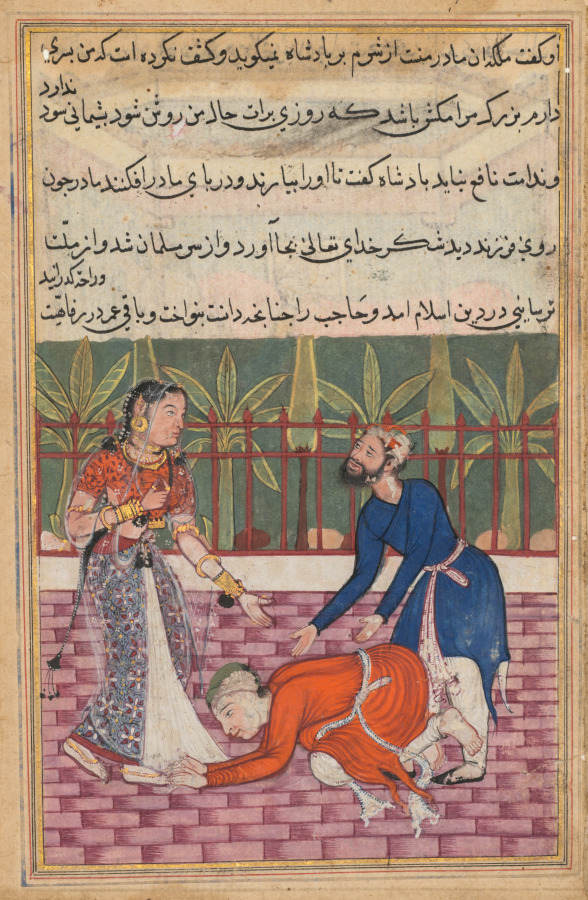
The guard restores the son who falls at his mother’s feet, from a Tuti-nama (Tales of a Parrot): Fiftieth Night
Cleveland Museum of Art
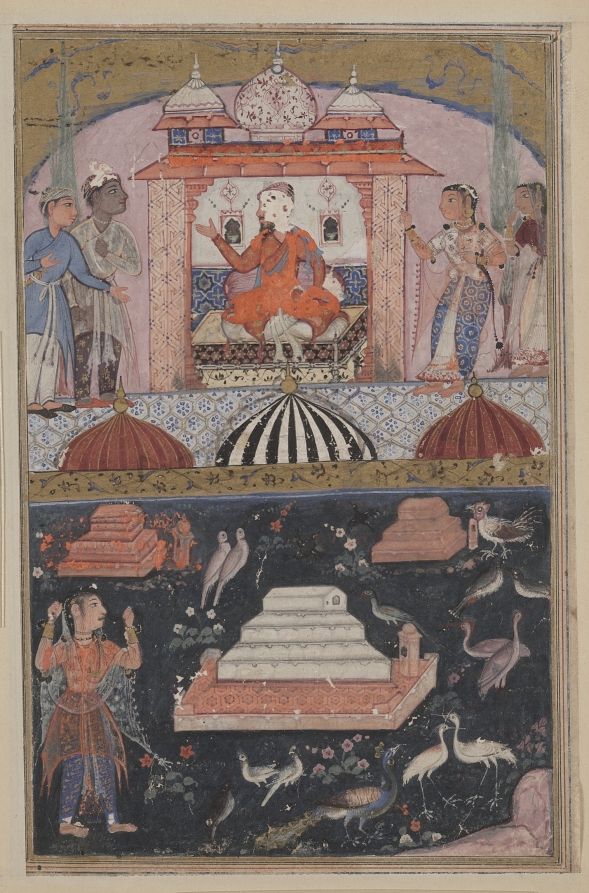
The merchant hears of his wife’s unfaithfulness (above); the unfaithful wife performs penance by plucking her hair (below), from a Tuti-nama (Tales of a Parrot): First Night
Cleveland Museum of Art
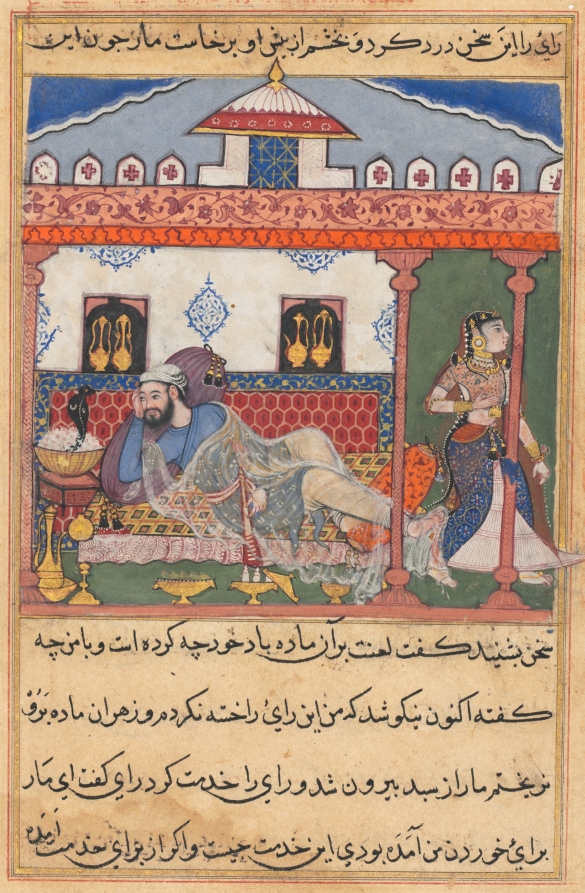
The snake, hidden in a basket of flowers, reveals himself to the Raja who has just sent away his wife, from a Tuti-nama (Tales of a Parrot): Forty-third Night
Cleveland Museum of Art