Cleveland Museum of Art
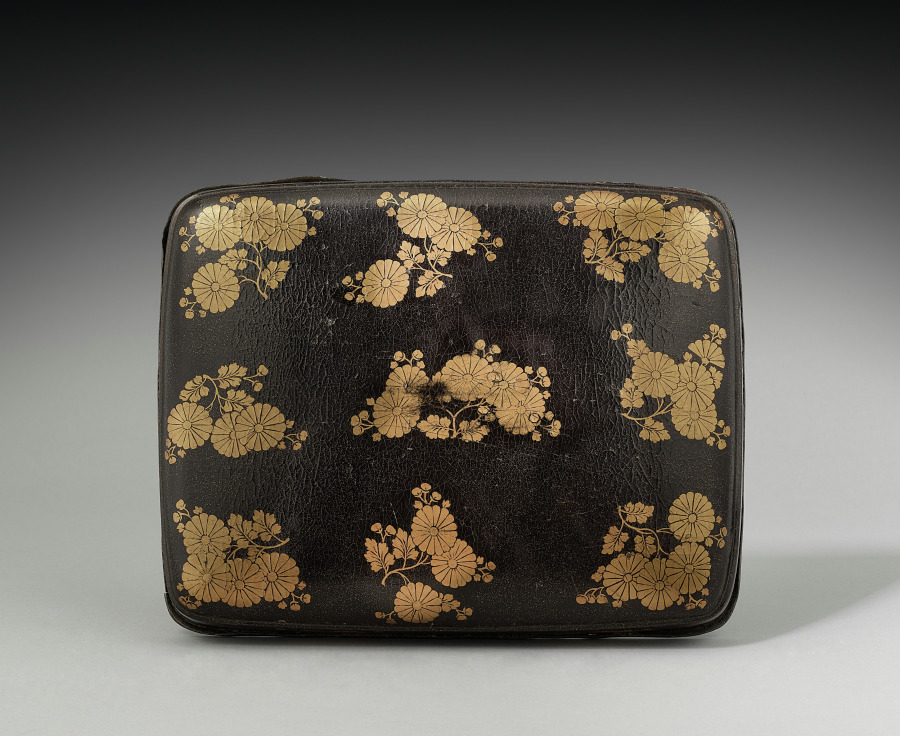
Cosmetics Box with Chrysanthemums (lid)
- Date
- early 1300s
- Medium
- lacquer on wood
- Culture
- Japan, Kamakura period (1185–1333)
- Department
- Japanese Art
- Institution
- Cleveland Museum of Art
- Object ID
- 139744
From the Cleveland Museum of Art record
In China, the chrysanthemum was historically appreciated for its association with the Double Nine Festival and the reclusive life of the poet Tao Yuanming (AD 365-427). In Japan, the 16-petaled chrysanthemum came to symbolize the Japanese imperial family after Emperor Gotoba (1180-1239) chose the motif as his personal emblem, having it applied to his sword and everyday utensils. This box proves that the flower also appeared on lacquer wares as early as the Kamakura period. In Japanese, this type of small box is called a tebako , literally a hand box, and was typically part of a cosmetics set.
The authoritative record is held by Cleveland Museum of Art. LinkedCulture surfaces this object and its connections; it does not alter institutional metadata.
Get printable QR codesHide QR codes
Open QR codes for this object page and the museum record. They stay collapsed until needed.
Provenance & credit
As published by the source institution. Coverage varies — not every institution's open-data feed includes ownership history.
- Credit line
- John L. Severance Fund
- Provenance
- ?–1963: (Inosuke Setsu 濑津伊之助 [1897–1969], Tokyo, Japan, sold to the Cleveland Museum of Art) | 1963–: The Cleveland Museum of Art, Cleveland, OH
Related across collections
Semantically similar works from Cleveland Museum of Art and other institutions.