Cleveland Museum of Art
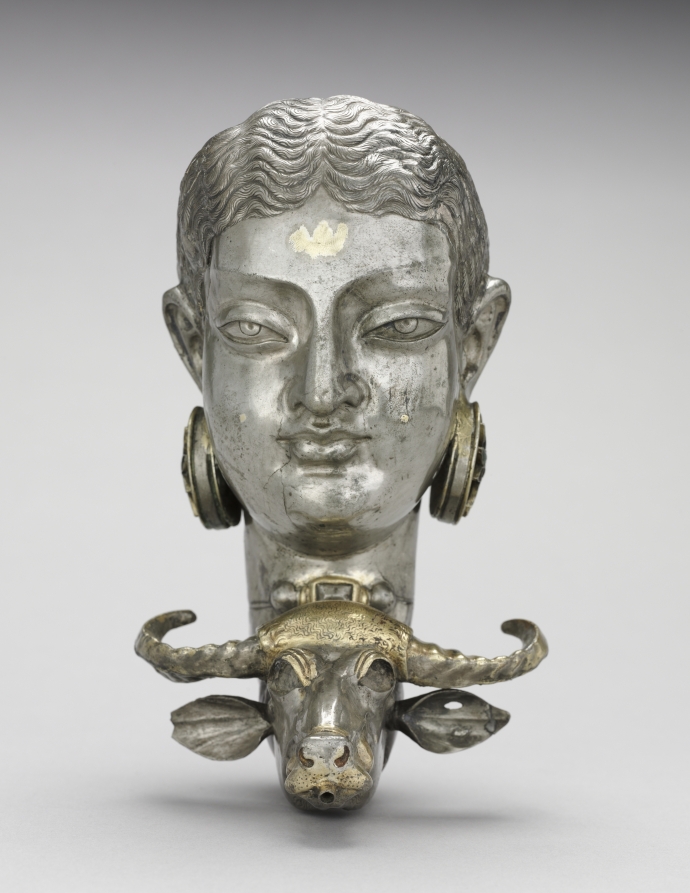
Woman and Water Buffalo Rhyton
- Date
- 500–700
- Medium
- silver, with mercury gilding and glass inlays
- Culture
- Sasanian, Iran, 600s or Turk Shahi dynasty, Kabul, Afghanistan, 500s
- Department
- Egyptian and Ancient Near Eastern Art
- Institution
- Cleveland Museum of Art
- Object ID
- 141487
From the Cleveland Museum of Art record
Recalling both Greek and Iranian traditions of head vases and rhyta (drinking horns), this unusual silver vessel combines the heads of a woman and a water buffalo. A filling hole on top and a pouring or drinking spout in front make clear its function. An inscription in Middle Persian on its back records its weight: probably 50 staters and three drachmae (close to its current weight of just over 700 grams, or about 1-1/2 pounds). The woman’s flat brow, straight nose, and widely set, heavy-lidded eyes—along with the sectarian mark in gold on her forehead—relate to art of the Indus River Valley and Hindu Kush regions of today’s Pakistan and Afghanistan. While we do not know for sure, numerous scholars have suggested that she may depict the Indian warrior goddess Durga, slayer of the buffalo demon. Inlays once filled the buffalo eye sockets, perhaps of colored glass like that still present within some petals of the disc-shaped earrings.
The authoritative record is held by Cleveland Museum of Art. LinkedCulture surfaces this object and its connections; it does not alter institutional metadata.
Get printable QR codesHide QR codes
Open QR codes for this object page and the museum record. They stay collapsed until needed.
Provenance & credit
As published by the source institution. Coverage varies — not every institution's open-data feed includes ownership history.
- Credit line
- Leonard C. Hanna Jr. Fund
- Provenance
- ?-1964: Dr. Elie Borowski, Toronto, Ontario, sold to the Cleveland Museum of Art | 1964-: The Cleveland Museum of Art, Cleveland, OH
Part of a LinkedCulture topic
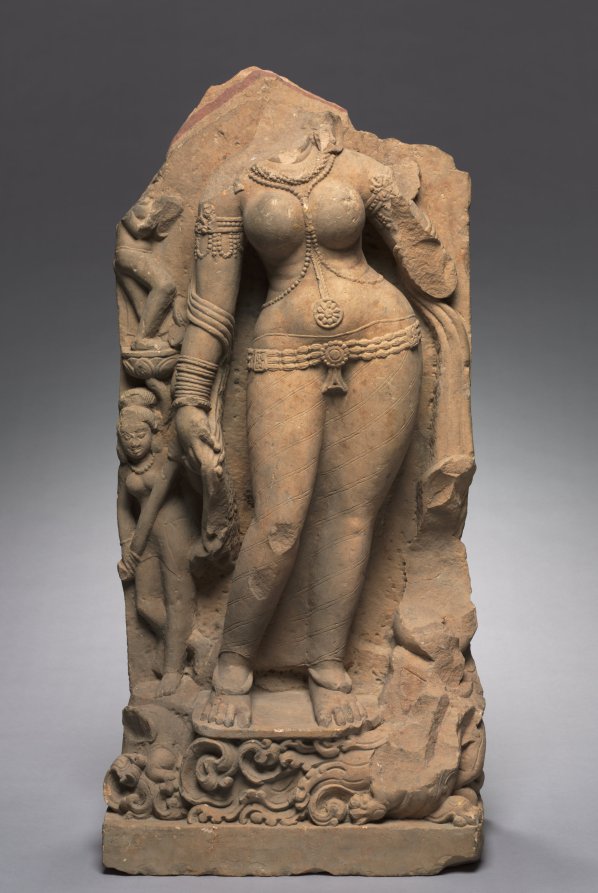 Hindu Deities and Mythology
These objects depict Hindu gods, goddesses, and mythological narratives, particularly featuring Durga slaying the buffalo demon Mahishasura, along with other deities like Ganesh, Krishna, and Brahma from various South an
59 objects from 3 institutions
Related across collections
Semantically similar works from Cleveland Museum of Art and other institutions.