Cleveland Museum of Art
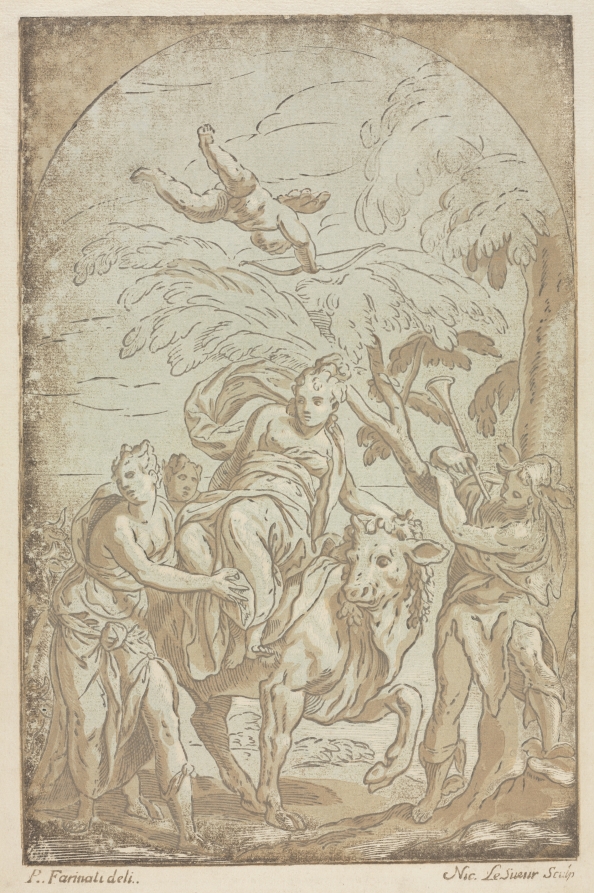
The Rape of Europa
Nicolas LeSueurLinkedCulture matchlcp-be1b558df18a
- Date
- 1725–42
- Medium
- chiaroscuro woodcut
- Culture
- France, 18th century
- Department
- Prints
- Institution
- Cleveland Museum of Art
- Object ID
- 142209
From the Cleveland Museum of Art record
Whereas in the 16th and 17th centuries chiaroscuro woodcuts were the artist's original conception or copies of contemporaneous designs, in the 18th century the technique often served to replicate the most famous masterworks of the past, especially of 16th-century Italy. During the 1700s, chiaroscuro woodcuts were directly connected to famous art collections and depended on the support of wealthy patrons. Le Sueur produced numerous chiaroscuros for the Cabinet Crozat, two volumes published in 1729 and 1742 by Count Anne Claude Philippe de Caylus and Pierre Crozat. The books reproduced famous paintings and drawings in French collections. For most of Le Sueur's chiaroscuros for this project, the black lines were printed from etched metal plates prepared by others, instead of from a woodblock. However, he did cut all four blocks for The Rape of Europa himself.
The authoritative record is held by Cleveland Museum of Art. LinkedCulture surfaces this object and its connections; it does not alter institutional metadata.
Get printable QR codesHide QR codes
Open QR codes for this object page and the museum record. They stay collapsed until needed.
Provenance & credit
As published by the source institution. Coverage varies — not every institution's open-data feed includes ownership history.
- Credit line
- Mr. and Mrs. Charles G. Prasse Collection
Related across collections
Semantically similar works from Cleveland Museum of Art and other institutions.