Cleveland Museum of Art
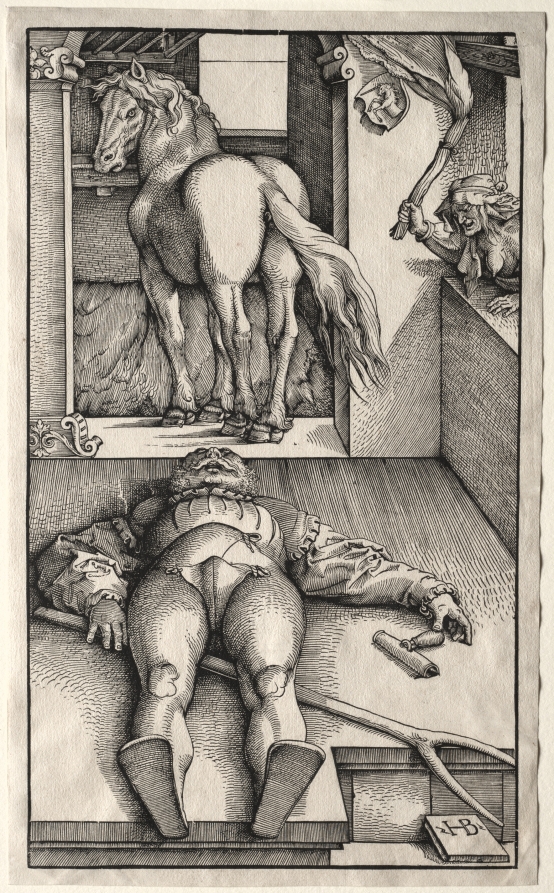
The Bewitched Groom
Hans BaldungLinkedCulture matchlcp-a65968000741
- Date
- 1544–45
- Medium
- woodcut
- Culture
- Germany
- Department
- Prints
- Institution
- Cleveland Museum of Art
- Object ID
- 142349
From the Cleveland Museum of Art record
Although the scene is enigmatic, presumably the witch has worked her magic through the physical power of the horse, who rendered the groom unconscious and now glowers at him. Representations of witchcraft were common during the early 16th century, a period of emerging moral reform and religious fervor. Baldung seemed to be obsessed with the evil power of female sexuality: representations of women with sinister or malicious connotations and their association with vulnerability and death are features of his work. Since Baldung's coat of arms appears on the wall behind the groom, who also bears some facial resemblance to portraits of the artist, some autobiographical reference may have been intended. Bewitched Groom presents a pessimistic view of man—or perhaps Baldung himself—who cannot resist the superior and evil forces of nature. The inevitability of physical passion, and its connection with the frailty of human nature, is a recurring theme in the artist's work.
The authoritative record is held by Cleveland Museum of Art. LinkedCulture surfaces this object and its connections; it does not alter institutional metadata.
Get printable QR codesHide QR codes
Open QR codes for this object page and the museum record. They stay collapsed until needed.
Provenance & credit
As published by the source institution. Coverage varies — not every institution's open-data feed includes ownership history.
- Credit line
- Mr. and Mrs. Charles G. Prasse Collection
Related across collections
Semantically similar works from Cleveland Museum of Art and other institutions.