Cleveland Museum of Art
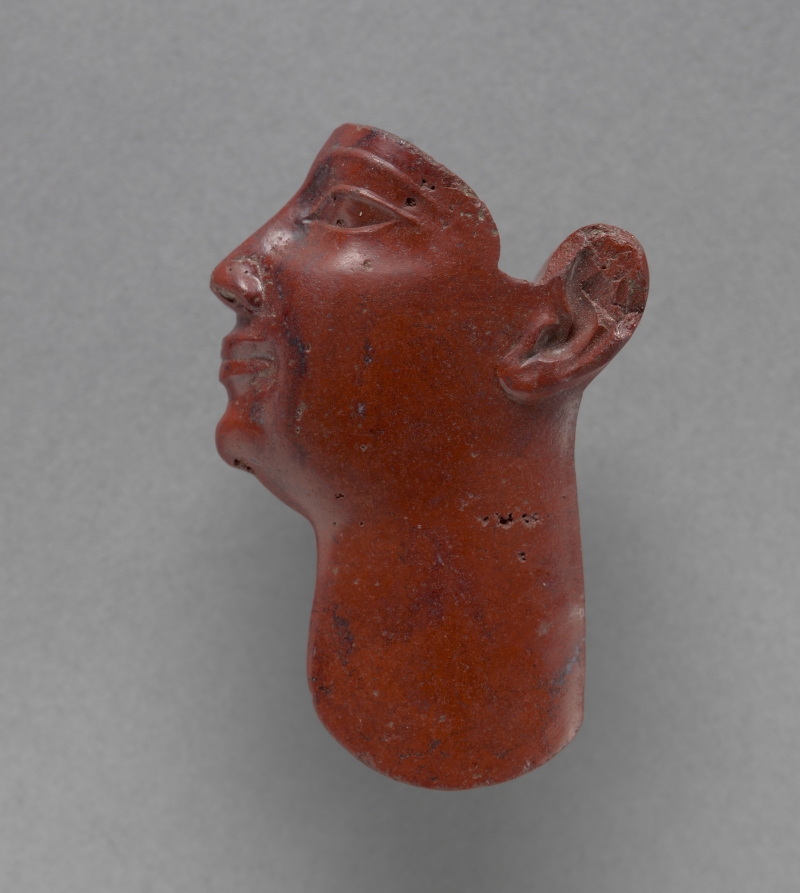
Inlay: Head of a King
- Date
- 380–246 BCE
- Medium
- red jasper
- Culture
- Egypt, Greco-Roman period (332 BCE–395 CE), Ptolemaic dynasty (305–30 BCE)
- Department
- Egyptian and Ancient Near Eastern Art
- Institution
- Cleveland Museum of Art
- Object ID
- 142646
From the Cleveland Museum of Art record
This miniature carved stone profile depicts a left-facing Egyptian king. The inlay was once part of a larger scene, with a cutaway on the king’s head clearly leaving room for an Egyptian crown and the neckline for a traditional broad collar. It is skillfully carved and made from red jasper, a semiprecious stone. The naturalistic handling of the cheeks and mouth date this inlay to the Ptolemaic period. An inlay such as this would have been set into a chest, throne, or even a royal coffin. Most Egyptian inlays are made of glass or faience, a type of ceramic, not precious or semiprecious stone like jasper.
The authoritative record is held by Cleveland Museum of Art. LinkedCulture surfaces this object and its connections; it does not alter institutional metadata.
Get printable QR codesHide QR codes
Open QR codes for this object page and the museum record. They stay collapsed until needed.
Provenance & credit
As published by the source institution. Coverage varies — not every institution's open-data feed includes ownership history.
- Credit line
- James Parmelee Fund
- Provenance
- Said to be from Edfu
Part of a LinkedCulture topic
 Ancient Egyptian Glass Inlays
These objects are decorative glass and faience inlays from ancient Egypt, primarily from the Ptolemaic Dynasty and Roman Period, used for ornamentation in jewelry, architecture, and other decorative applications.
12 objects from 3 institutions
Related across collections
Semantically similar works from Cleveland Museum of Art and other institutions.