Cleveland Museum of Art
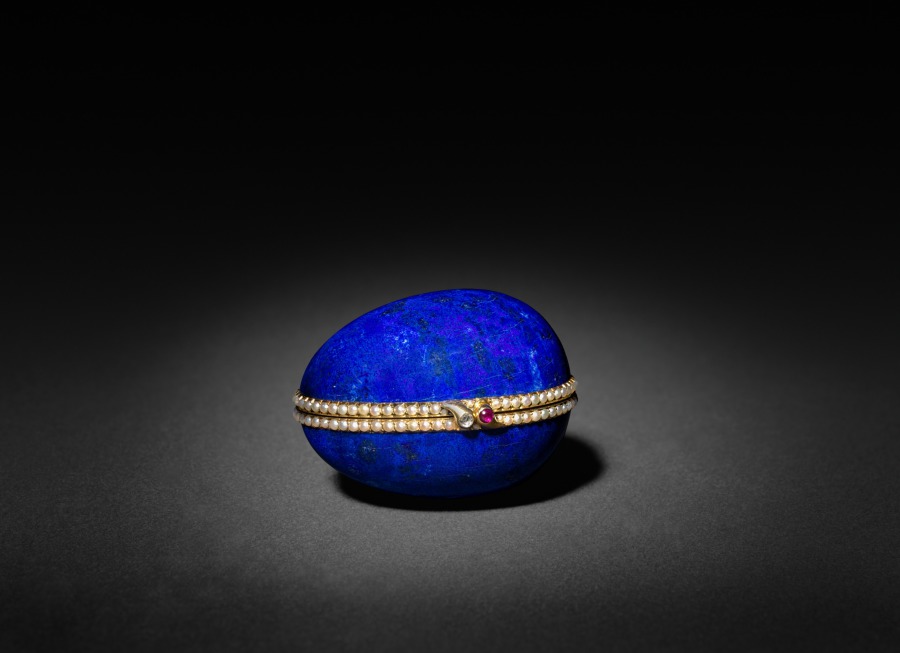
Lapis Lazuli Easter Egg
Peter Carl FabergéLinkedCulture matchlcp-76a570f8f4b7
- Date
- c. 1885–90
- Medium
- gold, enamel, lapis lazuli, pearls, diamonds, rubies
- Culture
- Russia, St. Petersburg
- Department
- Decorative Art and Design
- Institution
- Cleveland Museum of Art
- Object ID
- 142724
From the Cleveland Museum of Art record
Peter Carl Fabergé became the crown jeweler to the imperial court of Russia after he produced the very first Easter egg for Tsar Alexander III to give to his wife, Empress Marie Feodorovna. Fabergé created his celebrated Easter eggs, symbols of rebirth and renewal, as gifts for the Russian imperial family every year until he had to leave the country in 1919 after the Russian Revolution. Made of gold and lapis lazui from the Ural Mountains, this egg conceals a delightful surprise within of an imperial crown and a tiny ruby or pink sapphire on a chain. This egg may have been made for one of the tsar's relatives very early in the run of Fabergé's production of Easter eggs.
The authoritative record is held by Cleveland Museum of Art. LinkedCulture surfaces this object and its connections; it does not alter institutional metadata.
Get printable QR codesHide QR codes
Open QR codes for this object page and the museum record. They stay collapsed until needed.
Provenance & credit
As published by the source institution. Coverage varies — not every institution's open-data feed includes ownership history.
- Credit line
- The India Early Minshall Collection
- Provenance
- ?-1966: India Early Minshall [1885–1965], Cleveland, OH, bequest to the Cleveland Museum of Art | 1966-: The Cleveland Museum of Art, Cleveland, OH
Related across collections
Semantically similar works from Cleveland Museum of Art and other institutions.