Cleveland Museum of Art
Carving
- Date
- c. 1900
- Medium
- ivory
- Culture
- Central Africa, Democratic Republic of the Congo, Kongo, early 20th century
- Department
- African Art
- Institution
- Cleveland Museum of Art
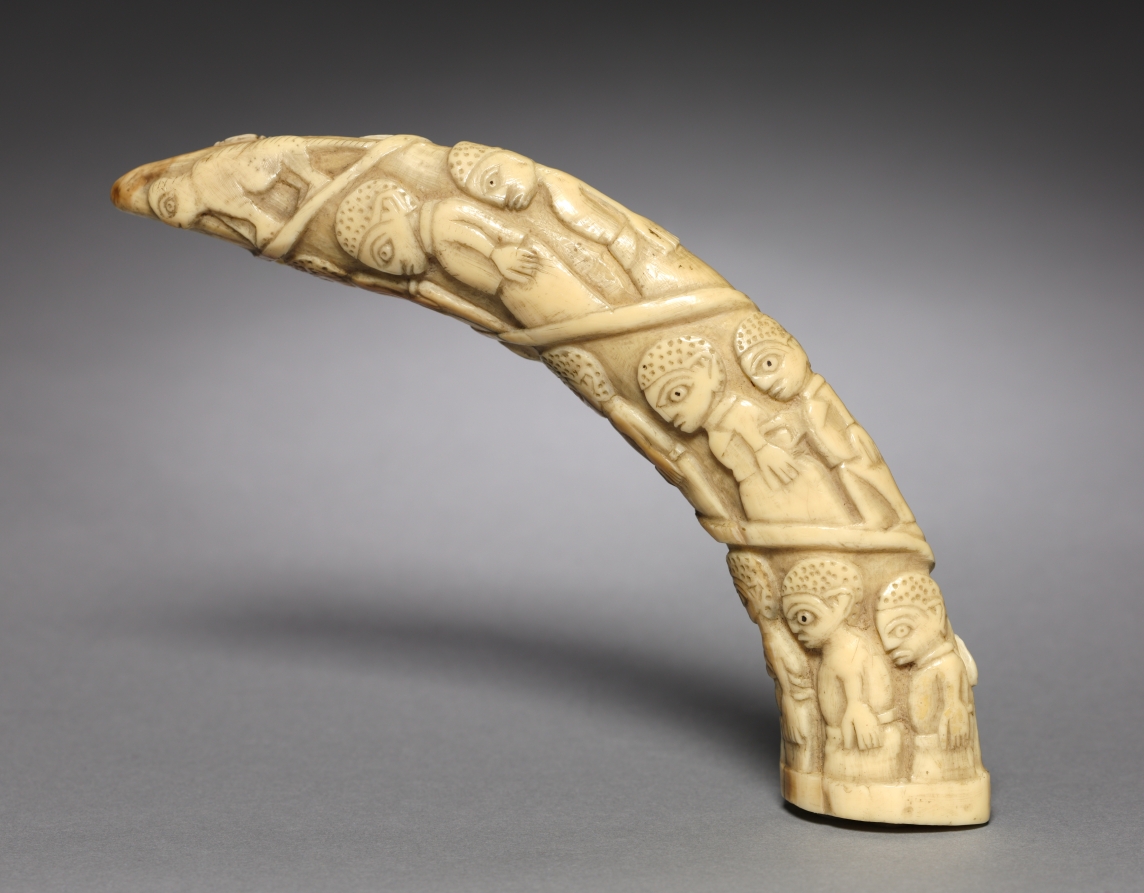
Carved elephant ivory tusks and hippopotamus tooth ivory—whether large, or small, like this example—were sought-after souvenirs for Europeans who visited, lived, or worked on the coast of Central Africa. Vili carvers had been sculpting ivory for centuries. In the age of European commerce and colonialism, they created carefully observed tusks with representations of everyday life for European clients. While commissions, they also reflected what the artists chose to represent about their own societies, and sometimes about Europeans. In this small tusk, we see Congolese individuals wearing various clothing, from local-style waist wrappers to European brimmed hats. The spiral composition of this artwork has been used on carved ivories in the Kingdom of Kongo since the 1500s.
The authoritative record is held by Cleveland Museum of Art. LinkedCulture surfaces this object and its connections; it does not alter institutional metadata.
Get printable QR codesHide QR codes
Open QR codes for this object page and the museum record. They stay collapsed until needed.
Related across collections
Semantically similar works from Cleveland Museum of Art and other institutions.