Cleveland Museum of Art
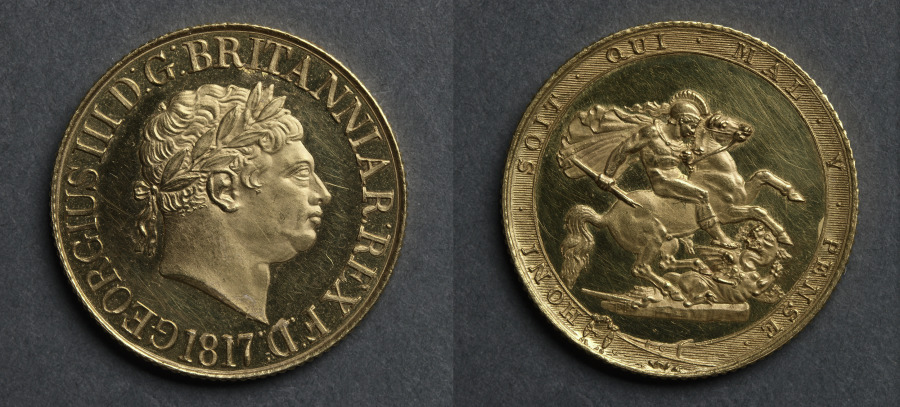
Sovereign: George III (obverse); St. George and the Dragon (reverse)
Benedetto PistrucciLinkedCulture matchlcp-49ecbe076885
- Date
- 1817
- Medium
- gold
- Culture
- England, George III, 1760-1820
- Department
- Medieval Art
- Institution
- Cleveland Museum of Art
- Object ID
- 144534
From the Cleveland Museum of Art record
Great changes had occurred since King George III's previous coinage. The Royal Mint had moved out of the Tower of London to new premises in Little Tower Hill. The new mint was fitted with the latest steam-driven machinery by Boulton and Watt, and the whole coinage had been reformed. The guinea of twenty-one shillings was replaced by the sovereign, the pound unit piece, designed by Benedetto Pistrucci, and went into circulation in 1817. The new Royal Mint was placed under the Mastership of William Wellesley Pole, later Lord Maryborough and finally the third Earl of Mornington, an elder brother of the famous Duke of Wellington. Pole was so impressed by a cameo of Saint George and the dragon, cut by Pistrucci, that he invited the artist to England and set him to design the new coinage. For legal reasons Pistrucci could not be appointed chief engraver, which started a quarrel between the artist and the government that lasted nearly 40 years until the Pistrucci's death in 1855. Working with, and often against, various members of the family who held a succession of engraving appointments at the Royal Mint, Pistrucci produced the new coinage of the reign of George III. His magnificent Saint George, seen to its best on this very rare piece, continued to be used from time to time. It is still the reverse type of the British sovereign. Benedetto Pistrucci's portrait of the king is a caricature.
The authoritative record is held by Cleveland Museum of Art. LinkedCulture surfaces this object and its connections; it does not alter institutional metadata.
Get printable QR codesHide QR codes
Open QR codes for this object page and the museum record. They stay collapsed until needed.
Provenance & credit
As published by the source institution. Coverage varies — not every institution's open-data feed includes ownership history.
- Credit line
- The Norweb Collection
- Provenance
- -1969: Mrs. Emery May Holden Norweb (1895-1984), Cleveland, OH, gifted to the Cleveland Museum of Art | 1969-: The Cleveland Museum of Art, Cleveland, OH
Related across collections
Semantically similar works from Cleveland Museum of Art and other institutions.