Cleveland Museum of Art
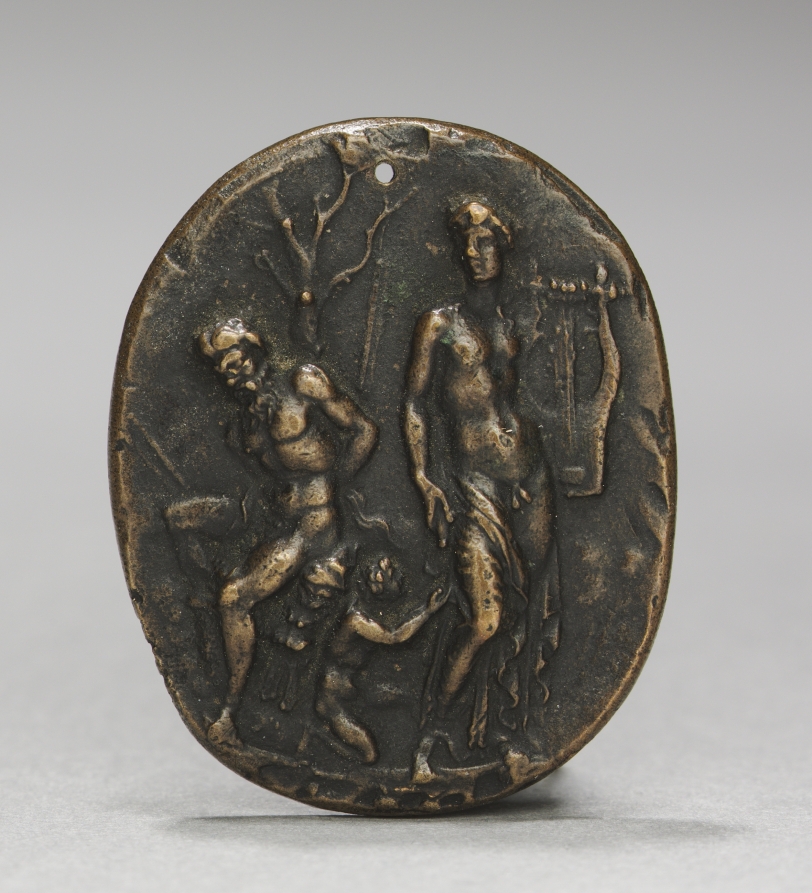
Apollo and Marsyas
Cristoforo di GeremiaLinkedCulture matchlcp-c7a1e6b50893
- Date
- c. 1468
- Medium
- bronze
- Culture
- Italy, 15th century
- Department
- European Painting and Sculpture
- Institution
- Cleveland Museum of Art
- Object ID
- 144627
From the Cleveland Museum of Art record
This plaquette is based on an important 1st-century gem attributed to Diskourides that passed into the Medici collection in the 1400s. The antique carnelian stone was so popular that the design was copied in numerous variations and media. In Ovid's Metamorphoses , Marsyas challenged Apollo to a music contest: his flute versus the god's lyre. As punishment for Marsyas's hubris, Apollo bound him to a tree and had his skin flayed. In the middle of the composition is the diminutive Olympus, Marsyas's student, begging Apollo for mercy. While the exact function of this plaquette is not clear, the subject had significance for political and noble figures in the Renaissance. The lyre symbolized peace, and thus the victory of Apollo's lyre stood for the triumph of universal harmony. When Pope Paul II Barbo (1417–1471) commissioned a portrait medal in 1468, the reverse included this same image, making the connection between his papacy and the new "Peace of Italy."
The authoritative record is held by Cleveland Museum of Art. LinkedCulture surfaces this object and its connections; it does not alter institutional metadata.
Get printable QR codesHide QR codes
Open QR codes for this object page and the museum record. They stay collapsed until needed.
Provenance & credit
As published by the source institution. Coverage varies — not every institution's open-data feed includes ownership history.
- Credit line
- Gift of the John B. Putnam Foundation
- Provenance
- Dr. Jacob Hirsch (New York, New York). | Bank Leu (Zurich, Switzerland), sold to Mrs. John B. Putnam. | John B. Putnam Foundation, by gift to the Cleveland Museum of Art, 1969.
Related across collections
Semantically similar works from Cleveland Museum of Art and other institutions.