Cleveland Museum of Art
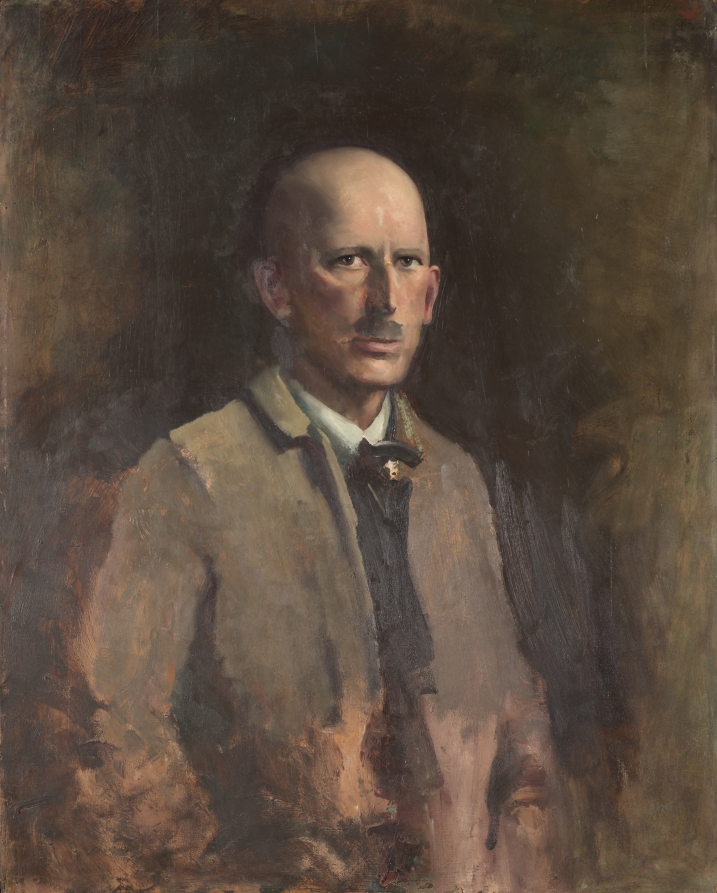
Self-Portrait
Abbott Handerson ThayerLinkedCulture matchlcp-6906e0fc692b
- Date
- 1918
- Medium
- oil on wood
- Culture
- America
- Department
- American Painting and Sculpture
- Institution
- Cleveland Museum of Art
- Object ID
- 144976
From the Cleveland Museum of Art record
Ways to represent one's self preoccupied Abbott Handerson Thayer throughout his life, playing a large role in both his emotional development and technical skill as a self-portrait painter. His earliest self-portrait is dated May 6, 1879, though he may have begun the piece in 1876, reworking it several times. Becoming increasingly eccentric with age, Thayer expressed his "growing egotism" and didactic, self-righteous ways through his artwork, especially through the group of self-portraits composed toward the end of his life. The work on display here is probably the earliest and most amiable of these later self-portraits. Thayer engages the viewer with his direct, almost defensive stare. In subsequent works, his eyes begin to cloud over in an almost trance-like state, exposing his emotional decline. This painting exemplifies the moodiness so prevalent during this period. Along with his achievements as a painter, Thayer spent many years studying the protective coloration of animals, and in 1909, he produced a book on the subject. His theories led to the development of military camouflage.
The authoritative record is held by Cleveland Museum of Art. LinkedCulture surfaces this object and its connections; it does not alter institutional metadata.
Get printable QR codesHide QR codes
Open QR codes for this object page and the museum record. They stay collapsed until needed.
Provenance & credit
As published by the source institution. Coverage varies — not every institution's open-data feed includes ownership history.
- Credit line
- Mr. and Mrs. William H. Marlatt Fund
- Provenance
- Mrs. Gladys Reasoner (daughter of the artist); Mrs. Walter R. Seaton, Woodstock NY (1937); Vose Galleries, Boston
Related across collections
Semantically similar works from Cleveland Museum of Art and other institutions.