Cleveland Museum of Art
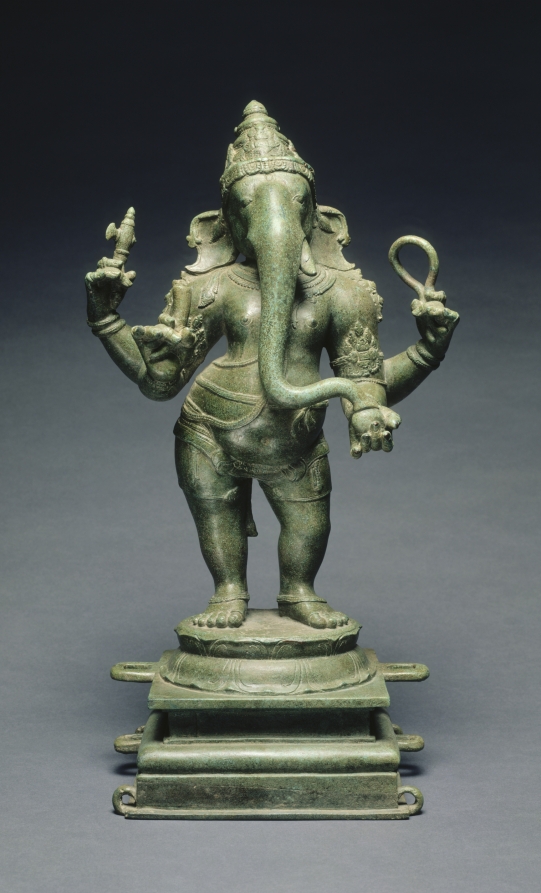
Ganesha
- Date
- c. 1070
- Medium
- bronze
- Culture
- South India, Medieval period, Chola dynasty(10th-13th century)
- Department
- Indian and Southeast Asian Art
- Institution
- Cleveland Museum of Art
- Object ID
- 145407
From the Cleveland Museum of Art record
Ganesha, the god of wealth and abundance, is an auspicious and revered Hindu deity. He removes obstacles and protects his worshipers. Numerous myths explain how Ganesha became an elephant-man composite, but the most popular version relates the story of how he was decapitated by his enraged father, Shiva, and restored to life through the intervention of his mother, Parvati. Shiva agreed to revive him with the head of the first creature encountered: an elephant. Ganesha's strength—his profound spiritual wisdom—contrasts with his weakness for sweets, as indicated by his pudginess and the sweet modaka he carries. In Ganesha, opposing forces exist in perfect harmony. Ganesha pulls his own broken tusk in one hand, which he used as a pen to write the epic Mahabharata .
The authoritative record is held by Cleveland Museum of Art. LinkedCulture surfaces this object and its connections; it does not alter institutional metadata.
Get printable QR codesHide QR codes
Open QR codes for this object page and the museum record. They stay collapsed until needed.
Provenance & credit
As published by the source institution. Coverage varies — not every institution's open-data feed includes ownership history.
- Credit line
- Gift of Katharine Holden Thayer
- Provenance
- (J. J. Klejman, New York, NY) | ?–1970: Katharine Holden Thayer [1898–1985], Cleveland, OH given to the Cleveland Museum of Art | 1970–: The Cleveland Museum of Art, Cleveland, OH
Part of LinkedCulture topics
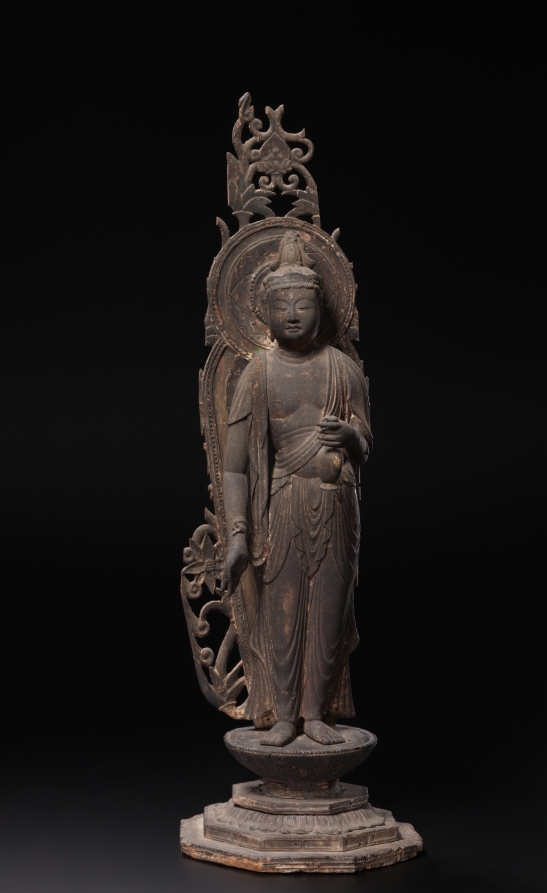 Buddhist and Hindu Iconography
These objects are connected by their representation of sacred figures and deities from Buddhist and Hindu religious traditions across Asian cultures, including sculptures, paintings, and ritual objects depicting buddhas,
183 objects from 5 institutions
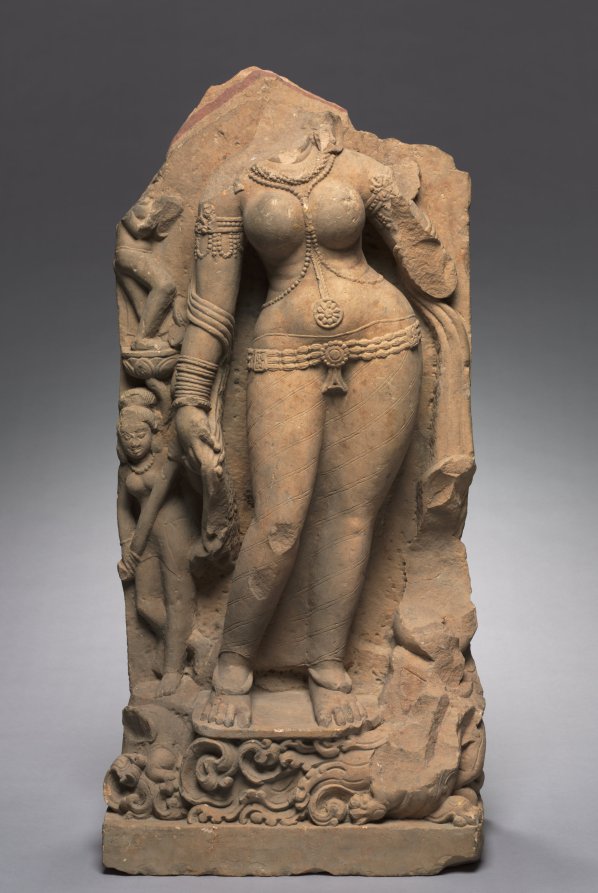 Hindu Deities and Mythology
These objects depict Hindu gods, goddesses, and mythological narratives, particularly featuring Durga slaying the buffalo demon Mahishasura, along with other deities like Ganesh, Krishna, and Brahma from various South an
59 objects from 3 institutions
Related across collections
Semantically similar works from Cleveland Museum of Art and other institutions.