Cleveland Museum of Art
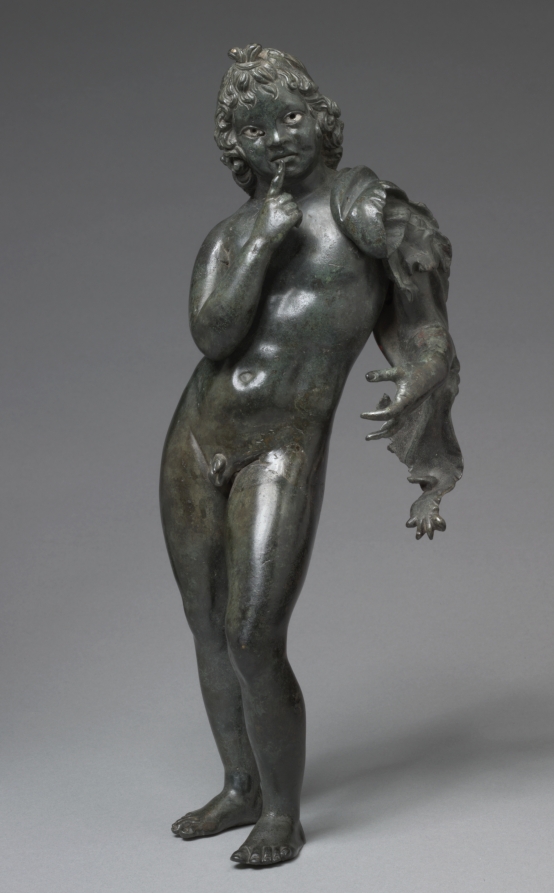
Statuette of Harpocrates
- Date
- c. 50 BCE
- Medium
- bronze, hollow cast, with silver inlays
- Culture
- Greece, Greco-Roman Period, late Ptolemaic Dynasty
- Department
- Greek and Roman Art
- Institution
- Cleveland Museum of Art
- Object ID
- 147036
From the Cleveland Museum of Art record
Combining Hellenistic naturalism with a finger gesture associated with childhood in Egyptian tradition, this young figure represents Harpocrates, the Greek form of the Egyptian child sun god Horus, or Hor-pa-khred. A hole atop his head likely once held a double crown of Egypt, as on more traditionally Egyptian representations of Harpocrates. The gesture this figure makes refers to the Egyptian hieroglyph for child, nn , 𓀁.
The authoritative record is held by Cleveland Museum of Art. LinkedCulture surfaces this object and its connections; it does not alter institutional metadata.
Get printable QR codesHide QR codes
Open QR codes for this object page and the museum record. They stay collapsed until needed.
Provenance & credit
As published by the source institution. Coverage varies — not every institution's open-data feed includes ownership history.
- Credit line
- Purchase from the J. H. Wade Fund
- Provenance
- –1972: Robert Hecht (1919–2012), New York, NY (said by Hecht to have been purchased from a family in England in whose possession it had been for about a century. Said by Hecht to have been brought from Egypt c. 1870) | 1972: The Cleveland Museum of Art
Part of a LinkedCulture topic
 Ancient Egyptian Personal Objects
These objects are cosmetic implements and grooming tools from ancient Egypt, including mirrors, palettes for grinding pigments, and decorative knives, representing daily life and personal adornment practices.
476 objects from 5 institutions
Related across collections
Semantically similar works from Cleveland Museum of Art and other institutions.