Cleveland Museum of Art
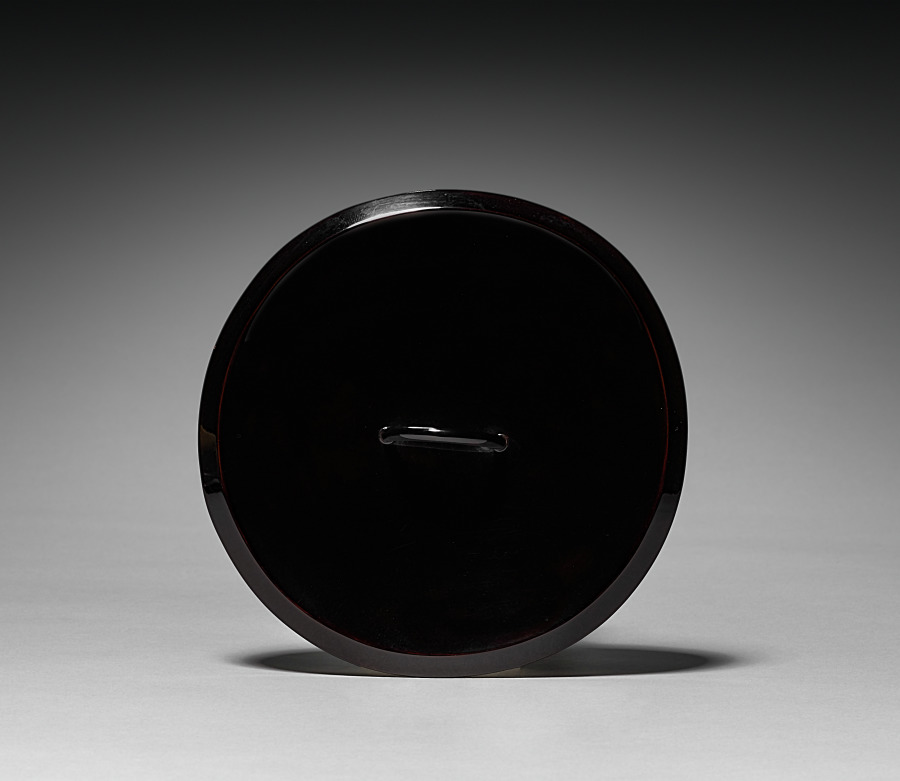
Water Container (Mizusashi) with Riverscape (lid)
- Date
- late 1500s–early 1600s
- Medium
- Black lacquer
- Culture
- Japan, Momoyama period (1573-1615) to Edo period (1615-1858)
- Department
- Japanese Art
- Institution
- Cleveland Museum of Art
- Object ID
- 147073
From the Cleveland Museum of Art record
Mizusashi are jars used to hold water for the preparation of tea at tea gatherings. This one was produced in the Mino area of present-day Gifu prefecture in central Japan, and is considered one of the finest of its type in existence, based on the complex aesthetic sensibilities developed around the tea ceremony in Japan. It is called a “picture Shino” ( e-shino ) mizusashi, as it has an abstracted design said to resemble an ink painting of reeds along a river bank and small boats in a river on one side, and a geometric pattern on the other. With its irregular shape and thick, luminous glaze, it is of a variety favored by eminent tea masters of the Momoyama period. The water this container held during a tea ceremony was used to fill the kama , or iron pot in which the water is heated.
The authoritative record is held by Cleveland Museum of Art. LinkedCulture surfaces this object and its connections; it does not alter institutional metadata.
Get printable QR codesHide QR codes
Open QR codes for this object page and the museum record. They stay collapsed until needed.
Provenance & credit
As published by the source institution. Coverage varies — not every institution's open-data feed includes ownership history.
- Credit line
- John L. Severance Fund
- Provenance
- ?-1972: (Gatodo Gallery Co., Ltd., Tokyo, Japan, sold to the Cleveland Museum of Art) | 1972-: The Cleveland Museum of Art, Cleveland, OH
Part of a LinkedCulture topic
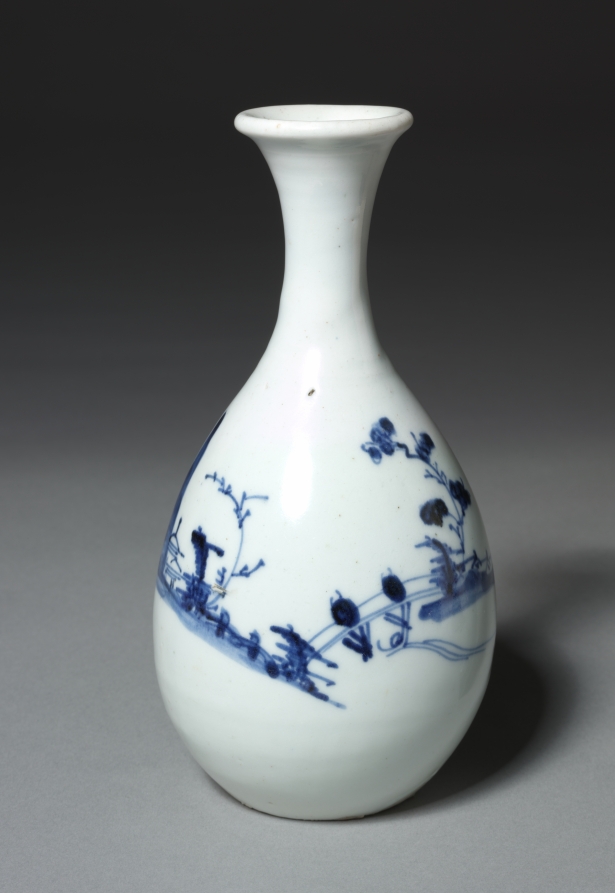 Japanese Ceramic Jar Traditions
These objects are all Japanese ceramic jars and vessels spanning from the Yayoi period through the Meiji period, representing various regional pottery traditions including Bizen, Shigaraki, Karatsu, Satsuma, Tokoname, an
124 objects from 4 institutions
Related across collections
Semantically similar works from Cleveland Museum of Art and other institutions.