Cleveland Museum of Art
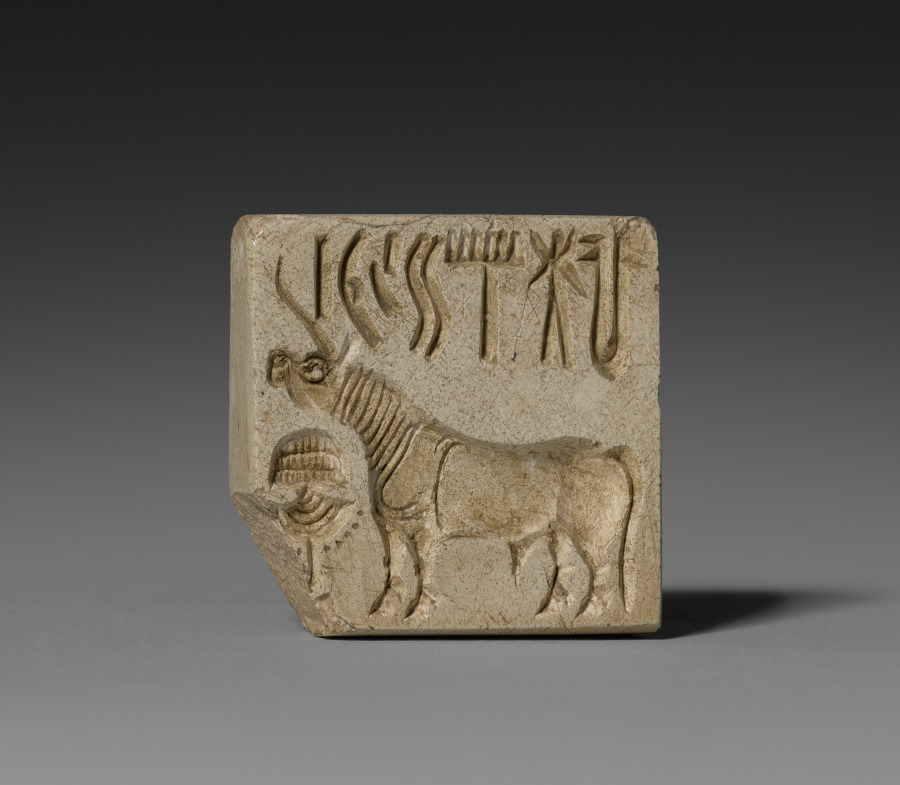
Seal with Unicorn and Inscription
- Date
- c. 2000 BCE
- Medium
- steatite
- Culture
- Pakistan, Indus Valley civilization
- Department
- Indian and Southeast Asian Art
- Institution
- Cleveland Museum of Art
- Object ID
- 147417
From the Cleveland Museum of Art record
Indus Valley seals appear to have been hung on a string that passed through a boss on the reverse side. This animal, carved with detailed markings around his neck and forequarters, has his head positioned over an object on a stand that may be interpreted as an altar or brazier or censer; it is not known whether it is for offerings to or sacrifice of the animal. Specialists disagree as to whether single-horned bovines actually lived during the time of the Indus Valley Civilization, four thousand years ago.
The authoritative record is held by Cleveland Museum of Art. LinkedCulture surfaces this object and its connections; it does not alter institutional metadata.
Get printable QR codesHide QR codes
Open QR codes for this object page and the museum record. They stay collapsed until needed.
Provenance & credit
As published by the source institution. Coverage varies — not every institution's open-data feed includes ownership history.
- Credit line
- Purchase from the J. H. Wade Fund
- Provenance
- ?–1973: (William H. Wolff [1906–1991], New York, NY, sold to the Cleveland Museum of Art) | 1973–: The Cleveland Museum of Art, Cleveland, OH
Part of a LinkedCulture topic
 Ancient Egyptian Personal Objects
These objects are cosmetic implements and grooming tools from ancient Egypt, including mirrors, palettes for grinding pigments, and decorative knives, representing daily life and personal adornment practices.
476 objects from 5 institutions
Related across collections
Semantically similar works from Cleveland Museum of Art and other institutions.