Cleveland Museum of Art
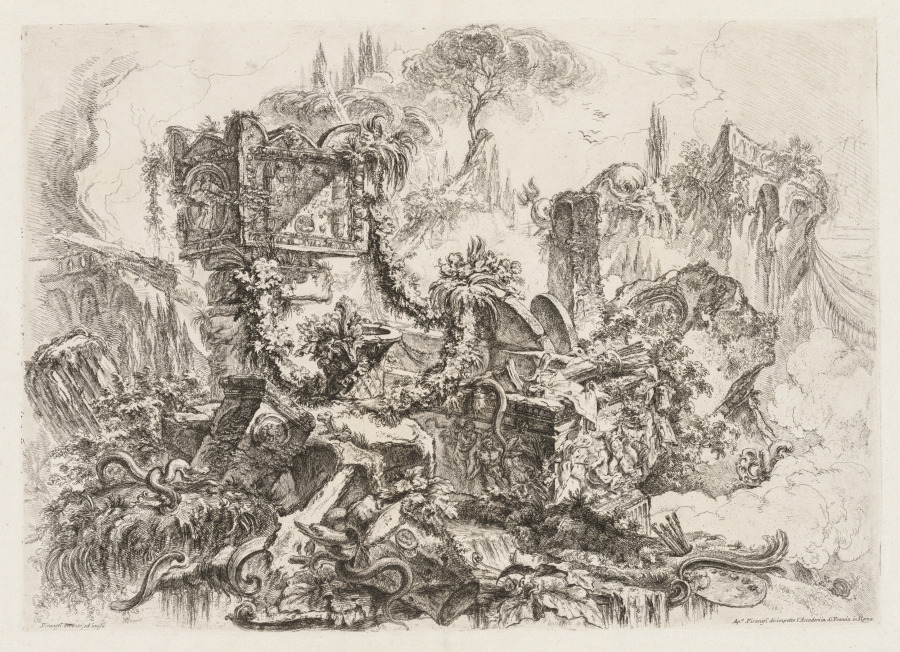
The Tomb of Nero
Giovanni Battista PiranesiLinkedCulture matchlcp-27ed3de8bf03
- Date
- 1747–48
- Medium
- etching with engraving and drypoint
- Culture
- Italy, 18th century
- Department
- Prints
- Institution
- Cleveland Museum of Art
- Object ID
- 147901
What the image shows
A detailed etching depicting a fantastical landscape with ruins, foliage, and architectural elements.
Generated by LinkedCulture from the photograph alone, without the museum’s catalogue text (Qwen/Qwen2.5-VL-7B-Instruct), and not yet reviewed by a person. It describes the picture, not the object’s history, and it is not part of the museum’s record.
From the Cleveland Museum of Art record
An ancient tomb, teeming with slithering snakes and overgrown vegetation, conjures the ruins of a strange and distant past in this print. The more lightly etched background appears faint against the jumble of darker lines in the foreground, as if the whole scene is slowly fading into the mist of time. Although the composition might seem to be one of pure imagination, the tomb it depicts was based on a real monument the artist had observed near Rome. Fascinated by classical antiquity, Giovanni Battista Piranesi evoked his own experience of seeing ruins, which he felt could not be conveyed by a more realistic portrayal. Popularly associated with the Emperor Nero in the 1700s, the monument the artist depicted has since been identified as the tomb of P. Vibius Maranus.
The authoritative record is held by Cleveland Museum of Art. LinkedCulture surfaces this object and its connections; it does not alter institutional metadata.
Get printable QR codesHide QR codes
Open QR codes for this object page and the museum record. They stay collapsed until needed.
Provenance & credit
As published by the source institution. Coverage varies — not every institution's open-data feed includes ownership history.
- Credit line
- Mr. and Mrs. Charles G. Prasse Collection
- Provenance
- ?–1975: Leona E. Prasse [1896–1984], Rocky River, OH, given to The Cleveland Museum of Art, Cleveland, OH | February 7, 1975–: The Cleveland Museum of Art, Cleveland, OH
Related across collections
Semantically similar works from Cleveland Museum of Art and other institutions.