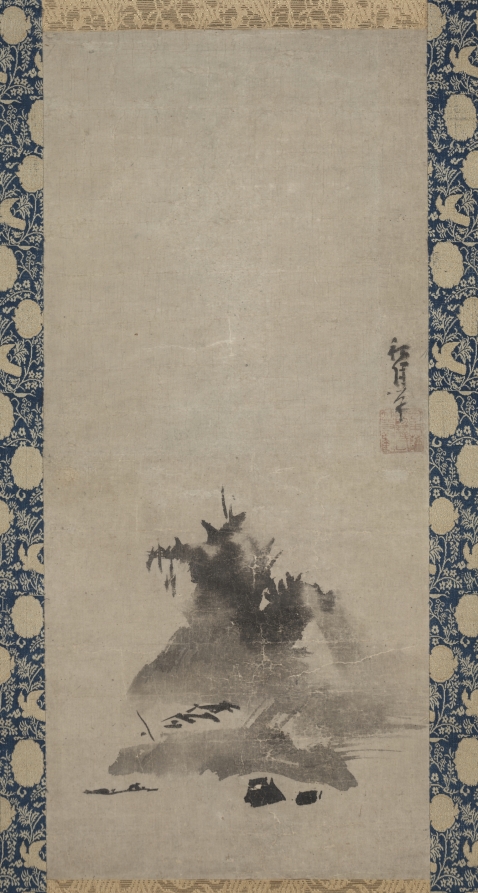
Cleveland Museum of Art
Haboku (Flung-ink) Landscape
Shūgetsu Tōkan
- Date
- c. 1510
- Medium
- hanging scroll; ink on paper
- Culture
- Japan, Muromachi period (1392–1573)
- Department
- Japanese Art
- Institution
- Cleveland Museum of Art
This vague but energetically rendered landscape highlights the brush: the messenger for a moment’s emotional or spiritual state. The painting represents one of many subjects and styles Shugetsu studied and absorbed from the great practitioners of Ming-dynasty China in the late 1400s and early 1500s. The technique of "flung ink," or haboku, disguises purposeful composition as an almost random, distracted series of brushstrokes. Close inspection reveals tonalities and strokes brushed onto a soft, absorbent paper in a range from heavy and wet to crisp ink charges. Not surprisingly, amateur and professional Zen monk-painters favored this "impressionistic" style as an exercise in seeing meaningful detail slowly emerge from what at first seems unclear.
The authoritative record is held by Cleveland Museum of Art. LinkedCulture surfaces this object and its connections; it does not alter institutional metadata.
Related across collections
Semantically similar works from Cleveland Museum of Art and other institutions.
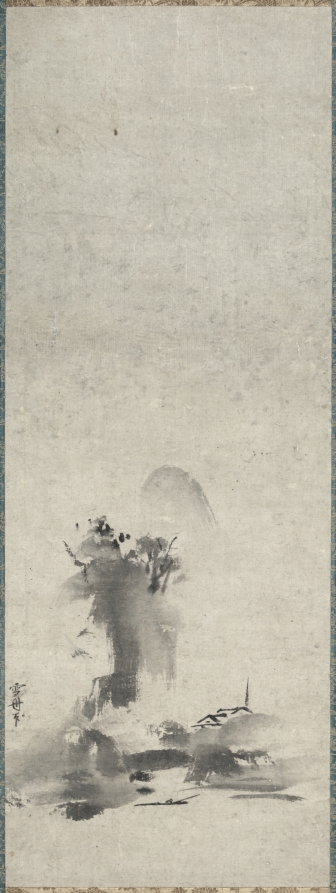
Haboku, Splashed Ink Landscape
Cleveland Museum of Art
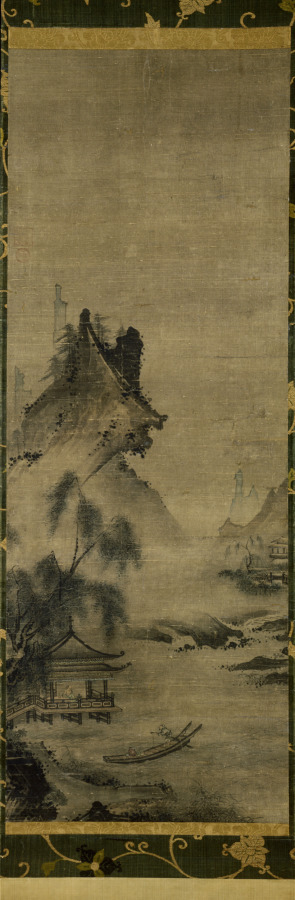
Lakeside Retreat
Cleveland Museum of Art

Mountain Wandering
Minneapolis Institute of Art
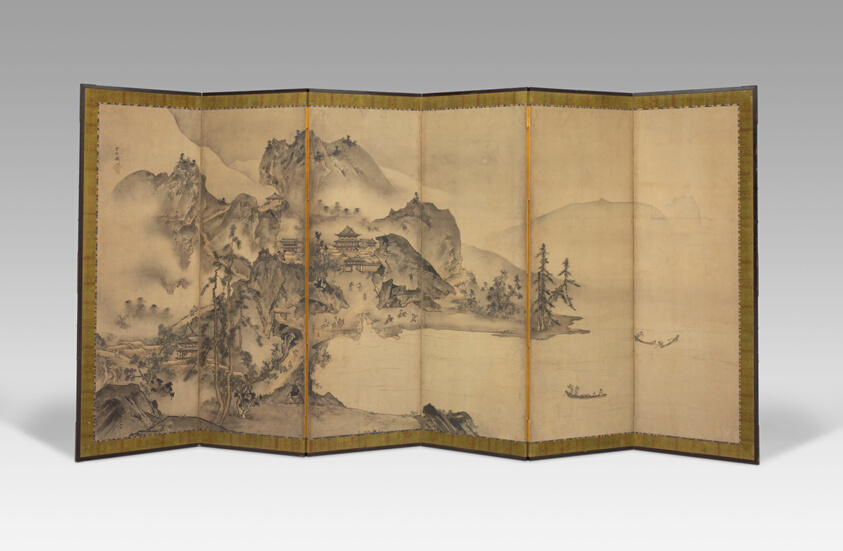
Landscape of the Four Seasons
Art Institute of Chicago

Landscape in China
Rijksmuseum

Landscape with Pavilion
Minneapolis Institute of Art
![Landscape [left of a triptych of White-Robed Kannon with Landscapes]](https://0.api.artsmia.org/800/117159.jpg)
Landscape [left of a triptych of White-Robed Kannon with Landscapes]
Minneapolis Institute of Art
![Landscape [right of a triptych of White-Robed Kannon with Landscapes]](https://5.api.artsmia.org/800/117157.jpg)
Landscape [right of a triptych of White-Robed Kannon with Landscapes]
Minneapolis Institute of Art
![Views of the Xiao and Xiang Rivers [left of a pair]](https://2.api.artsmia.org/800/19784.jpg)
Views of the Xiao and Xiang Rivers [left of a pair]
Minneapolis Institute of Art

White-robed Kannon
Minneapolis Institute of Art

Landscape, from a triptych of White-robed Kannon with Landscape and Tiger
Minneapolis Institute of Art
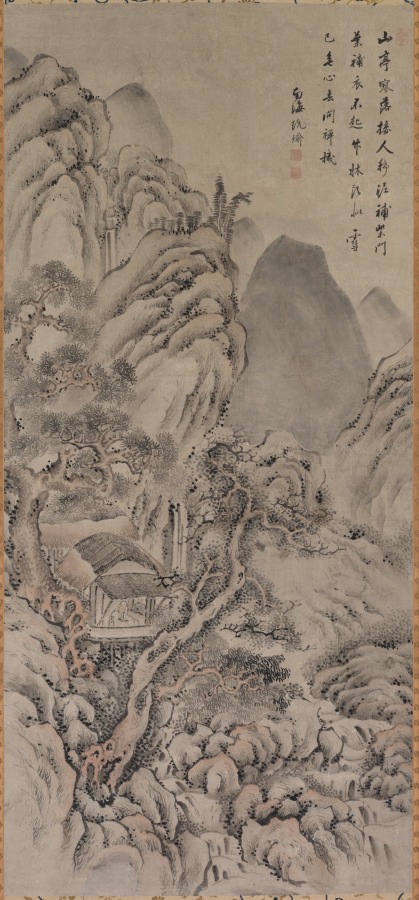
Landscape
Cleveland Museum of Art