Cleveland Museum of Art
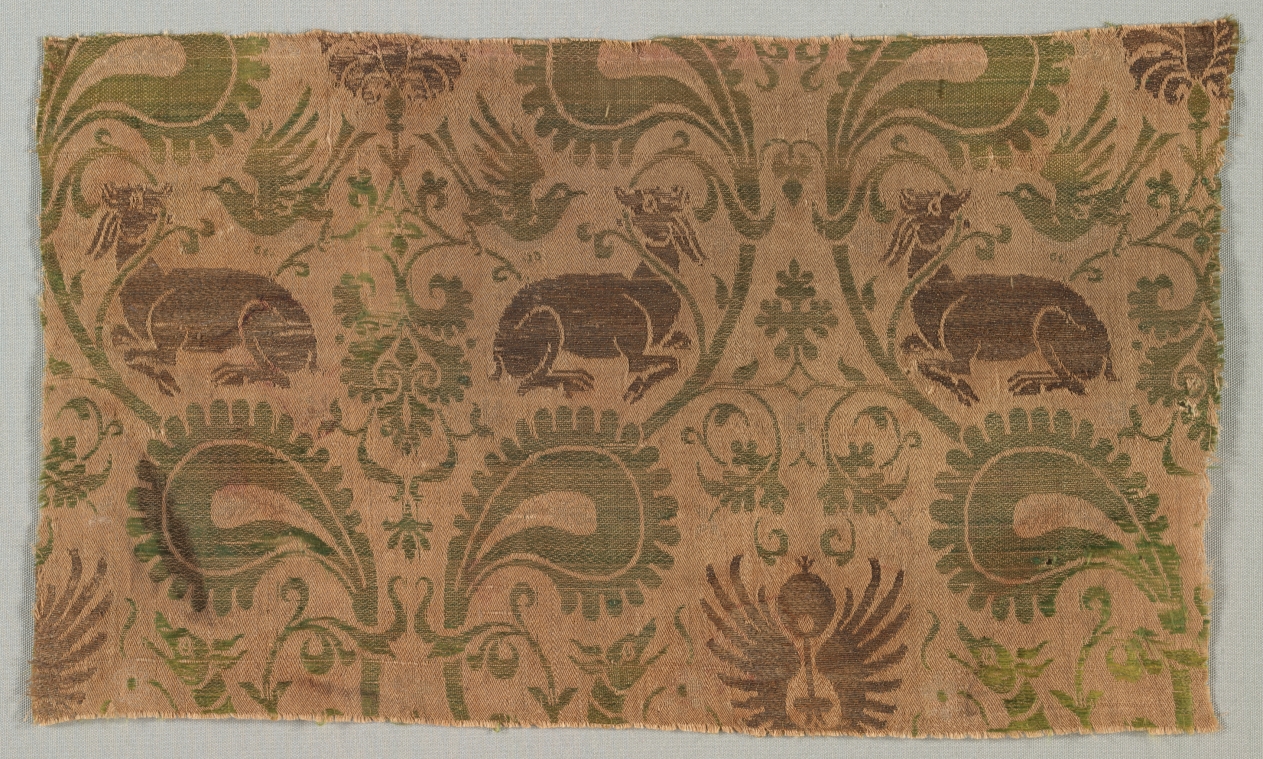
Silk with Dogs and Birds amid Vines
- Date
- 1350–1400
- Medium
- silk, gold thread; a combination of two weaves, 2/1 twill and plain weave (lampas)
- Culture
- Italy, second half of 14th century
- Department
- Textiles
- Institution
- Cleveland Museum of Art
- Object ID
- 148984
From the Cleveland Museum of Art record
Silks from China and the Islamic Near East introduced radically new designs with asymmetry and exotic animals around 1300, which Italian silk designers incorporated in an international style to compete with imports from the East. These large palmette leaves were adapted from Islamic silks whereas the recumbent deer, birds, and dogs (visible at the bottom) were popular Italian motifs. Textiles were lucrative commercial commodities during the Middle Ages. Intrepid Italian merchants traveled by land and sea to China, Mongolia, India, and the Islamic Near East, led by the maritime republics of Venice and Genoa. The renowned Venetian, Marco Polo, published his overland journey across Asia to China in 1265.
The authoritative record is held by Cleveland Museum of Art. LinkedCulture surfaces this object and its connections; it does not alter institutional metadata.
Get printable QR codesHide QR codes
Open QR codes for this object page and the museum record. They stay collapsed until needed.
Provenance & credit
As published by the source institution. Coverage varies — not every institution's open-data feed includes ownership history.
- Credit line
- Purchase from the J. H. Wade Fund
Related across collections
Semantically similar works from Cleveland Museum of Art and other institutions.