Cleveland Museum of Art
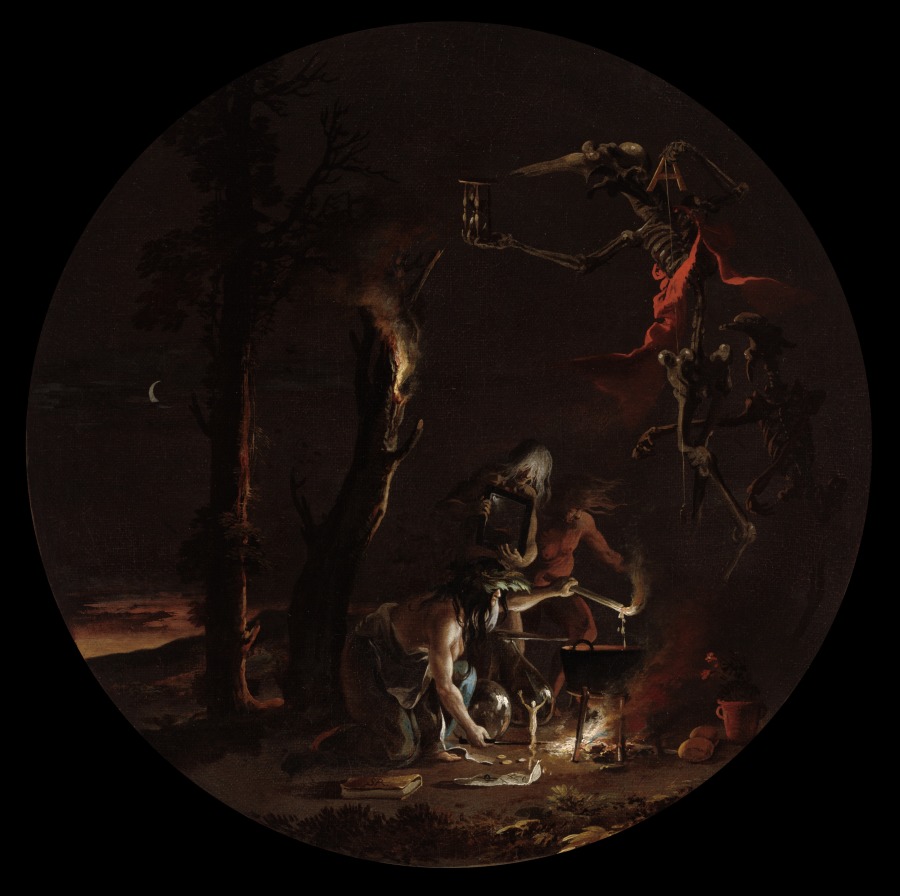
Scenes of Witchcraft: Evening
Salvator RosaLinkedCulture matchlcp-31853ba897b4
- Date
- c. 1645–49
- Medium
- oil on canvas
- Culture
- Italy, 17th century
- Department
- European Painting and Sculpture
- Institution
- Cleveland Museum of Art
- Object ID
- 149107
From the Cleveland Museum of Art record
At dusk, Rosa's hags gather around a cauldron. Above their incantations soars a conjured skeleton holding an hourglass symbolizing the brevity of life. In its left hand, the demonic creature holds a capital letter A from which extends a plumb line; as ancient signs of the moon and judgment, this strange combination of symbols embodies the nocturnal judgment the witches are doling out below. Though more rare in paint, the detailed portrayal of witches at their spells enjoyed a long literary tradition. The wax effigy alludes to classical literature by Virgil and Horace that described love magic. Poets in the 1500s and 1600s continued the tradition, writing verse about witches concocting potions and performing love spells. In Rosa's own poem "La Strega (The Witch)," the jilted Phyllis vows to take revenge on her feeble lover, listing the ingredients for her black magic: "ground powders, mystic gems, snakes and owls, stinking blood. . . ." Painting was considered "mute poetry" in the 1600s, and Rosa often explored the same themes in his written and painted art—a clever way to gain fame as a unique intellect. The artist chose the painting's shape to reference the foundational role of the circle in practicing magic.
The authoritative record is held by Cleveland Museum of Art. LinkedCulture surfaces this object and its connections; it does not alter institutional metadata.
Get printable QR codesHide QR codes
Open QR codes for this object page and the museum record. They stay collapsed until needed.
Provenance & credit
As published by the source institution. Coverage varies — not every institution's open-data feed includes ownership history.
- Credit line
- Purchase from the J. H. Wade Fund
- Provenance
- Family of the Marchese Giovanni Niccolini, Florence; [Heim Gallery, London]. Purchase from the J. H. Wade Fund, 1977.
Related across collections
Semantically similar works from Cleveland Museum of Art and other institutions.