Cleveland Museum of Art
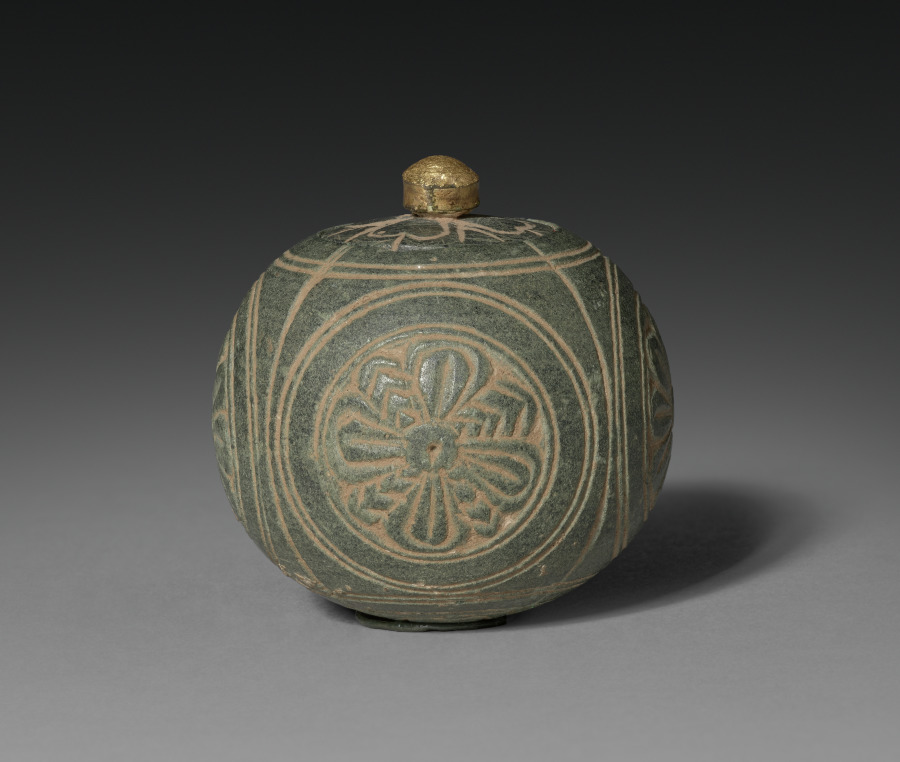
Miniature Stone Reliquary or Toilette Casket
- Date
- 1–100 CE
- Medium
- gray schist
- Culture
- Pakistan, Gandhara, probably Sirkap, early Kushan period
- Department
- Indian and Southeast Asian Art
- Institution
- Cleveland Museum of Art
- Object ID
- 149138
From the Cleveland Museum of Art record
Tiny reliquaries holding the cremated remains of the Buddha or a high-ranking holy person empowered monuments and made them sacred. A Buddhist monument, such as the solid hemispherical mounds called stupas, would not be worshipped until it was consecrated with the relic secreted inside. Bits of ash were combined with tiny gems inside a crystal or glass reliquary, which was then placed inside a stone or metal container, like the lidded versions seen here. These containers look like cosmetic vessels for aromatic pastes used for perfume in ancient India. Buddhist texts state that the enlightened Buddha emitted a fragrance like sandalwood paste; the form of the reliquary as a perfume bottle indicates the presence of the Buddha by the visual reference to his pleasant scent. Once enclosed in the stupa the reliquaries would not be seen, but monks were tasked with applying sandalwood paste to the exterior of stupas as part of their regular maintenance to convey to visitors the ongoing presence of the Buddha radiating from the relic in the center. The knob of the lid is gilded, as is the interior of the casket.
The authoritative record is held by Cleveland Museum of Art. LinkedCulture surfaces this object and its connections; it does not alter institutional metadata.
Get printable QR codesHide QR codes
Open QR codes for this object page and the museum record. They stay collapsed until needed.
Provenance & credit
As published by the source institution. Coverage varies — not every institution's open-data feed includes ownership history.
- Credit line
- Bequest of Elizabeth B. Blossom
- Provenance
- ?–1977: (Ulrich von Schroeder [b. 1943], Zürich, Switzerland, sold to the Cleveland Museum of Art) | 1977–: The Cleveland Museum of Art, Cleveland, OH
Related across collections
Semantically similar works from Cleveland Museum of Art and other institutions.