Cleveland Museum of Art
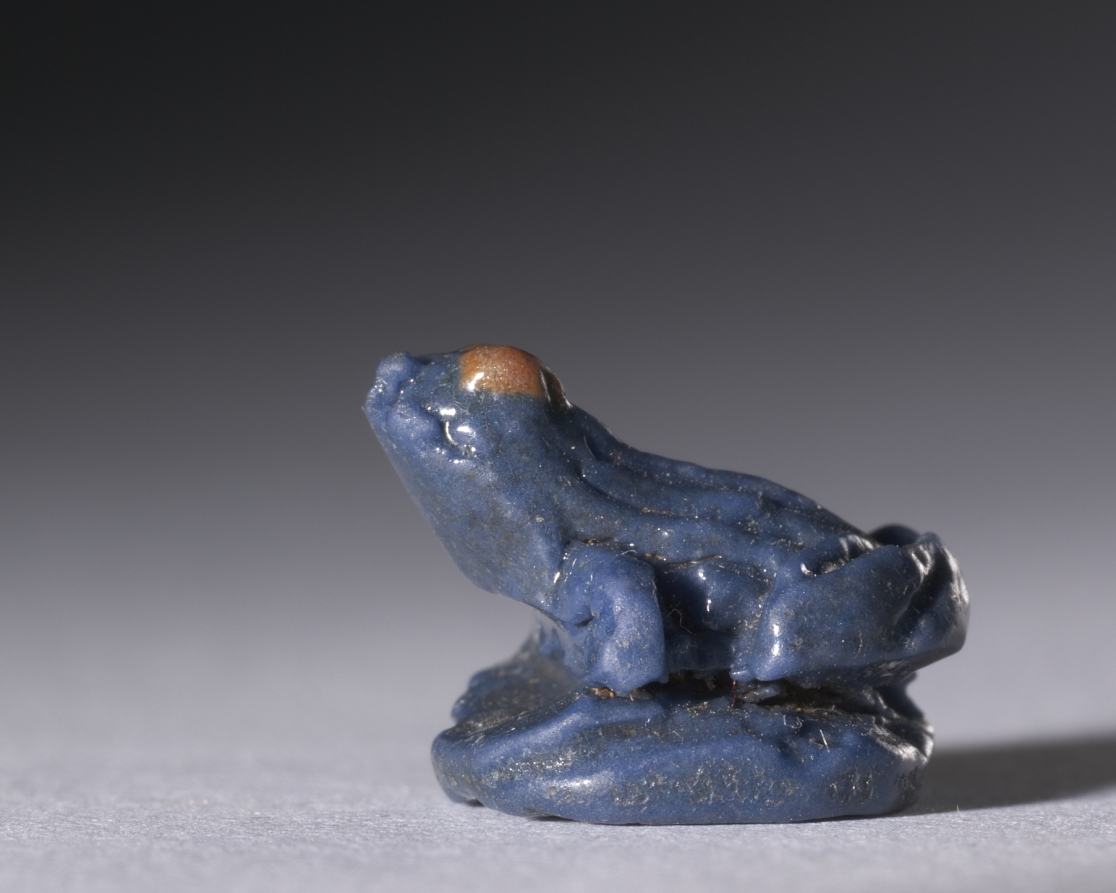
Frog Amulet
- Date
- c. 1380–1330 BCE
- Medium
- polychrome faience
- Culture
- Egypt, New Kingdom (1540–1069 BCE), Dynasty 18
- Department
- Egyptian and Ancient Near Eastern Art
- Institution
- Cleveland Museum of Art
The frog, because of its numerous offspring, was a symbol of fertility. In fact, the hieroglyphic sign for 100,000 was a tadpole. Frog amulets were very popular both in semiprecious stone and in faience, and were worn by women hoping for an easy delivery. Both sexes wore the frog in expectation of a successful rebirth in the afterlife. This frog amulet was made from faience, a fine type of self-glazing ceramic that is characteristically turquoise blue. It is a representation of Heqet, the frog goddess associated with childbirth and fertility.
The authoritative record is held by Cleveland Museum of Art. LinkedCulture surfaces this object and its connections; it does not alter institutional metadata.
Get printable QR codesHide QR codes
Open QR codes for this object page and the museum record. They stay collapsed until needed.
Related across collections
Semantically similar works from Cleveland Museum of Art and other institutions.