Cleveland Museum of Art
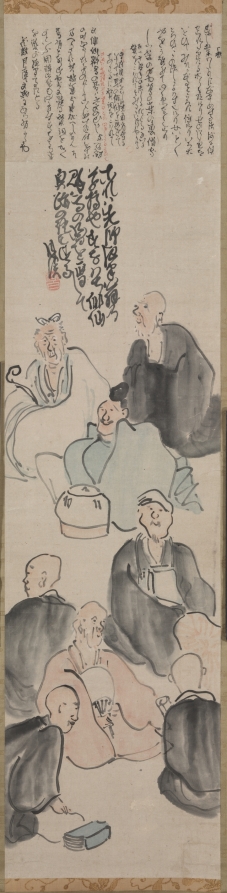
Gathering of Poetic Immortals with Poem Drafts
Matsumura GoshunLinkedCulture matchlcp-72453c890cdf
- Date
- late 1700s
- Medium
- hanging scroll; ink and color on paper
- Culture
- Japan, Edo period (1615–1868)
- Department
- Japanese Art
- Institution
- Cleveland Museum of Art
- Object ID
- 151340
From the Cleveland Museum of Art record
When Yosa Buson died, his students raised funds for his daughter Kuno’s second marriage by selling their own paintings and calligraphies attached to surviving drafts of Buson’s poetry and commentary. Here, beneath a section of Buson’s manuscripts, Matsumura Goshun painted nine of the poets Buson judged to be the best at haikai, a humorous form of poetry in which poets take turns contributing verses to a poem. In his inscription, Goshun explained that his choice of subject relates to the content of Buson’s text.
The authoritative record is held by Cleveland Museum of Art. LinkedCulture surfaces this object and its connections; it does not alter institutional metadata.
Get printable QR codesHide QR codes
Open QR codes for this object page and the museum record. They stay collapsed until needed.
Provenance & credit
As published by the source institution. Coverage varies — not every institution's open-data feed includes ownership history.
- Credit line
- Andrew R. and Martha Holden Jennings Fund
- Provenance
- ?–1983: (Andreas Leisinger, Tokyo, Japan, sold to the Cleveland Museum of Art) | 1983–: The Cleveland Museum of Art, Cleveland, OH
Related across collections
Semantically similar works from Cleveland Museum of Art and other institutions.