Cleveland Museum of Art
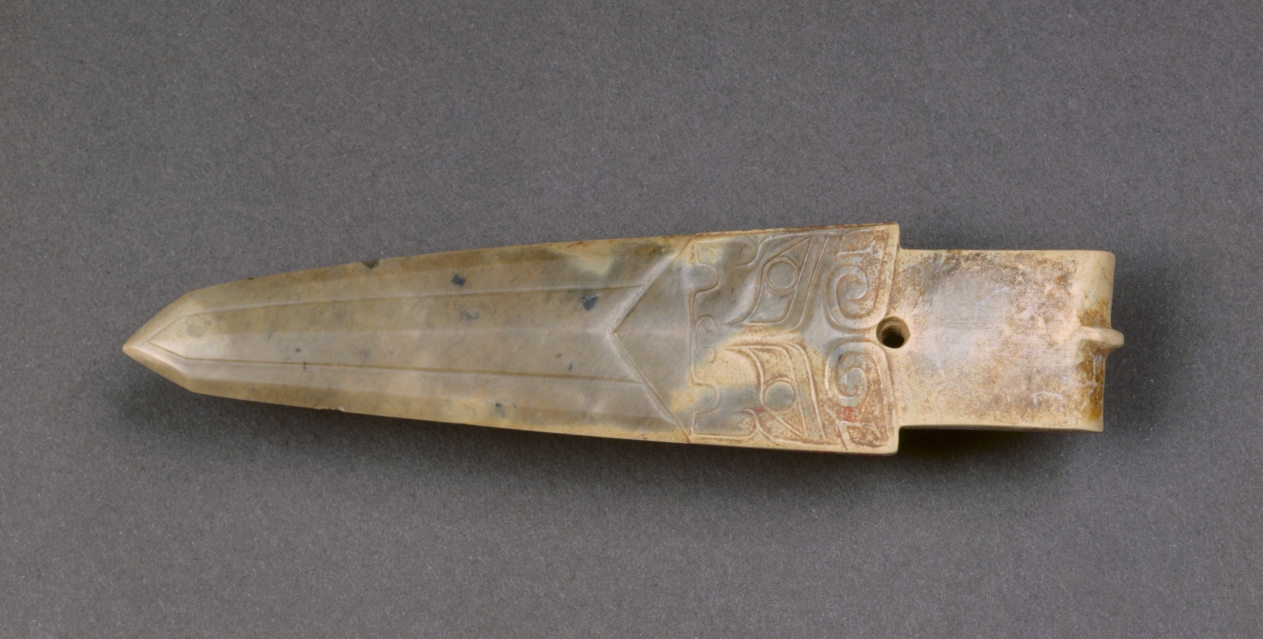
Ceremonial Dagger-Axe with Animal Masks (Ge)
- Date
- c. 1600–1050 BCE
- Medium
- jade (nephrite)
- Culture
- China, Shang dynasty (c. 1600–c. 1046 BCE)
- Department
- Chinese Art
- Institution
- Cleveland Museum of Art
Jade is an extremely hard material. In ancient China, it was carved or ground with fine abrasives, such as quartz sand, affixed to cutting or drilling tools. The form of this jade ( ge, ceremonial dagger axe), was likely derived from similarly shaped bronze weapons. The pointed and slightly curved blade was symmetrically carved. It seems to emerge from the mouth of the taotie , the animal mask. The taotie’s curved horns were carved in relief bands; its eyes, snout, and upper jaw are delineated in threadlike relief. Similar taotie designs are also seen on bronze vessels of the same period. The hole in the tang indicates where the blade was originally attached to a wooden shaft. Traces of vermilion or cinnabar remain on the taotie mask design.
The authoritative record is held by Cleveland Museum of Art. LinkedCulture surfaces this object and its connections; it does not alter institutional metadata.
Related across collections
Semantically similar works from Cleveland Museum of Art and other institutions.
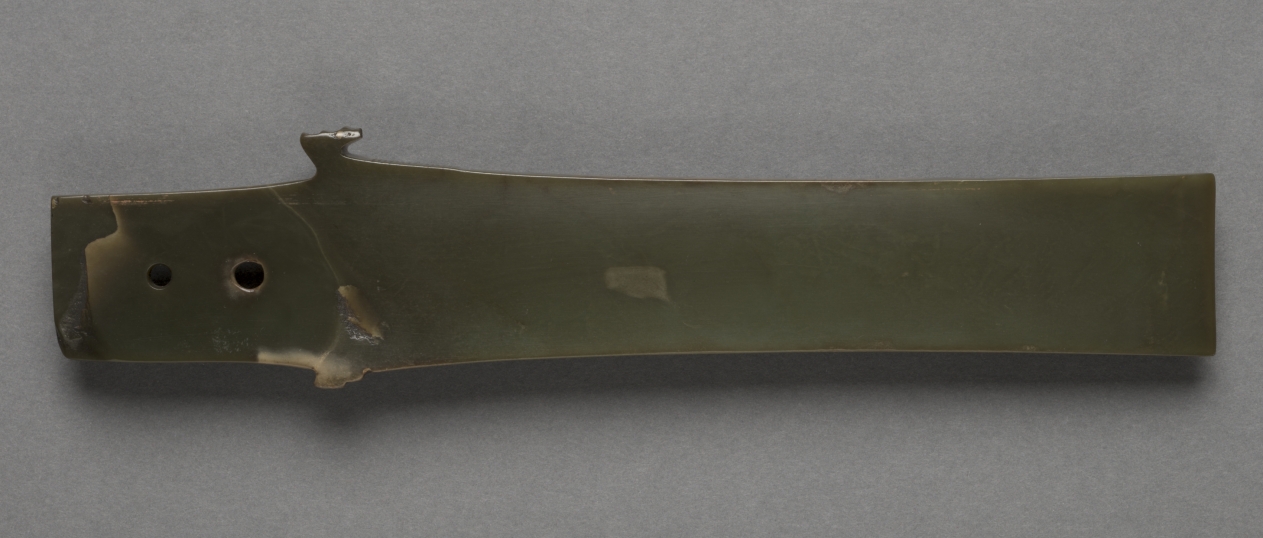
Ge (Dagger Axe)
Cleveland Museum of Art

Ceremonial dagger
Minneapolis Institute of Art
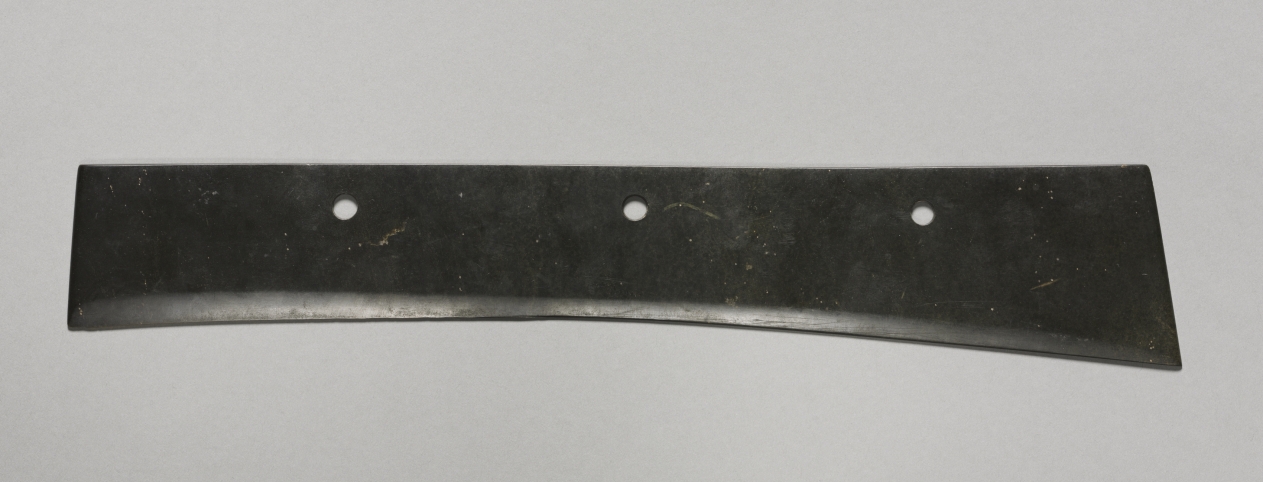
Ceremonial Blade with Three Perforations (Dao)
Cleveland Museum of Art
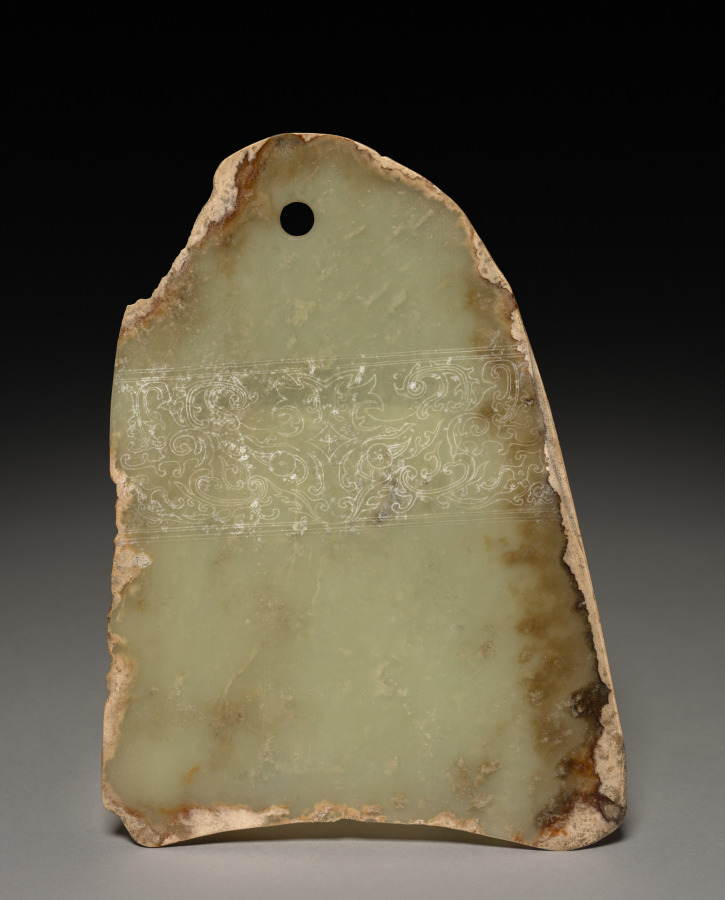
Blade Incised with Animal Masks
Cleveland Museum of Art
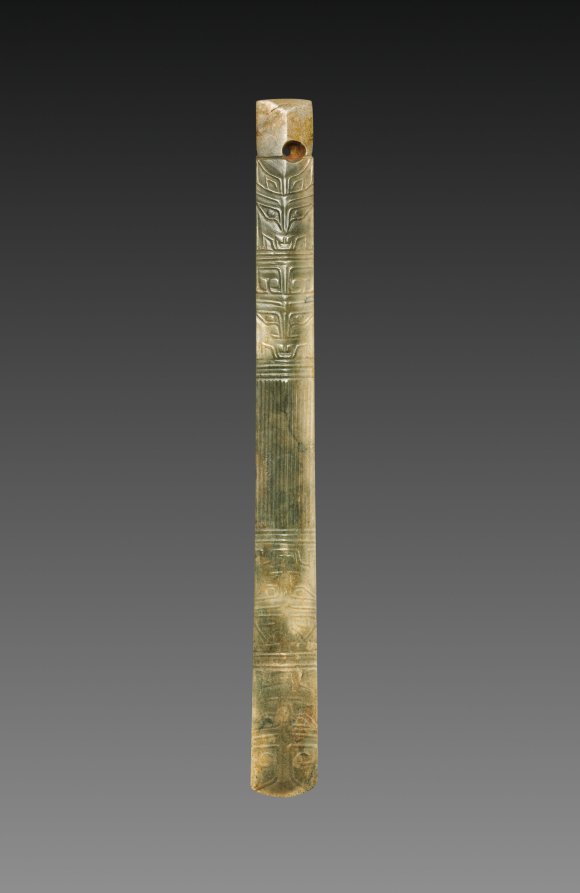
Ceremonial Scepter with Animal Masks (Gui)
Cleveland Museum of Art

Dagger-axe (ge)
Minneapolis Institute of Art

Ceremonial ge Dagger
Minneapolis Institute of Art
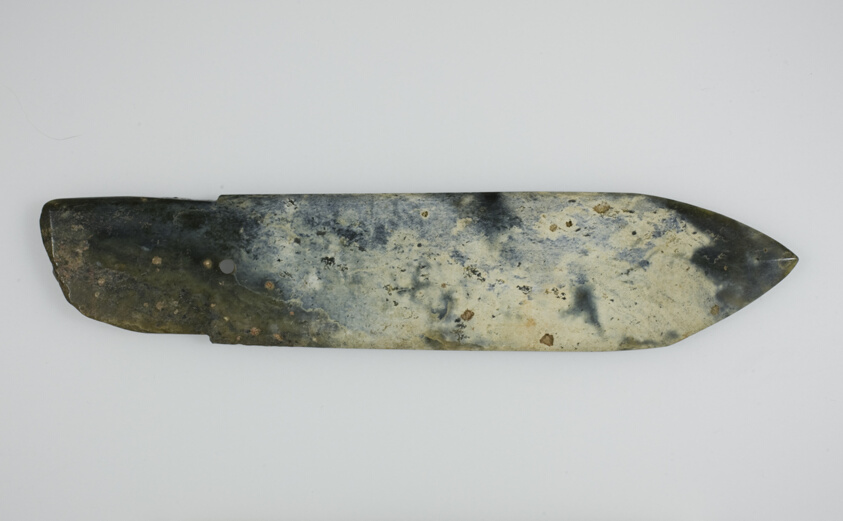
Dagger-Blade (Ge)
Art Institute of Chicago

Belt hook
Minneapolis Institute of Art
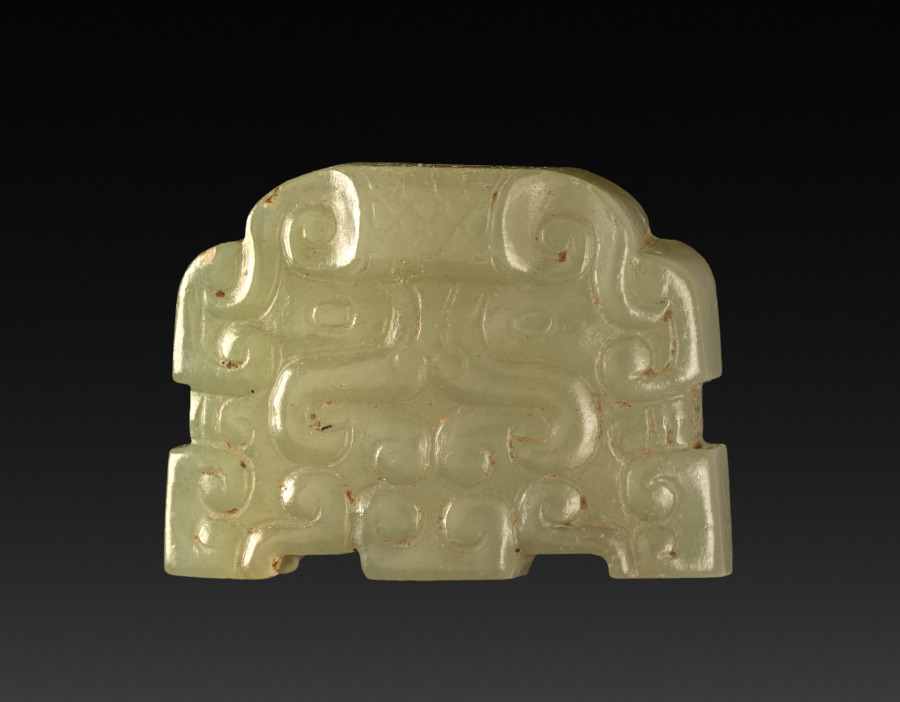
Ogre Mask (Taotie)
Cleveland Museum of Art
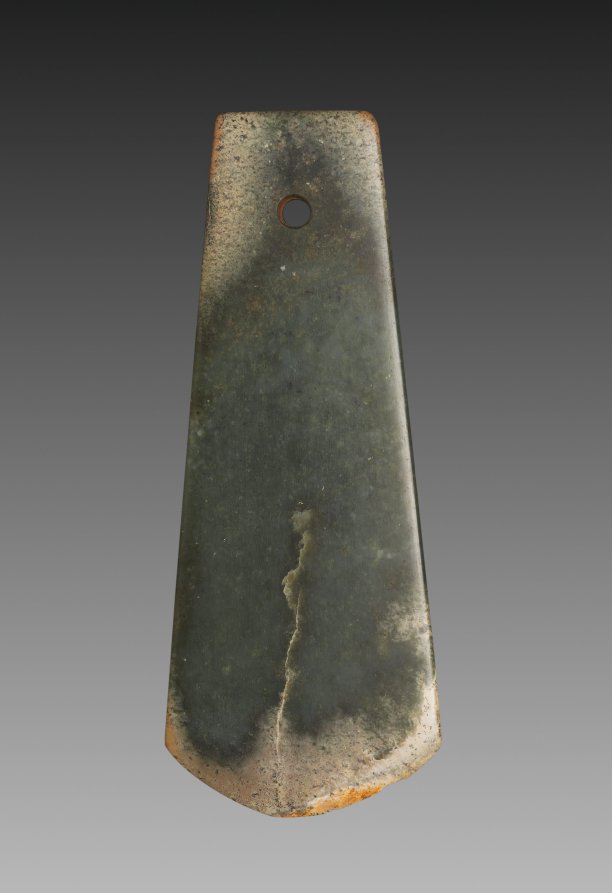
Ceremonial Axe (Fu)
Cleveland Museum of Art

Ceremonial Ge Dagger
Minneapolis Institute of Art