Cleveland Museum of Art
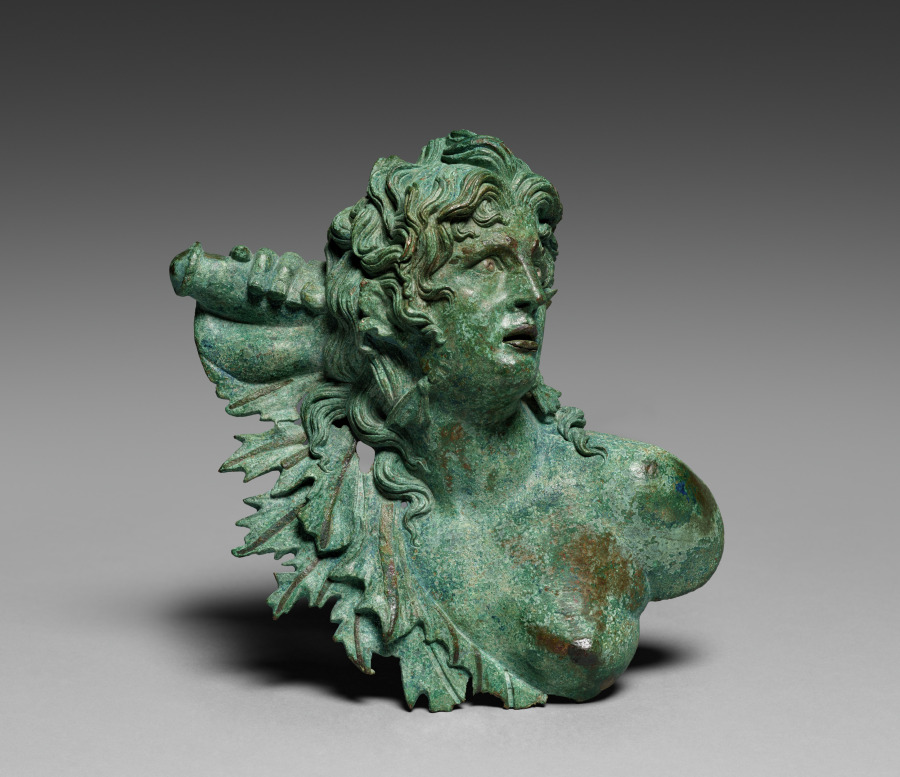
Tritoness or Scylla Relief Applique
- Date
- late 200s BCE
- Medium
- bronze with copper inlays
- Culture
- Greece, Hellenistic period
- Department
- Greek and Roman Art
- Institution
- Cleveland Museum of Art
The seaweed garment, finned gills, and webbed ears give this female bust appliqué all the hallmarks of an ocean dweller. She may be a Tritoness, a minor goddess of the sea and the female counterpart to the more common Triton. However, her intense gaze and raised arm clutching perhaps the hilt of a sword suggest she may be Scylla, a sea monster that first appears in Homer’s Odyssey . Without the Tritoness’s fishtail or Scylla’s lower body made of dogs’ heads, it is difficult to differentiate. Certain features are highlighted with a copper inlay such as the lips, eyes, and gills. Mythological sea creatures became popular metal vessel decorations around the 2nd-century BCE.
The authoritative record is held by Cleveland Museum of Art. LinkedCulture surfaces this object and its connections; it does not alter institutional metadata.
Get printable QR codesHide QR codes
Open QR codes for this object page and the museum record. They stay collapsed until needed.
Related across collections
Semantically similar works from Cleveland Museum of Art and other institutions.