Cleveland Museum of Art
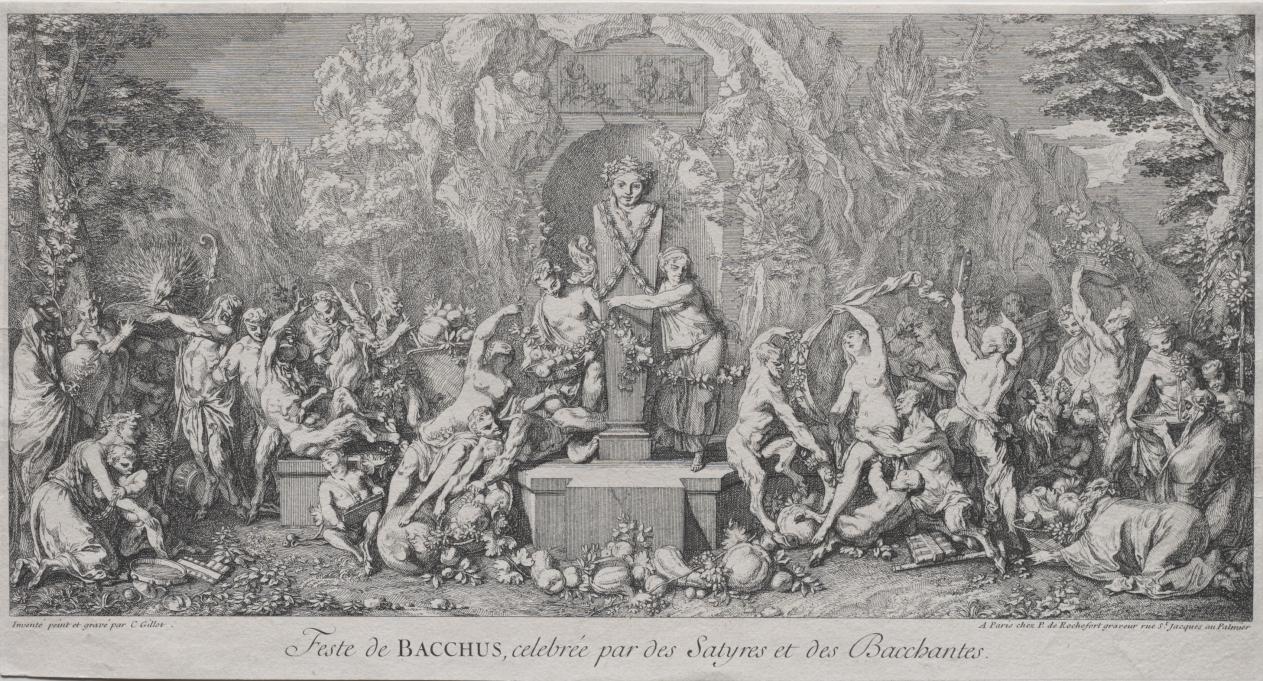
The Four Festivals: Festival of Bacchus
Claude GillotLinkedCulture matchlcp-6ee4753761c0
- Date
- c. 1693–1715
- Medium
- etching and engraving
- Culture
- France, 18th century
- Department
- Prints
- Institution
- Cleveland Museum of Art
- Object ID
- 152864
From the Cleveland Museum of Art record
The principal source of inspiration for Claude Gillot, while working in Paris during the final years of the reign of Louis XIV (r. 1643–1715), was popular theater. His staged and precisely choreographed bacchanalia scene consists of music, dancing bacchants, drinking, and plentiful food, all symmetrically composed around a herm (a stone pillar topped by the head of Bacchus). According to written sources in Gillot’s time, a herm marked a site in ancient Greece where rites to Bacchus occurred. At the far right, a young satyr holds a thyrsus—a wand decorated with grape leaves and ivy—a bacchanalian symbol of fertility and hedonism. The lovely bacchantes (female followers of Bacchus) dancing throughout the composition appear in contrast with the beastly satyrs and fauns. The term bacchante could also be used to describe an intoxicated and libidinous woman in less mythological contexts.
The authoritative record is held by Cleveland Museum of Art. LinkedCulture surfaces this object and its connections; it does not alter institutional metadata.
Get printable QR codesHide QR codes
Open QR codes for this object page and the museum record. They stay collapsed until needed.
Provenance & credit
As published by the source institution. Coverage varies — not every institution's open-data feed includes ownership history.
- Credit line
- In memory of Jane Millar Harris and John H. Harris
- Provenance
- ?–1985: (Hill–Stone, Inc., New York, NY, sold to the Cleveland Museum of Art, Cleveland, OH) | July 8, 1985–: The Cleveland Museum of Art, Cleveland, OH
Related across collections
Semantically similar works from Cleveland Museum of Art and other institutions.