Cleveland Museum of Art
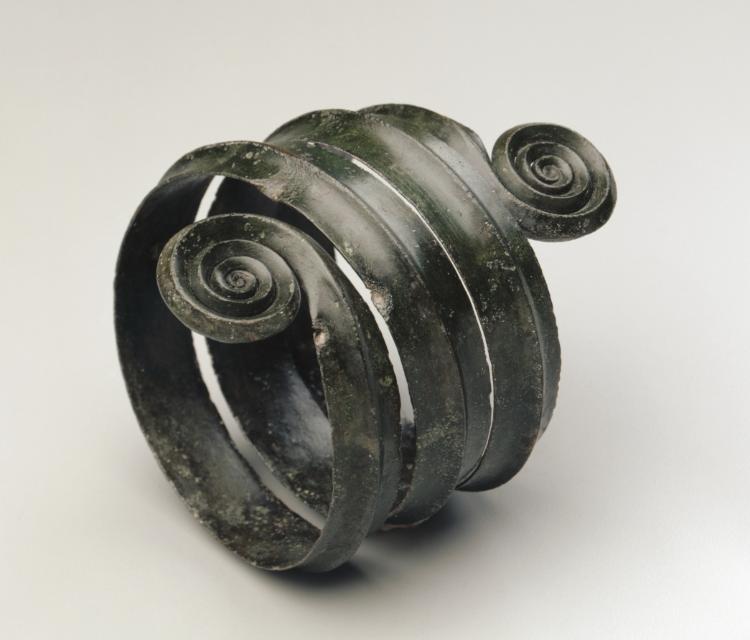
Turned Armilla
- Date
- c. 1500 BCE
- Medium
- bronze, wrought
- Culture
- Hungary, Bronze Age
- Department
- Greek and Roman Art
- Institution
- Cleveland Museum of Art
Europe. As the spiral mimics forms found in nature - specifically in nautilus shells - it is the basis for logarithmic measures of progression in measurement and growth, which in turn help establish the Fibonacci sequence. Through this sequence we can analyze the phenomenon of spiral designs, specifically in nautilus shells, where the radius of each new chamber grows at a rate determined by a specific proportion to the previous one. This armilla or arm ornament has a ridge along the spine, ending in a spiral at both ends.
The authoritative record is held by Cleveland Museum of Art. LinkedCulture surfaces this object and its connections; it does not alter institutional metadata.
Related across collections
Semantically similar works from Cleveland Museum of Art and other institutions.
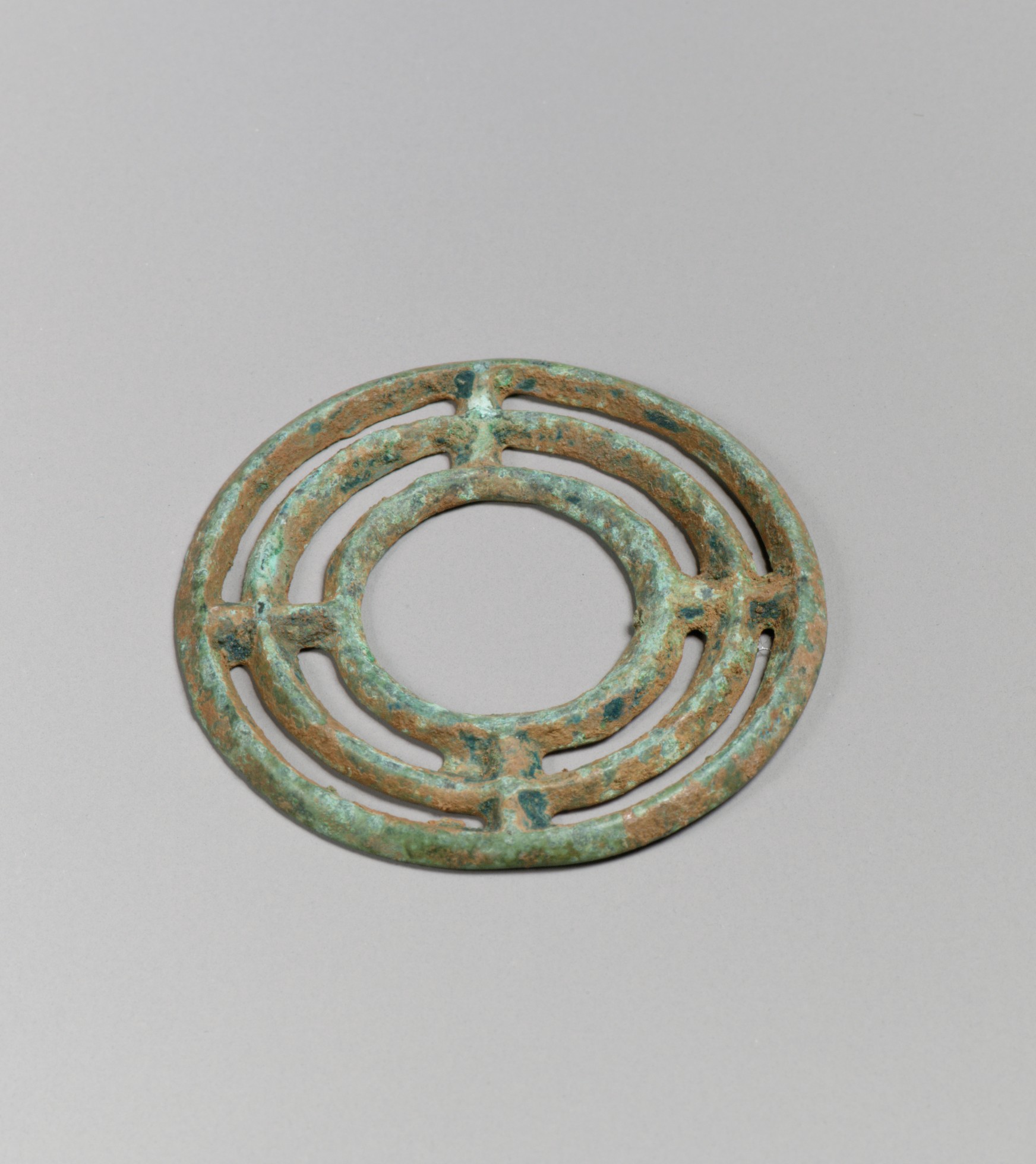
Bronze necklace spiral
The Metropolitan Museum of Art

Concours internationale de gymnastique à Philippeville (Belgique, province de Namur), 13-14 août 1899
Musée Carnavalet, Histoire de Paris

Fédération des propagateurs de la gymnastique scolaire
Musée Carnavalet, Histoire de Paris
Fédération des propagateurs de la gymnastique scolaire
Musée Carnavalet, Histoire de Paris

Le cercle "Travail et Progrès" lors de la fête de gymnastique, Bruxelles, 21 juin 1884
Musée Carnavalet, Histoire de Paris

Le cercle "Travail et Progrès" lors de la fête de gymnastique, Bruxelles, 21 juin 1884
Musée Carnavalet, Histoire de Paris

Fête du centenaire des vrais amis de l'Union et du Progrès réunis de Bruxelles, 1882
Musée Carnavalet, Histoire de Paris

Séance annuelle de l'académie de Reims, 25 juillet 1850
Musée Carnavalet, Histoire de Paris

Fibule, époque la Tène
Musée Carnavalet, Histoire de Paris

Fibule, époque la Tène
Musée Carnavalet, Histoire de Paris
Fête de gymnastique organisée par le cercle Travail et Progrès, 21 juillet 1884
Musée Carnavalet, Histoire de Paris

Récompense aux concours de gymnastique
Musée Carnavalet, Histoire de Paris