Cleveland Museum of Art
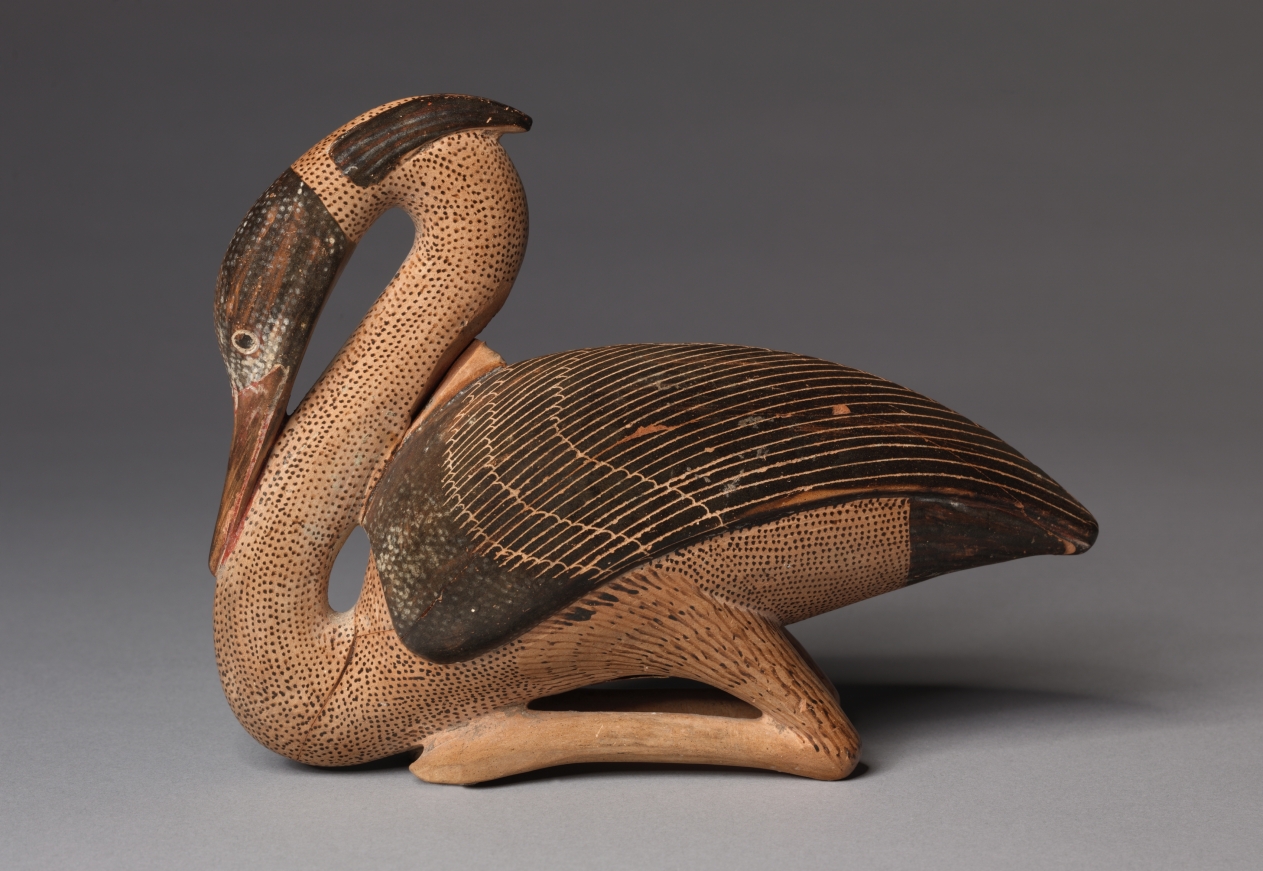
Heron-Shaped Figure Vase (Oil Vessel)
Robertson's GroupLinkedCulture matchlcp-a92001a506e5
- Date
- c. 580 BCE
- Medium
- ceramic
- Culture
- East Greek, probably Milesian
- Department
- Greek and Roman Art
- Institution
- Cleveland Museum of Art
- Object ID
- 154253
From the Cleveland Museum of Art record
In the 6th century BC, a particular type of vessel for scented oil was produced in Corinth, Rhodes, and along the western coast of Asia Minor. Primarily animal forms, they are made of unglazed fired clay with painted decoration. This example in the form of a heron was crafted by a Milesian potter. The bird rests with its delicately curving and counter-curving neck nearly touching the ground; the feathers are defined by incision and painted black slip. An aryballos is a vessel that contained scented oils, this one in the shape of a heron.
The authoritative record is held by Cleveland Museum of Art. LinkedCulture surfaces this object and its connections; it does not alter institutional metadata.
Get printable QR codesHide QR codes
Open QR codes for this object page and the museum record. They stay collapsed until needed.
Provenance & credit
As published by the source institution. Coverage varies — not every institution's open-data feed includes ownership history.
- Credit line
- John L. Severance Fund
- Provenance
- 1988-: The Cleveland Museum of Art, Cleveland, OH
Related across collections
Semantically similar works from Cleveland Museum of Art and other institutions.