Cleveland Museum of Art
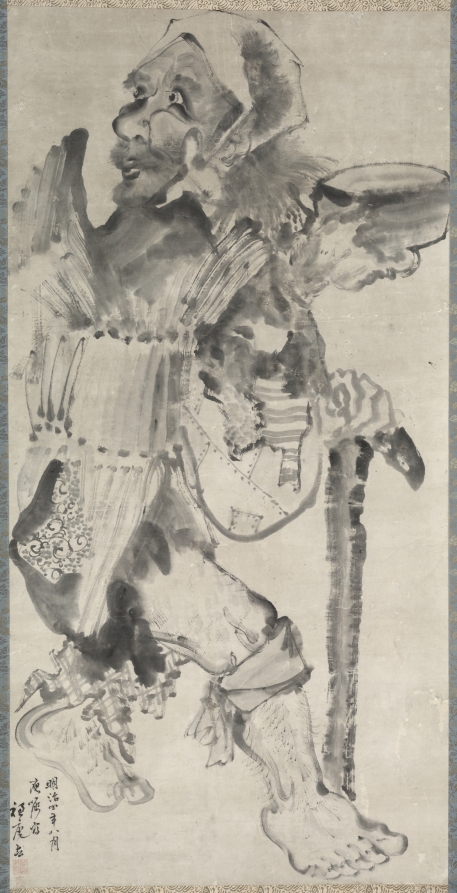
Beggar (Kojiki)
Hirafuku SuianLinkedCulture matchlcp-94b34c55a114
- Date
- 1871
- Medium
- hanging scroll; ink on paper
- Culture
- Japan, Meiji period (1868–1912)
- Department
- Japanese Art
- Institution
- Cleveland Museum of Art
- Object ID
- 154263
From the Cleveland Museum of Art record
The Japanese term for beggar, kojiki, derives from the word kotsujiki, which refers to Buddhist monks taking bowls from door to door to request sustenance. The son of the artist Suian Bunrō, Suian Hirafuku was born in Kakunodate in Japan’s northern Akita prefecture. When he was 16, he went to study in Kyoto. In 1880 he took first place with another painting titled Beggar at the third Akita Prefectural Industrial Exposition, and in 1890, he took second prize for technical achievement with Nursing Tigress at the third National Industrial Exposition.
The authoritative record is held by Cleveland Museum of Art. LinkedCulture surfaces this object and its connections; it does not alter institutional metadata.
Get printable QR codesHide QR codes
Open QR codes for this object page and the museum record. They stay collapsed until needed.
Provenance & credit
As published by the source institution. Coverage varies — not every institution's open-data feed includes ownership history.
- Credit line
- John L. Severance Fund
Related across collections
Semantically similar works from Cleveland Museum of Art and other institutions.