Cleveland Museum of Art
Headdress
- Date
- early 1900s
- Medium
- Wood, rawhide, cane, paint, bone, natural fiber, and metal
- Culture
- Africa, West Africa, Nigeria, Ejagham-style maker
- Department
- African Art
- Institution
- Cleveland Museum of Art
- Object ID
- 155510
From the Cleveland Museum of Art record
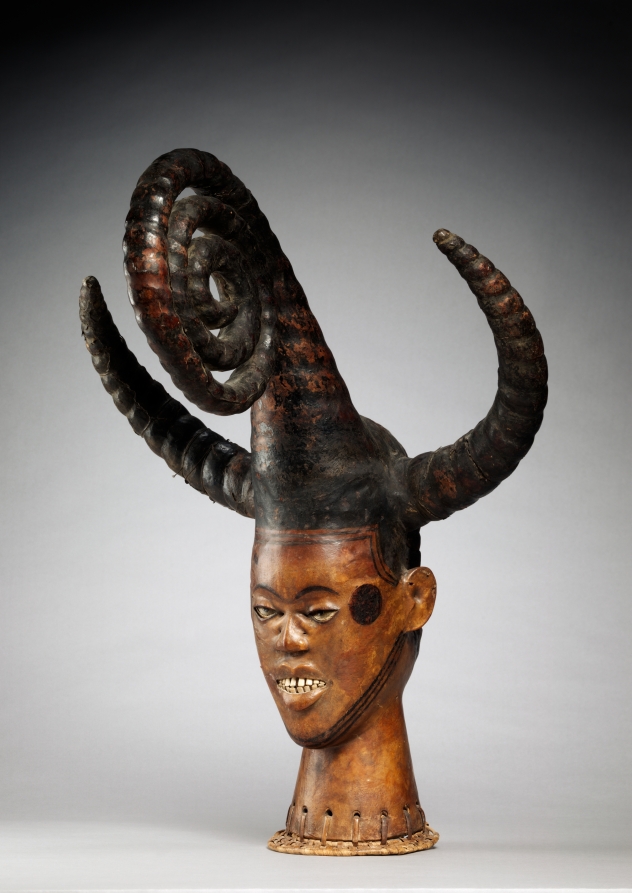
Headdresses or crest masks made of antelope skin stretched over a carved head are a distinctive art form of the Cross River region in southeastern Nigeria and western Cameroon. Worldwide, this practice is unique. This female evocation of ideal feminine beauty was most probably worn by an Ejagham woman in the context of a female society called Ekpa, which was responsible for girls' education in preparation for marriage. The headdress represents a girl who evokes ideal female beauty and is ready for marriage. The depicted hairstyle was worn during the coming-out ceremony following the girls’ seclusion. Look closely along the sides of the nostrils, upper eyelids, and around the mouth. The impressions of twisted yarn shows how the hide was carefully held in place while it dried to precisely fit the sculpted wooden core.
The authoritative record is held by Cleveland Museum of Art. LinkedCulture surfaces this object and its connections; it does not alter institutional metadata.
Get printable QR codesHide QR codes
Open QR codes for this object page and the museum record. They stay collapsed until needed.
Provenance & credit
As published by the source institution. Coverage varies — not every institution's open-data feed includes ownership history.
- Credit line
- Andrew R. and Martha Holden Jennings Fund
- Provenance
- possibly 1970s: Pace Gallery, New York, NY | Private Collection, New York | Private Collection, London | ?–1990: Entwistle and Co., Ltd., London, England, sold to the Cleveland Museum of Art | 1990–: Cleveland Museum of Art, Cleveland, OH
Related across collections
Semantically similar works from Cleveland Museum of Art and other institutions.