Cleveland Museum of Art
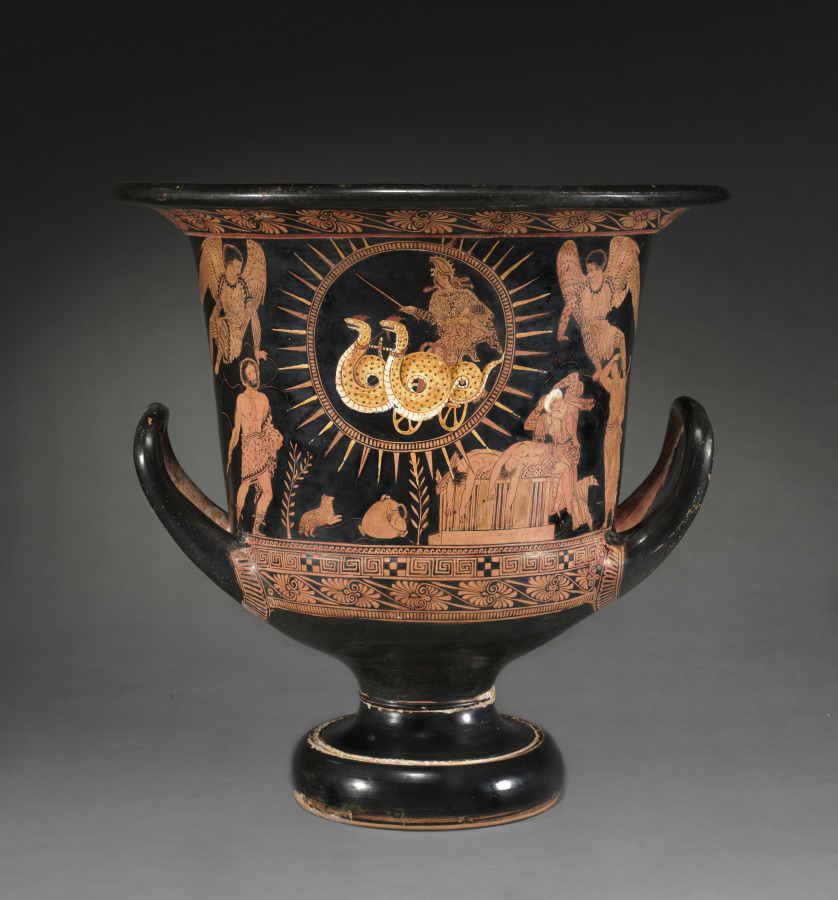
Red-Figure Calyx-Krater (Mixing Vessel): Medea in Chariot (A); Telephos with Baby Orestes (B)
Policoro PainterLinkedCulture matchlcp-0c7ddbc2a68f
- Date
- c. 400 BCE
- Medium
- ceramic
- Culture
- South Italian, Lucanian
- Department
- Greek and Roman Art
- Institution
- Cleveland Museum of Art
- Object ID
- 155665
From the Cleveland Museum of Art record
The remarkable scene on the front of this vase relates to the famous tragedy Medea , written by Euripides and first produced in Athens in 431 BC. Framed in the center by a halo (recalling her sun god grandfather Helios), the sorceress Medea flies off in a dragon-drawn chariot. Seeking revenge against her husband Jason, leader of the Argonauts, Medea has just slain their two children. Two Furies flank her, while Jason and a distraught nurse and teacher approach the bodies on the altar below. A different tragedy unfolds on the other side of the vase, from Euripides’s Telephos (438 BC). The wounded warrior Telephos holds the baby Orestes hostage at an altar, with Agamemnon and Clytemnestra rushing to save their son. This vase includes scenes connected to two Athenian tragedies dealing with children— Medea and Telephos .
The authoritative record is held by Cleveland Museum of Art. LinkedCulture surfaces this object and its connections; it does not alter institutional metadata.
Get printable QR codesHide QR codes
Open QR codes for this object page and the museum record. They stay collapsed until needed.
Provenance & credit
As published by the source institution. Coverage varies — not every institution's open-data feed includes ownership history.
- Credit line
- Leonard C. Hanna Jr. Fund
- Provenance
- 1991-: The Cleveland Museum of Art, Cleveland, OH
Related across collections
Semantically similar works from Cleveland Museum of Art and other institutions.