Cleveland Museum of Art
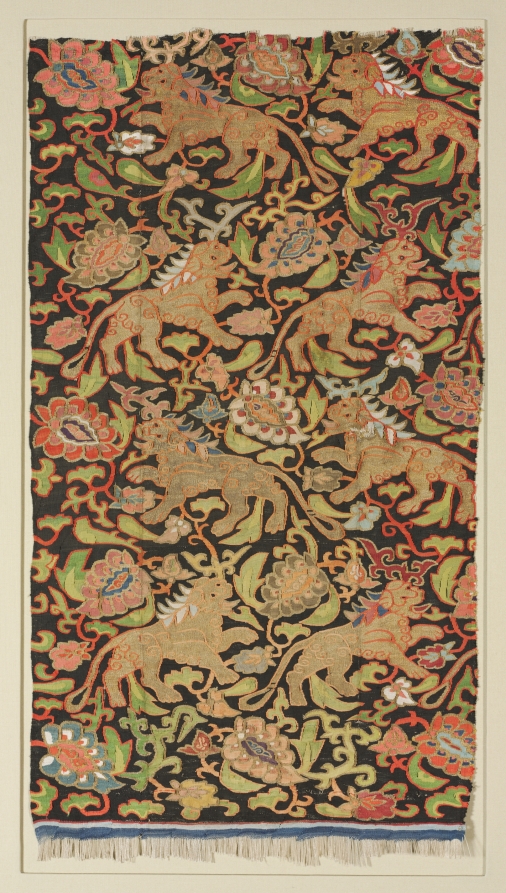
Tapestry with golden lions and palmettes
- Date
- 1200s or earlier
- Medium
- silk, gold thread; tapestry weave
- Culture
- Central Asia
- Department
- Textiles
- Institution
- Cleveland Museum of Art
This reversible tapestry ( kesi ) fragment, woven with silk and metal thread, is a section from yardage likely intended for a garment, but no contemporary paintings exist to confirm this. A fringe of warps and a striped starting edge are preserved at the bottom of this fragment, as is a selvage along the left edge. Iranian golden lions, traditional symbols of royalty, are depicted amid large palmette leaves on vines. This kesi is different from other Central Asian silk kesi in the repetition of lions and palmettes in horizontal rows, facing alternate directions in an asymmetrical Chinese-inspired layout. But the depiction of lions with parted manes and tilted heads dates from the Sasanian dynasty of Iran (226–637 CE). The palmettes are common to both the Iranian world and Central Asia. This kesi may have been woven by Uyghurs living in the vicinity of Khotan, where the influence of Iranian culture was strong. Dye analysis has been done on some of the colored yarns in this fragment. The orange, scarlet, and pink dye comes from the safflower plant, the red and darker pink dye from the bark of a small evergreen tree called the China brasiliensis , and the blue dye from the indigo plant.
The authoritative record is held by Cleveland Museum of Art. LinkedCulture surfaces this object and its connections; it does not alter institutional metadata.
Get printable QR codesHide QR codes
Open QR codes for this object page and the museum record. They stay collapsed until needed.
Related across collections
Semantically similar works from Cleveland Museum of Art and other institutions.