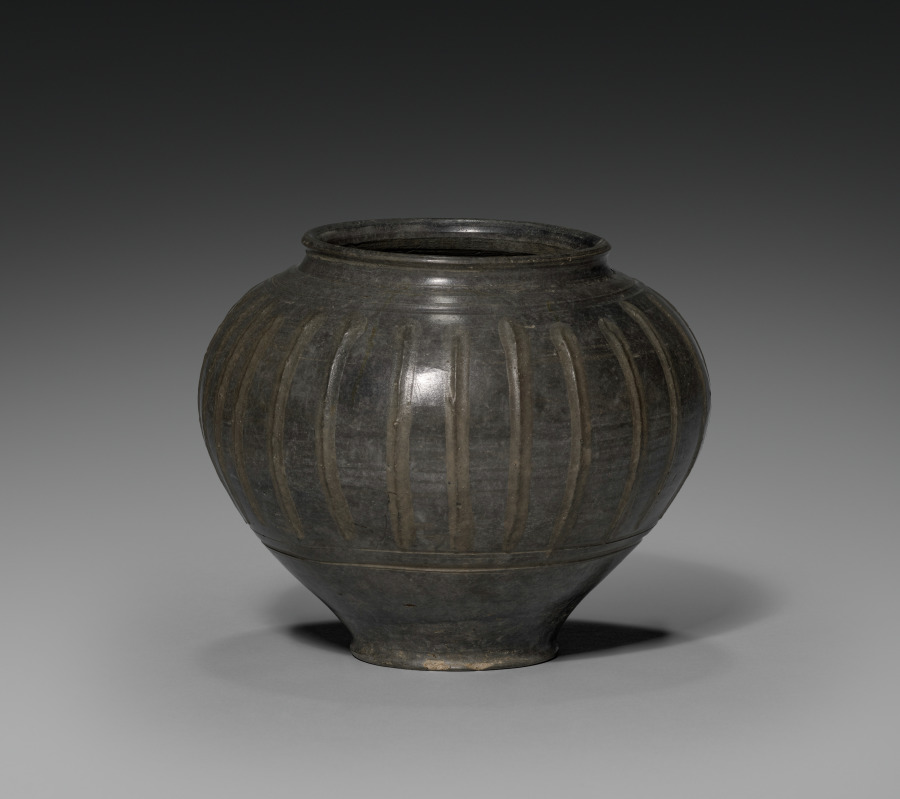
Cleveland Museum of Art
Pot with Cover
- Date
- 100s CE
- Medium
- tan ware with gray and some brown burnished slip
- Culture
- Rhenish (Cologne), Gallo-Roman, 2nd century
- Department
- Greek and Roman Art
- Institution
- Cleveland Museum of Art
The work of Roman potters is very different from that of their Greek predecessors. Greek clay had allowed potters to throw thin-walled ceramics. Slips (paint) made from this clay had permitted painters to draw complicated scenes and figures with infinite care. As the Roman empire grew to include Germany and Britain, local clays found there were better for producing heavier pottery with three-dimensional decoration like the vases shown here. These jars--decorated with a human face (1992.125), animals (1992.126), a feather pattern (1992.183), a wheat pattern (1992.124), and vertical ribs (1992.127,a) were probably filled with foods or liquids and given either as gifts to an elaborate burial or as offerings to a god's shrine.
The authoritative record is held by Cleveland Museum of Art. LinkedCulture surfaces this object and its connections; it does not alter institutional metadata.
Related across collections
Semantically similar works from Cleveland Museum of Art and other institutions.
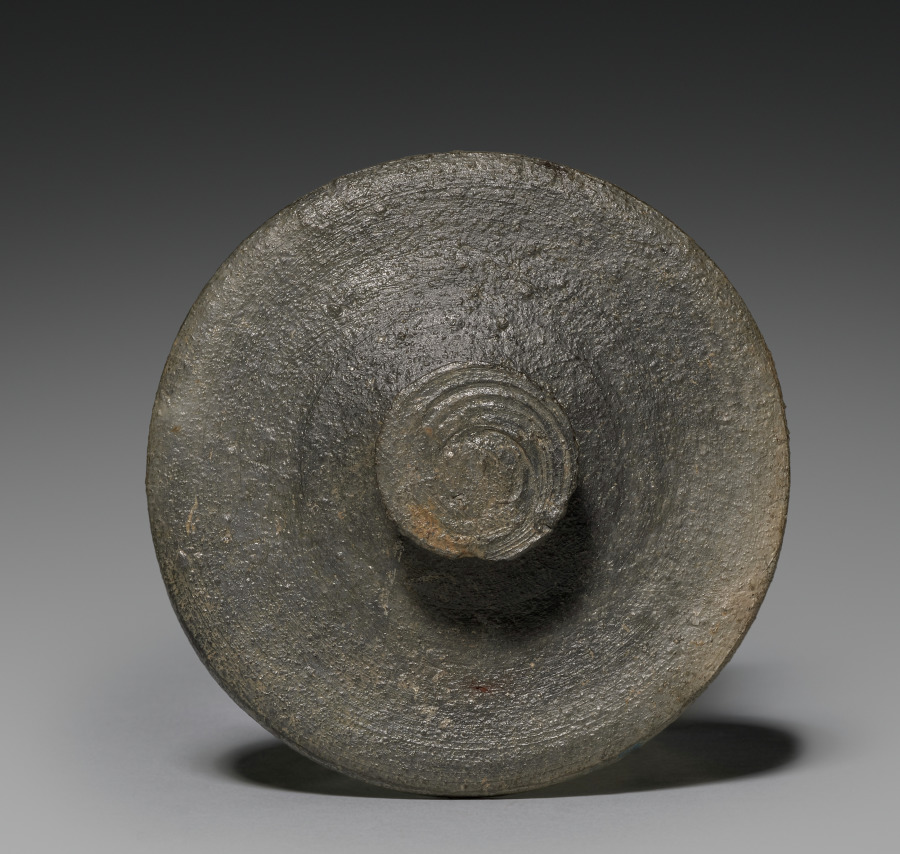
Pot with Cover (lid)
Cleveland Museum of Art
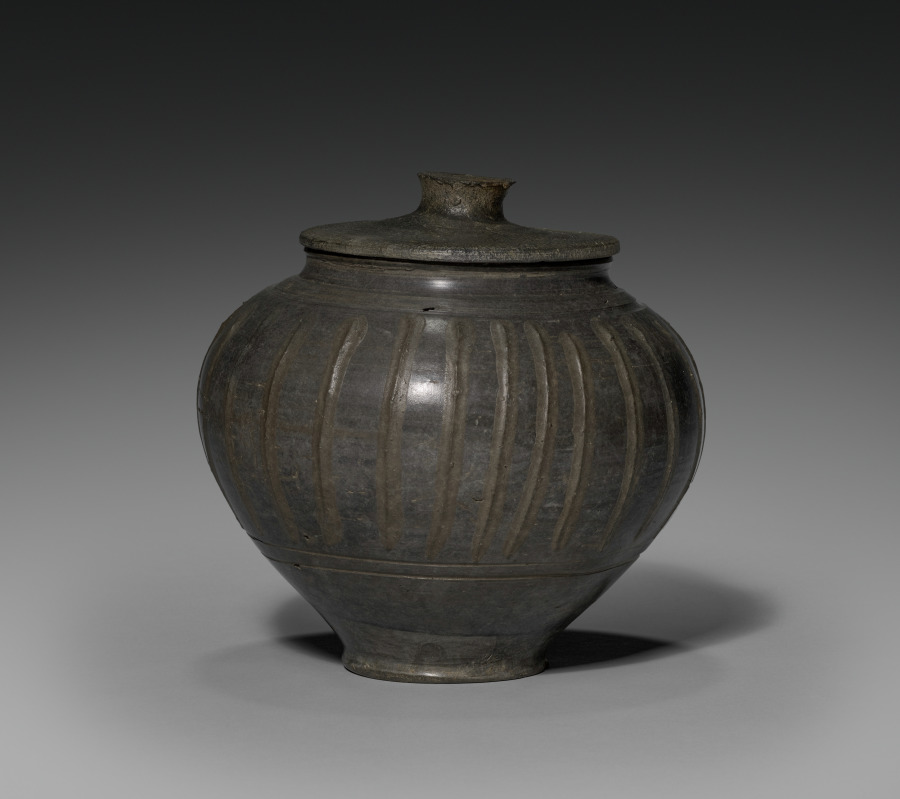
Pot with Cover
Cleveland Museum of Art
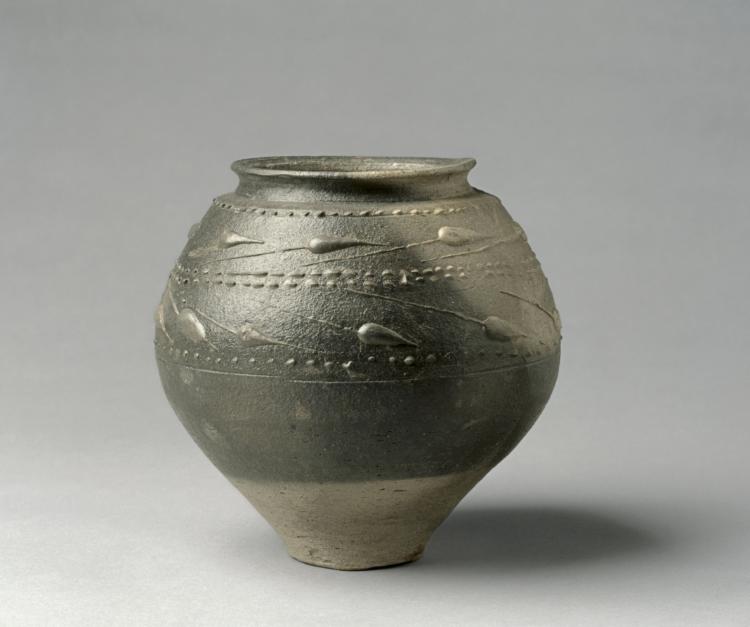
Globular Pot
Cleveland Museum of Art
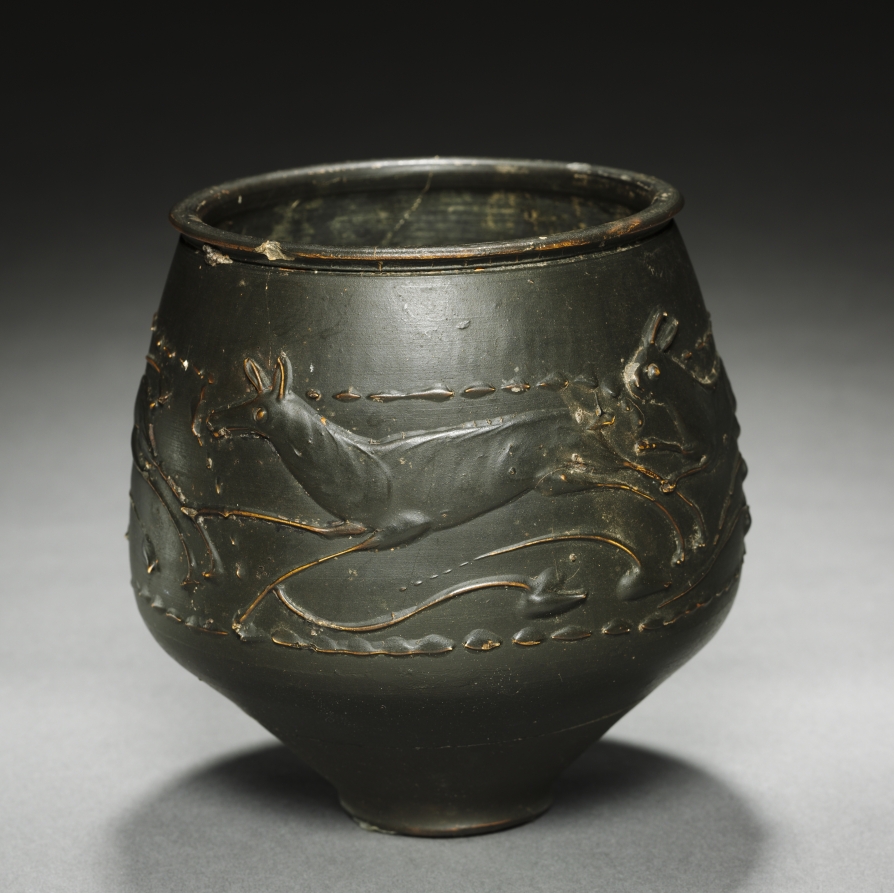
"Caster Ware" Vase with Hunt Scene
Cleveland Museum of Art

Lead-Glazed Beaker
Getty Museum
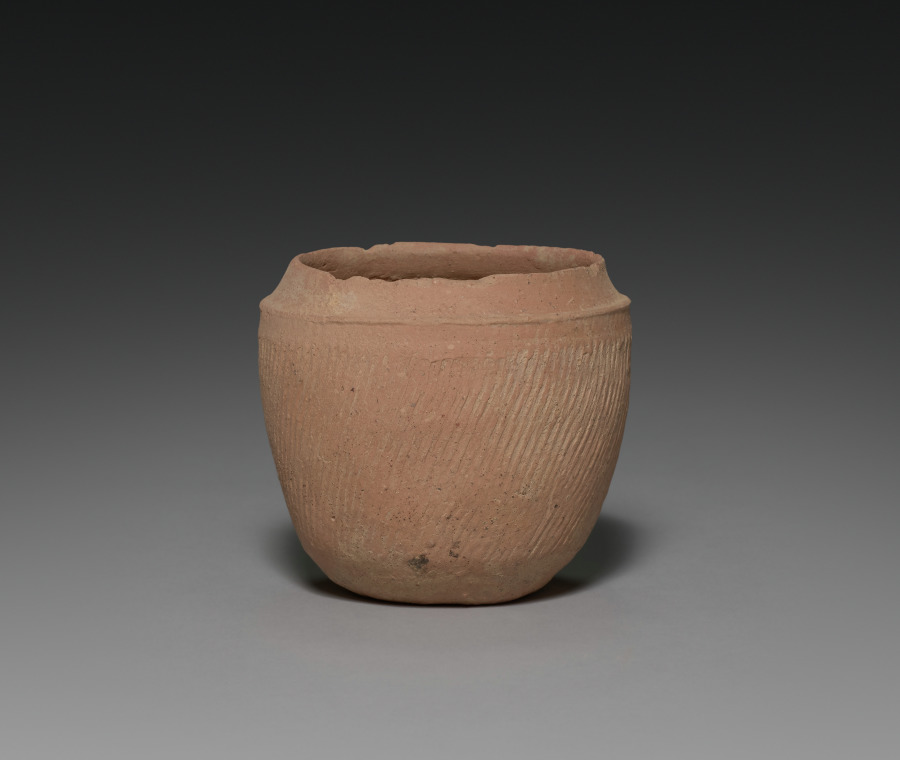
Covered Jar with Horn Handle
Cleveland Museum of Art
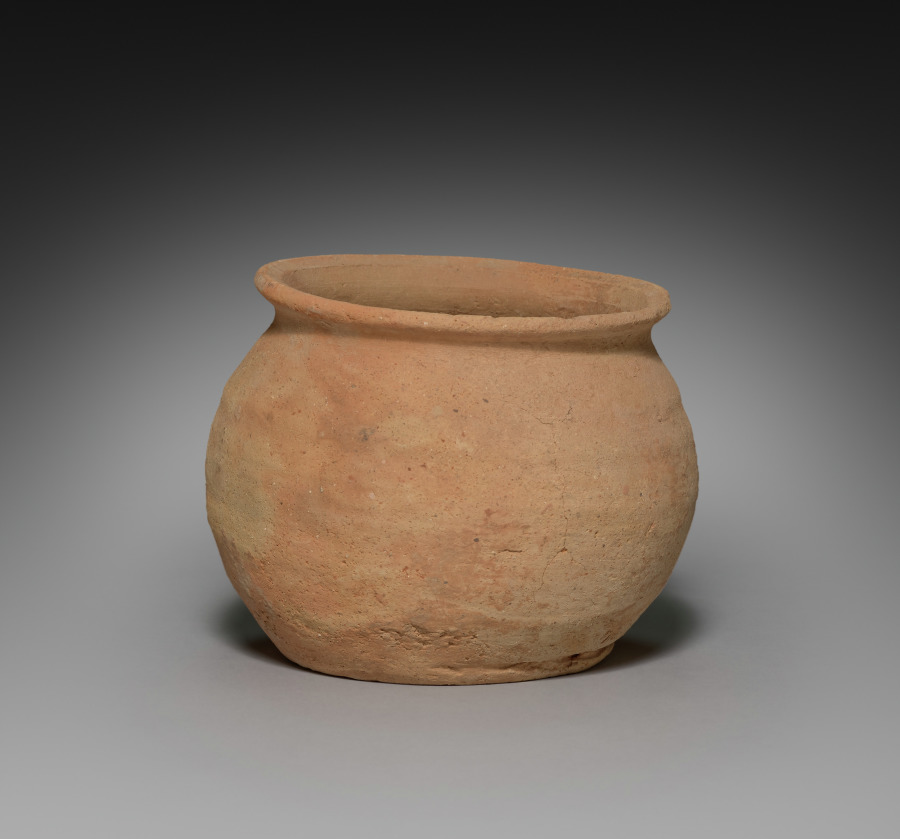
Covered Jar with Horn Handle
Cleveland Museum of Art
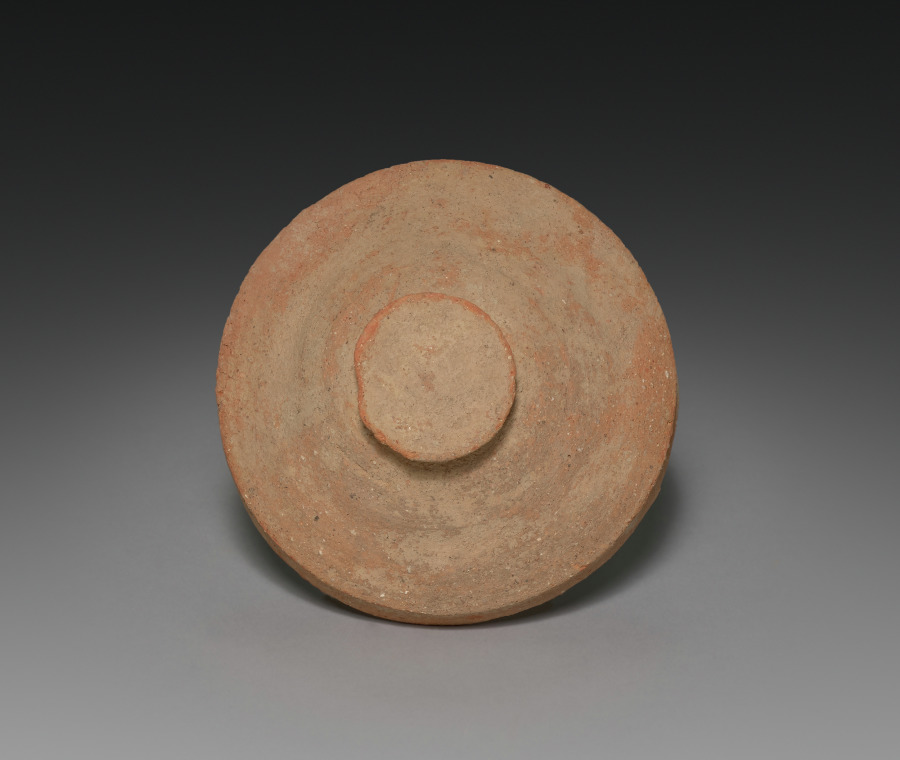
Covered Jar with Horn Handle (lid)
Cleveland Museum of Art
Jar
Art Institute of Chicago

Jar and Cover
Minneapolis Institute of Art
Covered Jar with Horn Handle (lid)
Cleveland Museum of Art
Jar
Art Institute of Chicago