Cleveland Museum of Art
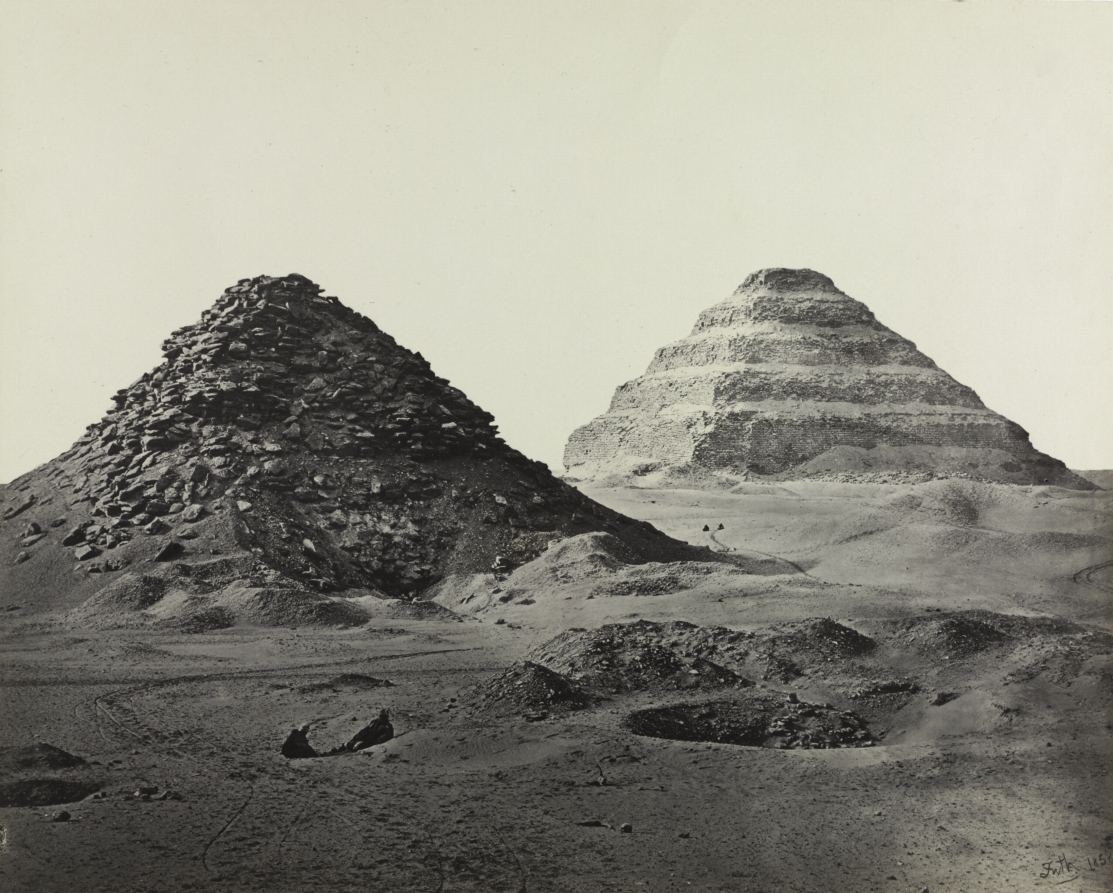
The Pyramids of Saqqara, from the Northeast
Francis Frith
- Date
- 1858
- Medium
- albumen print from wet collodion negative
- Culture
- England, 19th century
- Department
- Photography
- Institution
- Cleveland Museum of Art
Frith was the first photographer in Egypt to successfully use the wet collodion process, introduced in 1851. Its glass plate negatives yielded sharper, more detailed images than paper ones. He even created mammoth plate prints, as this size is called, which required equally large glass plate negatives. Pursuing the process’s exacting chemistry in Egypt’s scorching sunlight was trying. Frith sometimes sought refuge in tombs for the cool air and darkness to process his plates. “Pushing myself backwards upon my hands and knees, into a damp slimy rock-tomb . . . I prepared my pictures by candlelight in one of the interior chambers. . . . The floor was covered . . . with an impalpable ill flavored dust, which rose in clouds as we moved; from the roof were suspended groups of fetid bats.”
The authoritative record is held by Cleveland Museum of Art. LinkedCulture surfaces this object and its connections; it does not alter institutional metadata.
Related across collections
Semantically similar works from Cleveland Museum of Art and other institutions.

Lower Egypt, Thebes, and The Pyramids
Getty Museum

Lower Egypt, Thebes and The Pyramids.
Getty Museum
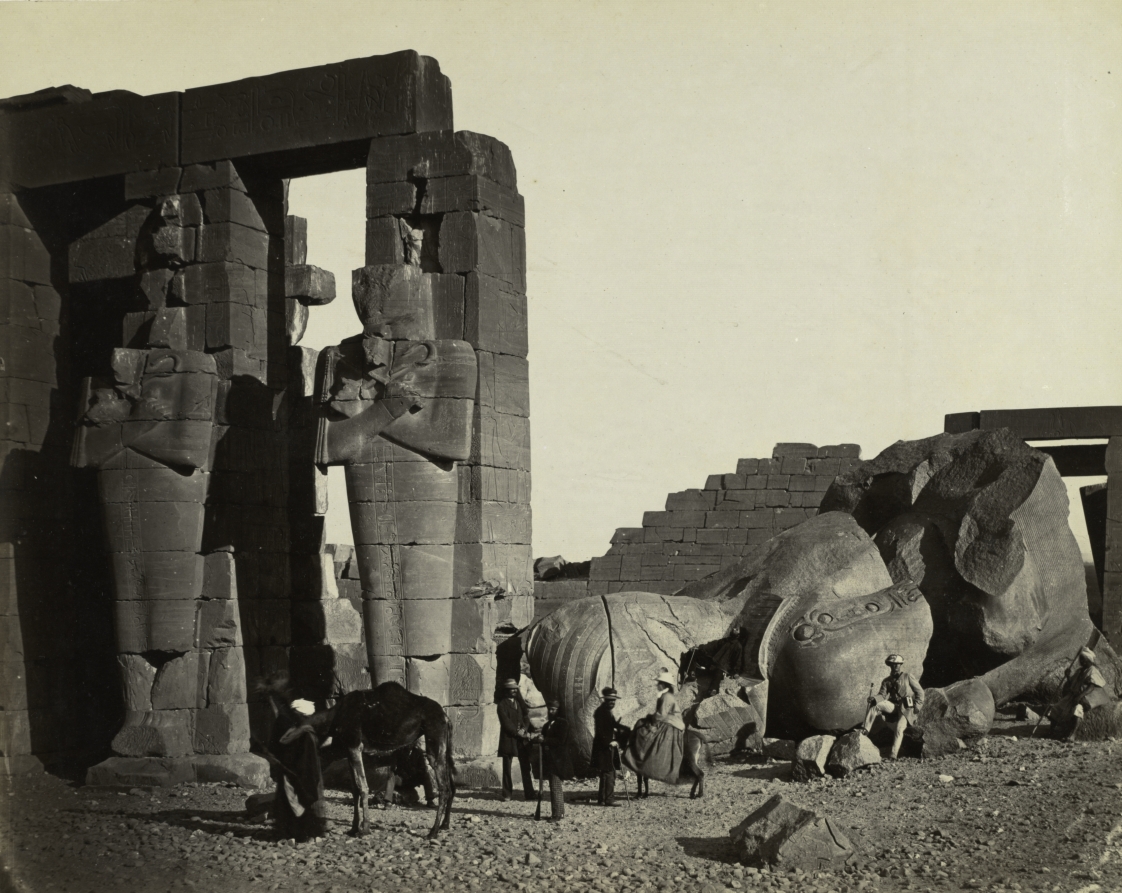
Fallen Statue at the Ramesseum, Thebes
Cleveland Museum of Art
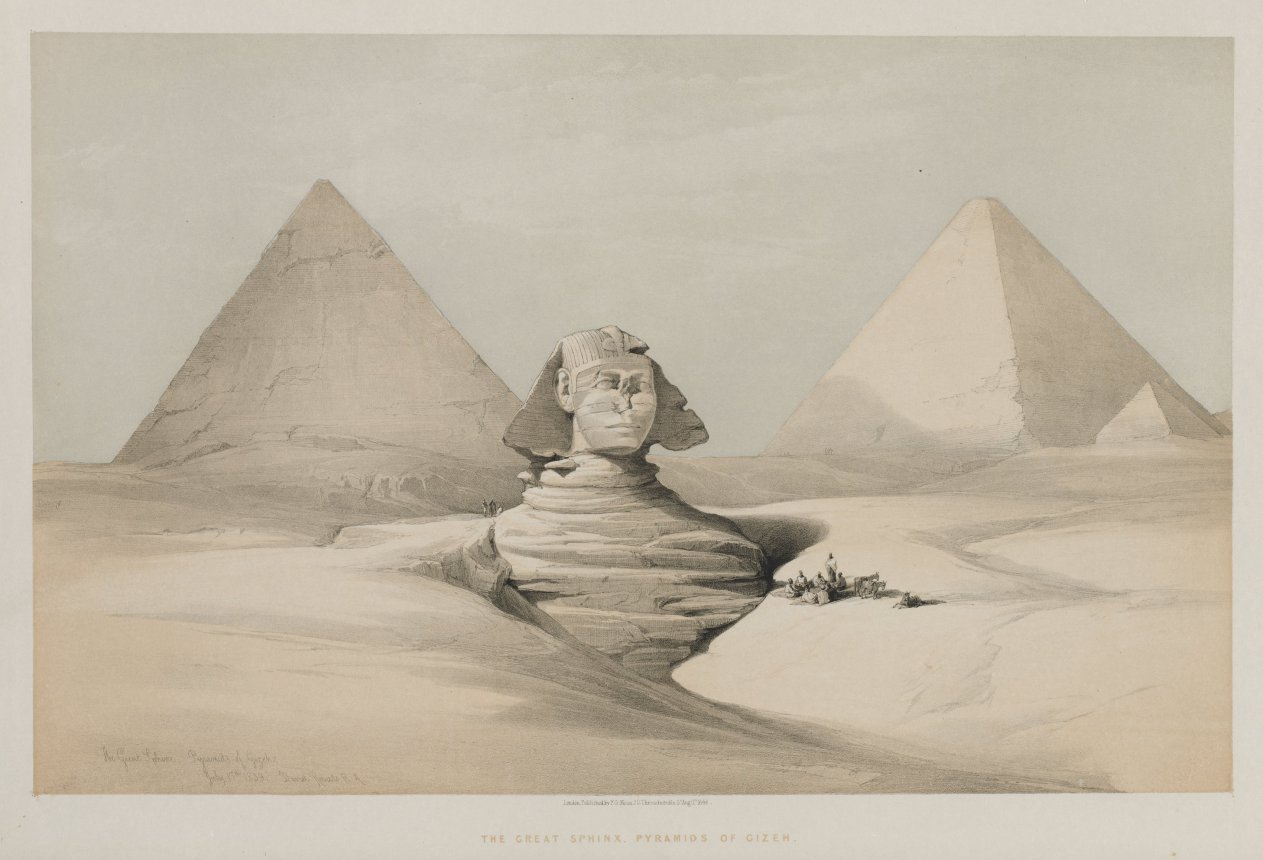
Egypt and Nubia, Volume I: The Great Sphinx, Pyramids of Gezeeh
Cleveland Museum of Art

The Great Pyramid and the Great Sphinx, Egypt
Minneapolis Institute of Art

Pyramids of Geezeh
Minneapolis Institute of Art
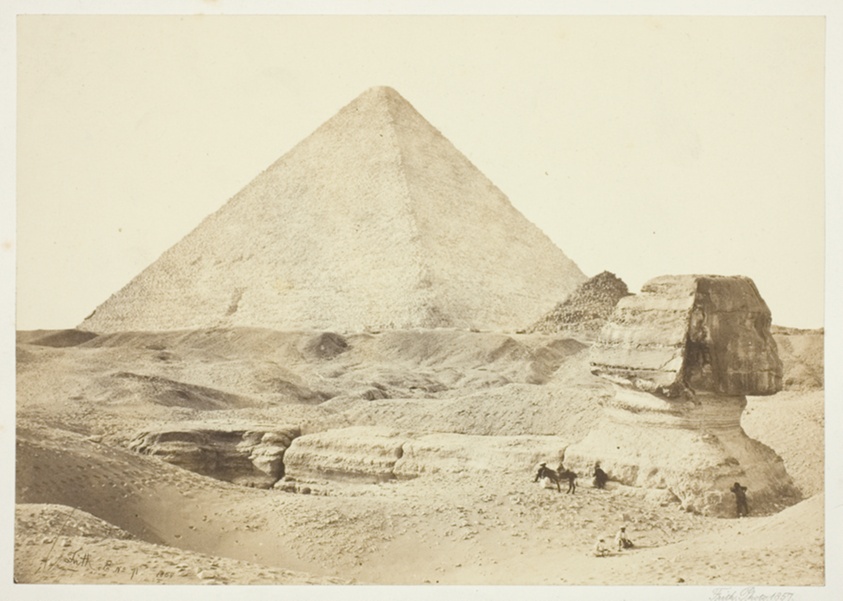
The Sphynx and Great Pyramid
Art Institute of Chicago

The Great Sphinx, Pyramids of Gizeh
Minneapolis Institute of Art

Cairo from the Gate of Citzenib, Looking Towards the Desert of Suez
Minneapolis Institute of Art
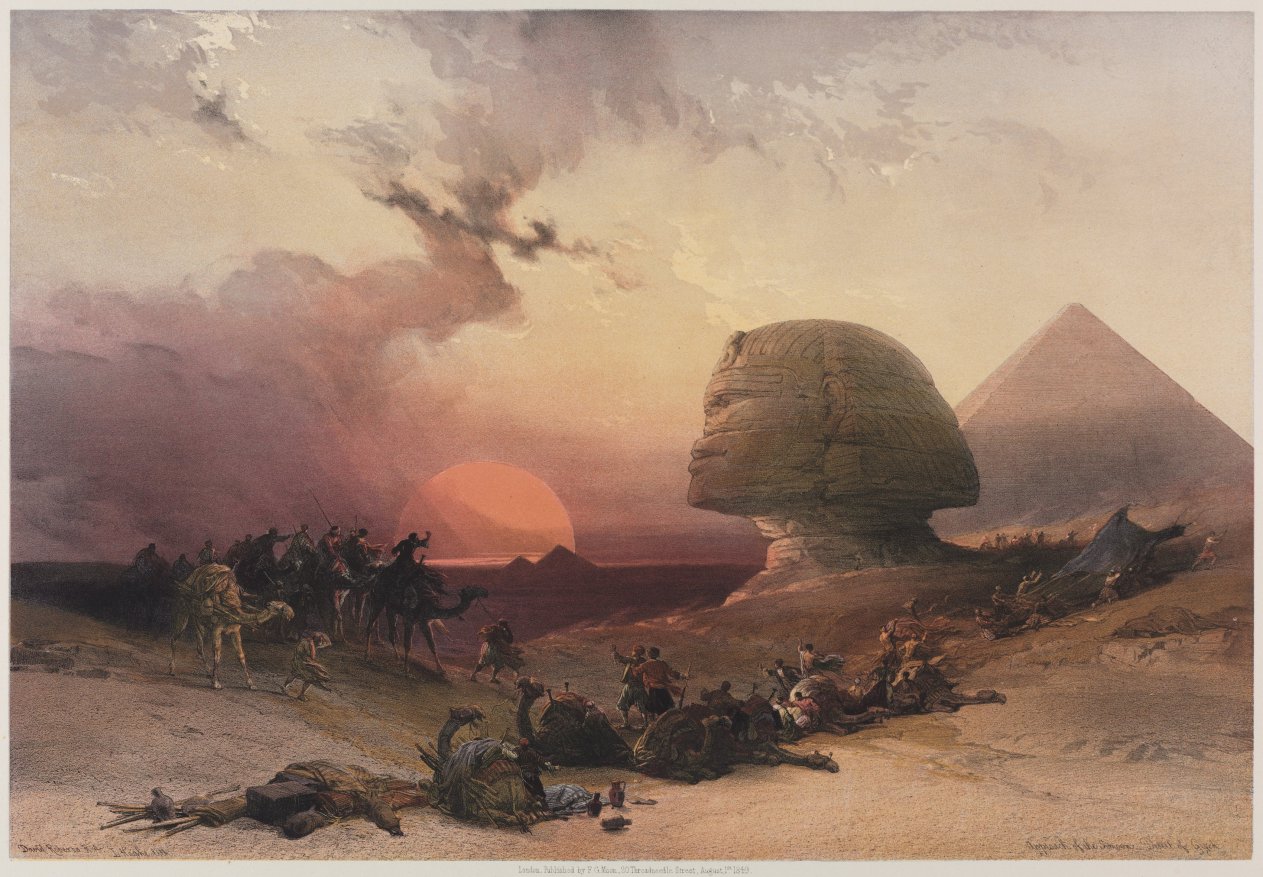
Egypt and Nubia, Volume III: Approach of the Simoon-Desert at Gizeh
Cleveland Museum of Art

The Great Pyramid and the Sphinx
Getty Museum

Interview with the Viceroy of Egypt, at His Palace, Alexandria, May 12th, 1839
Minneapolis Institute of Art