Cleveland Museum of Art
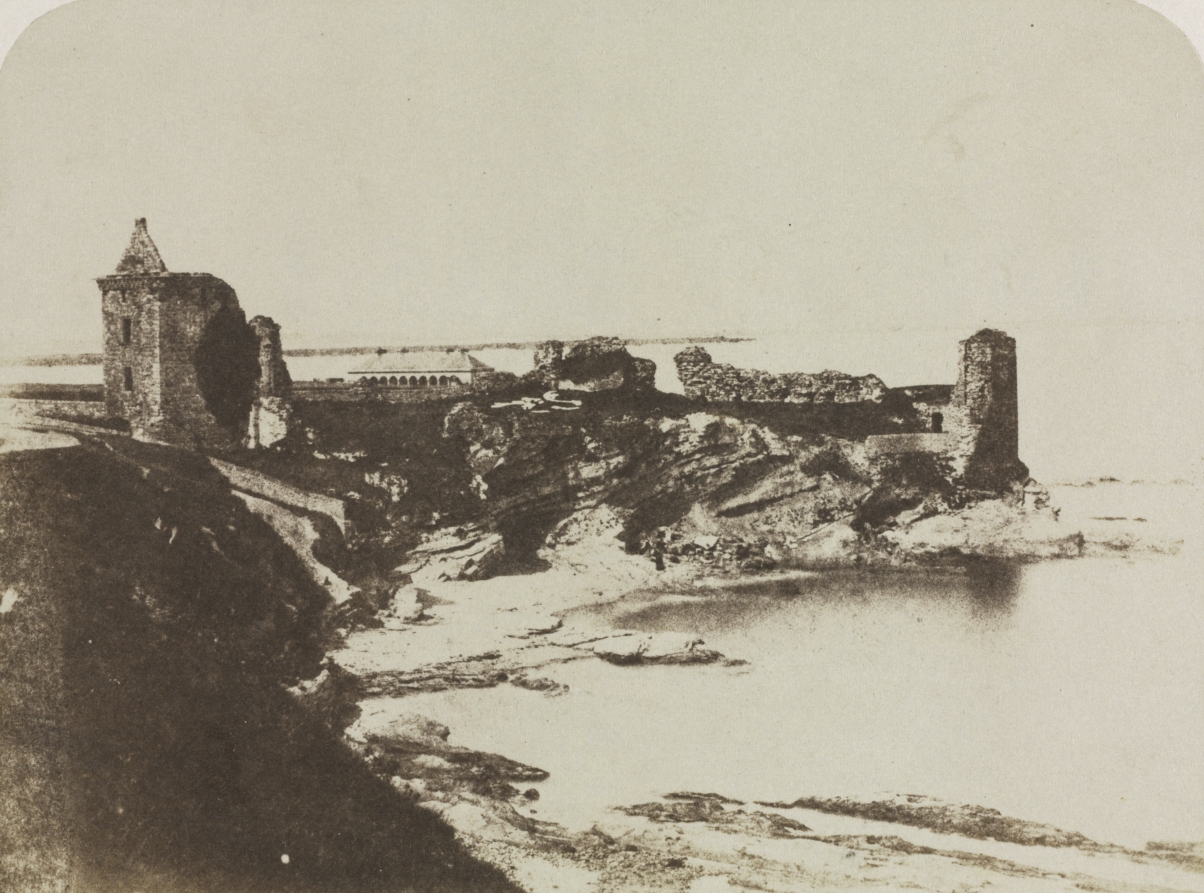
St. Andrews Castle, from the Southeast
David Octavius HillLinkedCulture matchlcp-8f6e4ebfd998
- Date
- 1846
- Medium
- salted paper print from calotype negative
- Culture
- England, 19th century
- Department
- Photography
- Institution
- Cleveland Museum of Art
- Object ID
- 159833
This photograph is from a body of work created in 1846 by the pioneering Scottish photographers David Octavius Hill and Robert Adamson. Their ambitious campaign to record the principal buildings and sites of the historic Scottish town of St. Andrews resulted in over 70 known images. From an elevated viewpoint, they made three exposures of this picturesque vista of the ruins of St. Andrews Castle, located on a rocky shoreline jutting into the North Sea. This poetic, evocative print, which may be unique, is notable for its broad areas to light and dark. The diagonal shadow in the left foreground and the curving rock formations guide the viewer's interest to the remains of the castle. Its tall, solid forms occupy the empty space of the sea and sky. The photographers participated in a wide-ranging, contemporary interest in the architecture, landscape, and history of Scotland. St. Andrews was a particular favorite, since it was the ancient ecclesiastical capital of Scotland and the seat of the oldest university. Built around 1200, the castle was the residence of the bishops and archbishops of St. Andrews. It was last rebuilt in the 17th century but was subsequently neglected.
The authoritative record is held by Cleveland Museum of Art. LinkedCulture surfaces this object and its connections; it does not alter institutional metadata.
Get printable QR codesHide QR codes
Open QR codes for this object page and the museum record. They stay collapsed until needed.
Provenance & credit
As published by the source institution. Coverage varies — not every institution's open-data feed includes ownership history.
- Credit line
- John L. Severance Fund
Related across collections
Semantically similar works from Cleveland Museum of Art and other institutions.