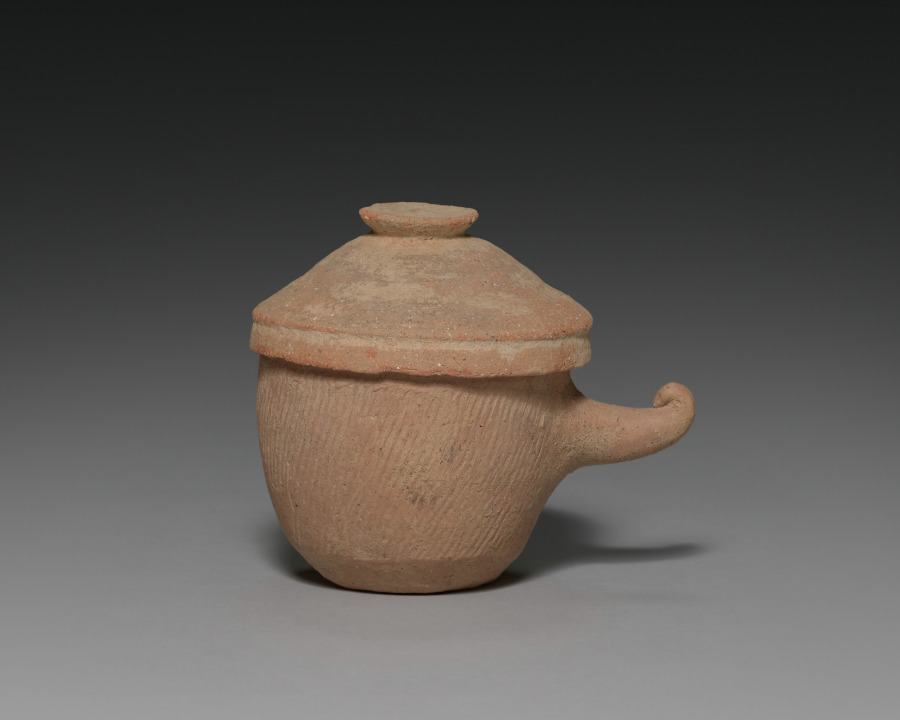
Cleveland Museum of Art
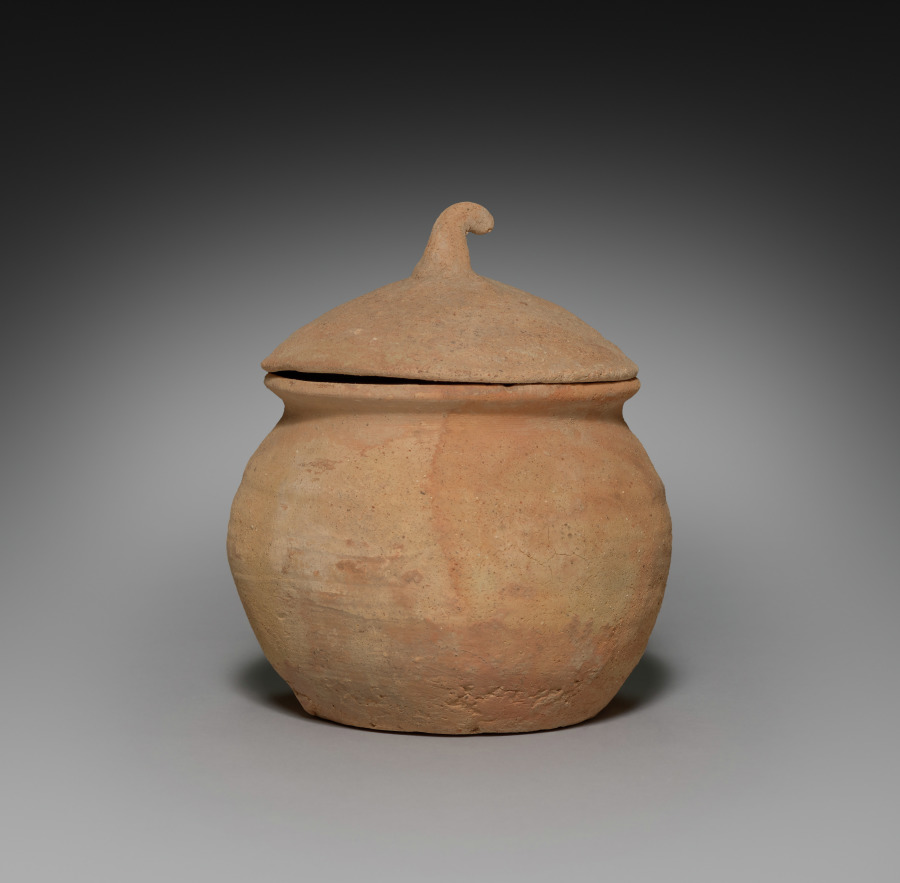
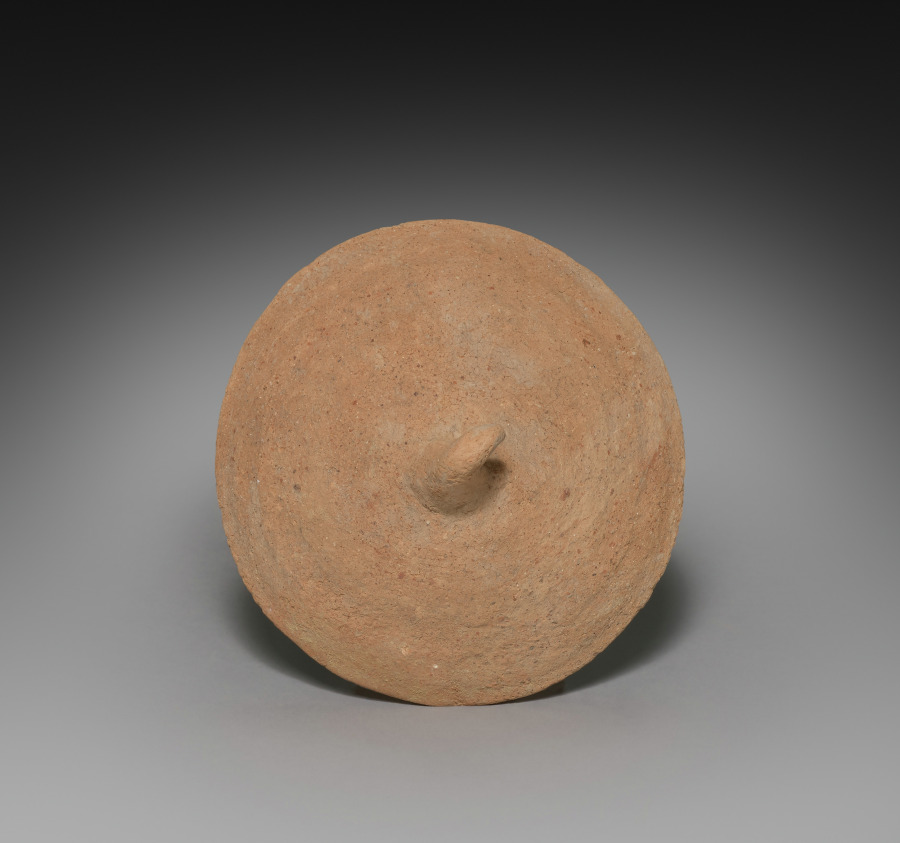
Lidded Jar with Horn Handle
- Date
- 400s-500s CE
- Medium
- red earthenware with impressed designs and applied red slip
- Culture
- Korea, Silla (57 BC-935) or Kaya (AD 42-562) period
- Department
- Korean Art
- Institution
- Cleveland Museum of Art
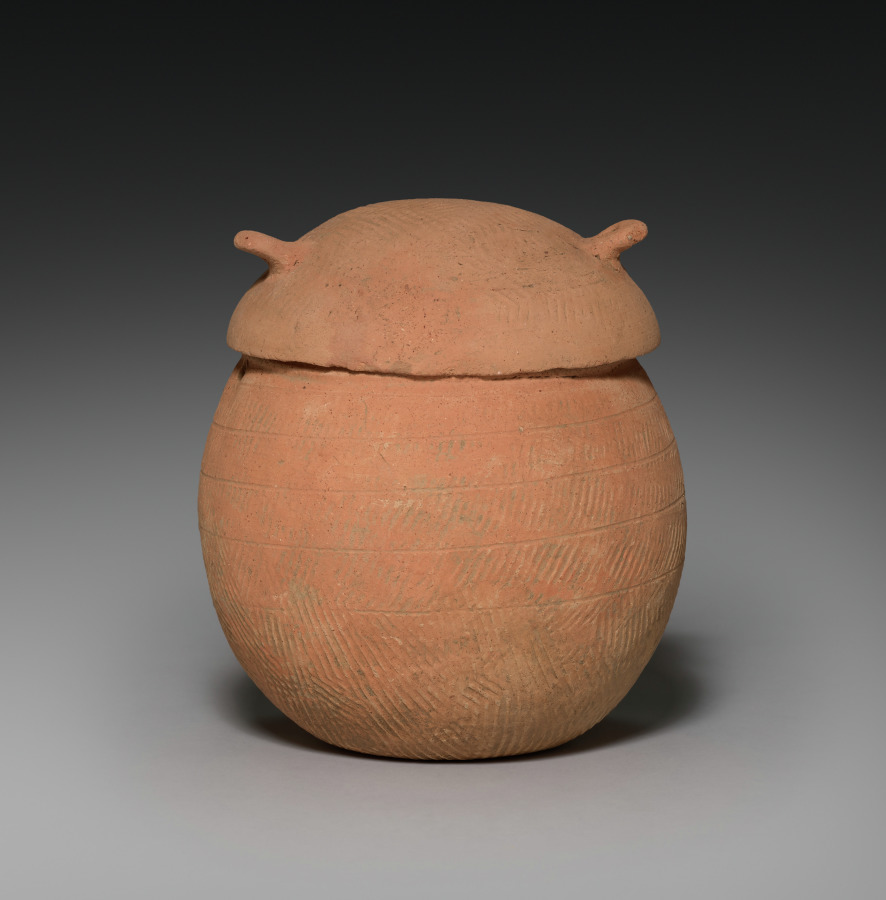
This type of pottery vessel was a product of closed kilns built on hillsides, which became widely used in Korea during the Three Kingdoms period. Its low-fired red surface indicates the various steps in its fabrication. First, coils of clay were layered on top of one another and pinched together to form the wall of the pot. Then wood mallets with carved surfaces pounded these walls simultaneously, inside and out, merging and thinning the clay bands. Thus the impressed designs visible on both the inner and outer surfaces were functional as well as decorative. Closed kilns built on hillsides became widely used for producing this type of pottery vessel in Korea during the Three Kingdoms period.
The authoritative record is held by Cleveland Museum of Art. LinkedCulture surfaces this object and its connections; it does not alter institutional metadata.
Related across collections
Semantically similar works from Cleveland Museum of Art and other institutions.
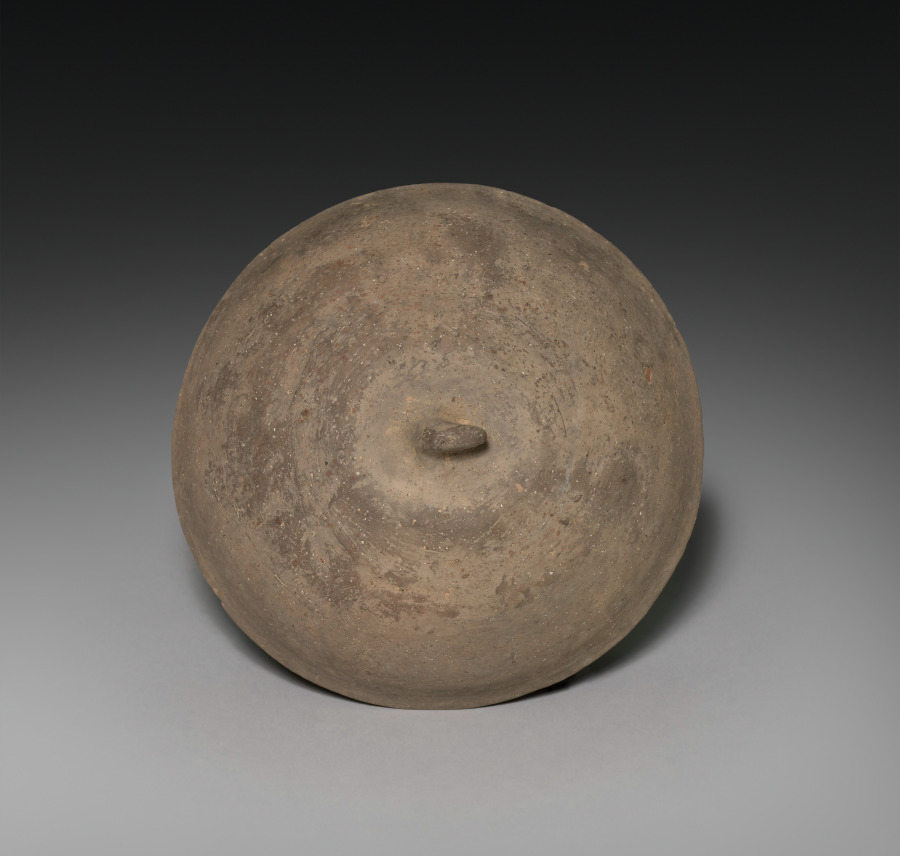
Lidded Jar with Four Horn Lugs (lid)
Cleveland Museum of Art
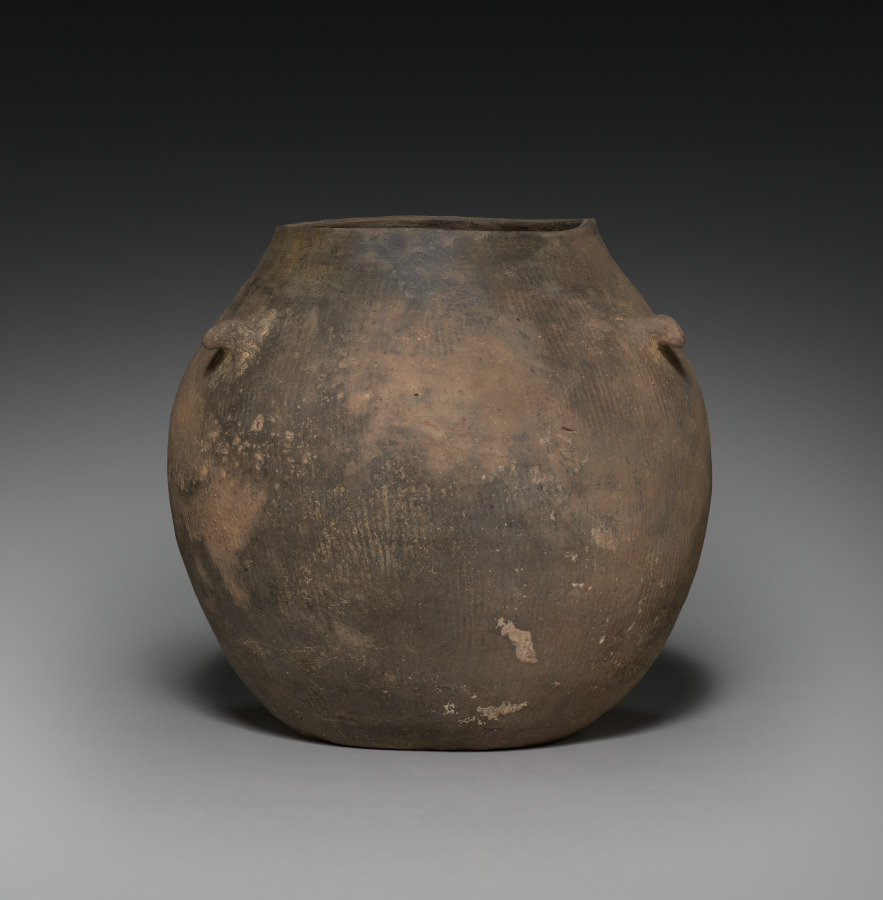
Lidded Jar with Four Horn Lugs
Cleveland Museum of Art
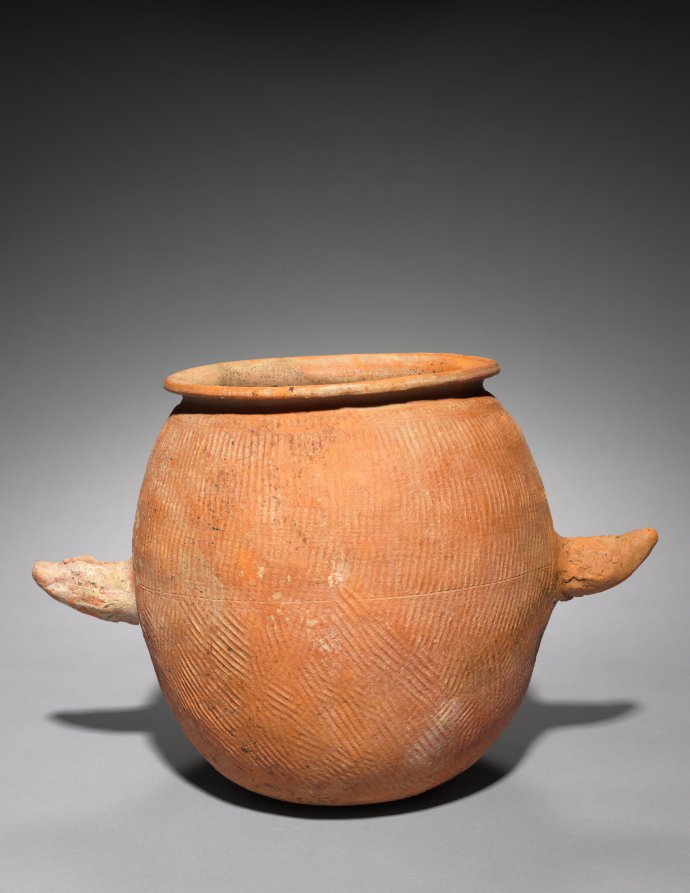
Jar with Horn-Shaped Handles
Cleveland Museum of Art
Lidded Jar with Horn Handle
Cleveland Museum of Art
Lidded Vessel with Loop Handles
Cleveland Museum of Art
Jar with Loop Handle with Overall Impressed Surface Decoration (lid)
Cleveland Museum of Art
Lidded Vessel with Loop Handles
Cleveland Museum of Art
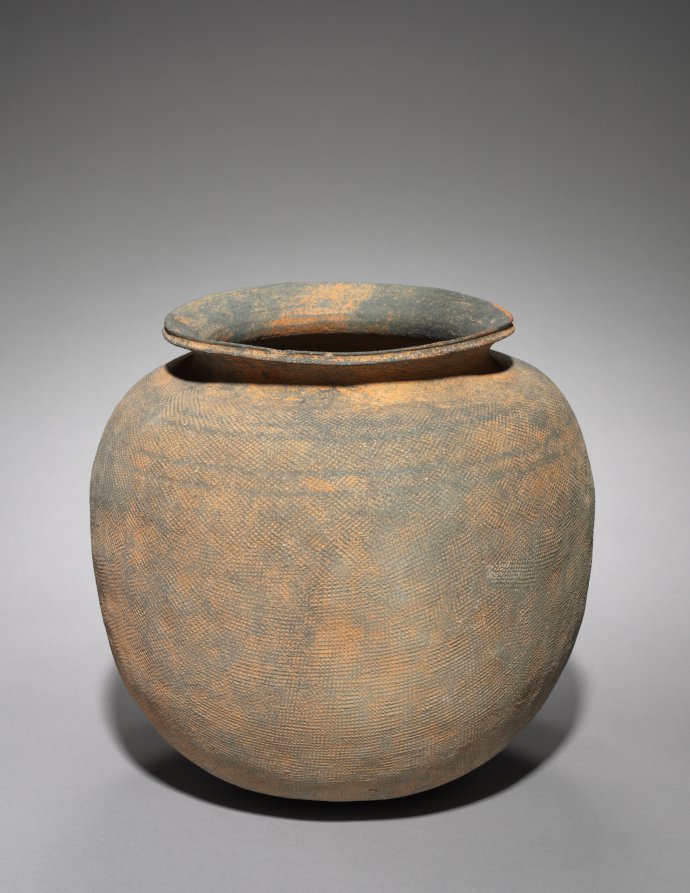
Jar with Loop Handle with Overall Impressed Surface Decoration
Cleveland Museum of Art
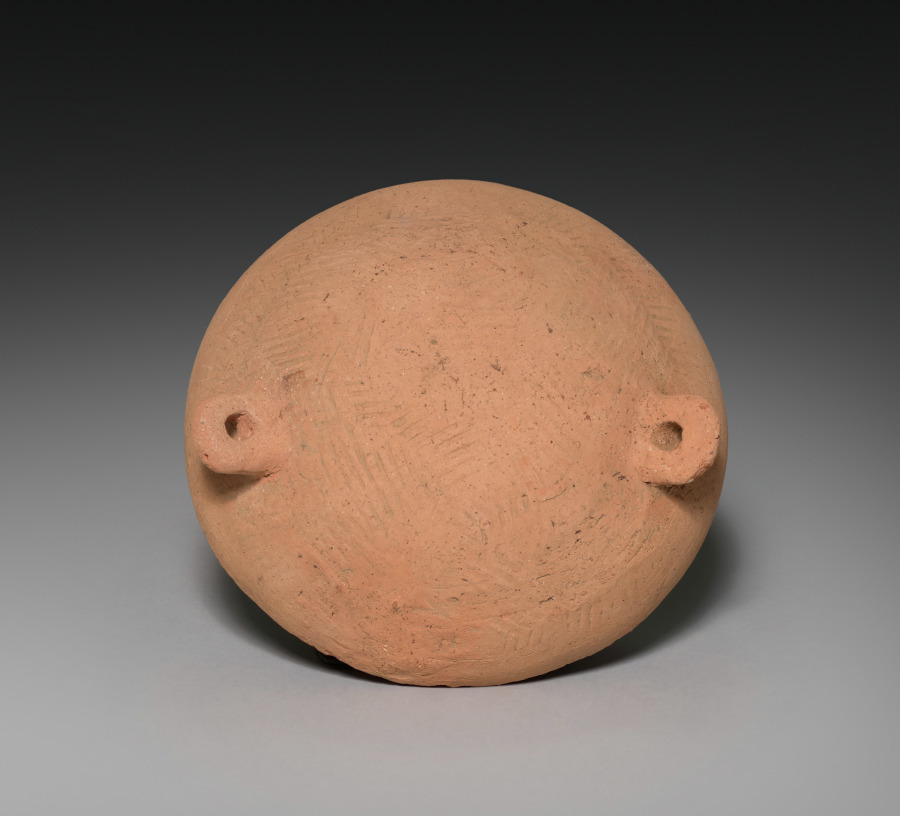
Lidded Vessel with Loop Handles (lid)
Cleveland Museum of Art
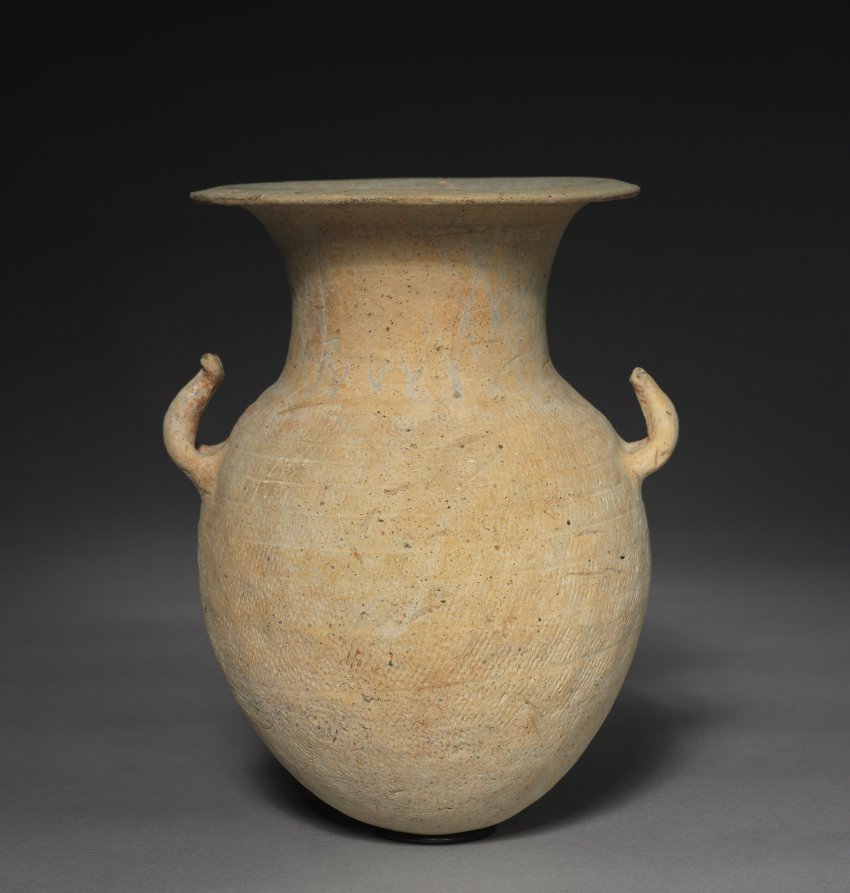
Jar with Horn-Shaped Handles
Cleveland Museum of Art
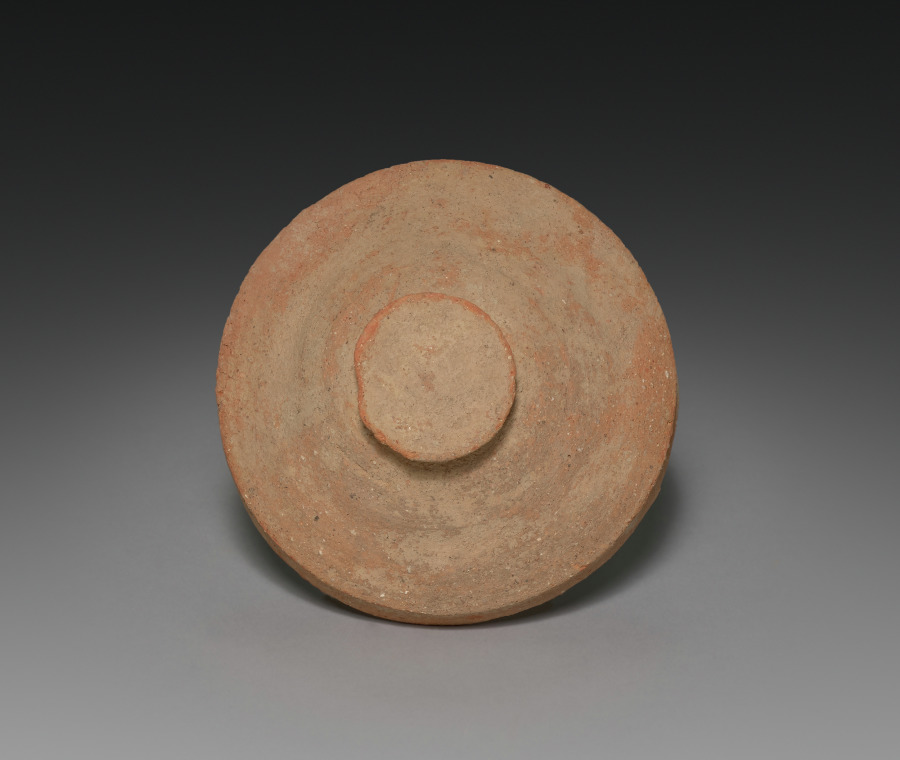
Covered Jar with Horn Handle (lid)
Cleveland Museum of Art
Covered Jar with Horn Handle (lid)
Cleveland Museum of Art