Cleveland Museum of Art
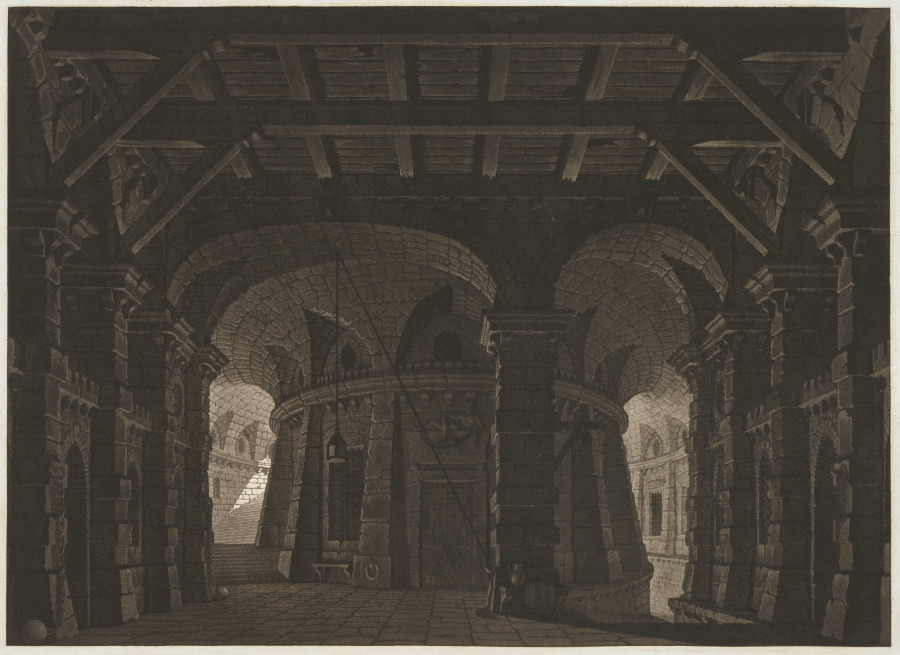
Subterranean Jail for the Stage
Abel Schlicht
- Date
- 1788
- Medium
- etching and aquatint
- Culture
- Germany, 18th century
- Department
- Prints
- Institution
- Cleveland Museum of Art
Trained as an architect, Abel Schlicht also designed stage sets for the Mannheim National Theater. An important forum for German cultural identity, the theater was one of the first companies to produce exclusively German-language plays, including those by beloved playwright Friedrich Schiller. Prisons were an especially popular drama subject in the 1700s, and sets would have featured in multiple productions. Here, Schlicht employed aquatint to render the gloomy space of one of his prison scenes. This technique enabled the artist to create the range of tones used to illuminate the background and plunge the foreground into darkness. Since none of his stage sets survive, Abel Schlicht’s prints serve as records of his lost designs.
The authoritative record is held by Cleveland Museum of Art. LinkedCulture surfaces this object and its connections; it does not alter institutional metadata.
Related across collections
Semantically similar works from Cleveland Museum of Art and other institutions.

Die Seiltänzer, from Jahrmarkt
Minneapolis Institute of Art

Hinter den Kulissen, from Jahrmarkt
Minneapolis Institute of Art

Brünn: Krautmarkt im Schnee
Minneapolis Institute of Art
Zweite Zukunft
Minneapolis Institute of Art

Schlangendame, from Jahrmarkt
Minneapolis Institute of Art
Prisoners on a Projecting Platform, Plate 10
Cleveland Museum of Art

Garderobe, from Jahrmarkt
Minneapolis Institute of Art

Negro Dance from Jahrmarkt
Minneapolis Institute of Art

Bavaria
Minneapolis Institute of Art

Dance Training
Minneapolis Institute of Art

The Men's Bath
Art Institute of Chicago
Predjama Castle in Krein, Twelve Hours from Trieste
Art Institute of Chicago