Cleveland Museum of Art
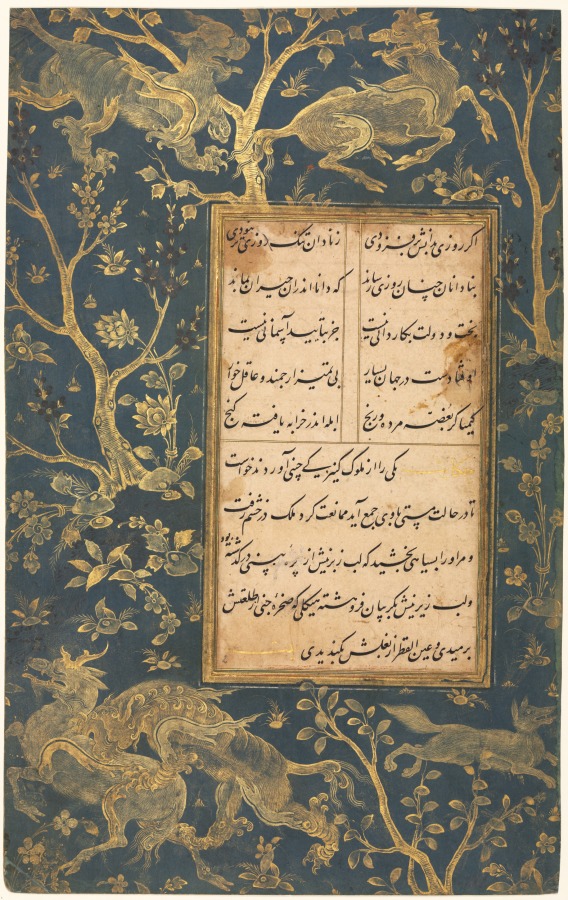
Illuminated Folio from a Gulistan (Rose Garden) of Sa'di (c. 1213–1291)
Sultan 'Ali al-Mashadi- Date
- calligraphy: c. 1475–1500; border: c. 1550
- Medium
- Gum tempera, ink, gold, and silver on paper
- Culture
- Iran
- Department
- Islamic Art
- Institution
- Cleveland Museum of Art
The border scene is set in a magical forest bursting with blossoms. At the top, a winged lion chases a winged deer, who is caught in the bottom border. The imagery of a lion biting down on its prey dates from the Achaemenid period in Iran (550–330 BCE) and references the valor of the king. A fox scurries off to the right. The verse is written in the Persian language using nastaliq script. Sultan ‘Ali Mashadi was widely renowned for perfecting the nastaliq script, and his calligraphy was a model for many followers across the Islamic world. The book’s name means “rose garden” in Persian; just as a rose garden is a collection of flowers, the contents are a collection of anecdotes.
The authoritative record is held by Cleveland Museum of Art. LinkedCulture surfaces this object and its connections; it does not alter institutional metadata.
Get printable QR codesHide QR codes
Open QR codes for this object page and the museum record. They stay collapsed until needed.
Related across collections
Semantically similar works from Cleveland Museum of Art and other institutions.