Cleveland Museum of Art
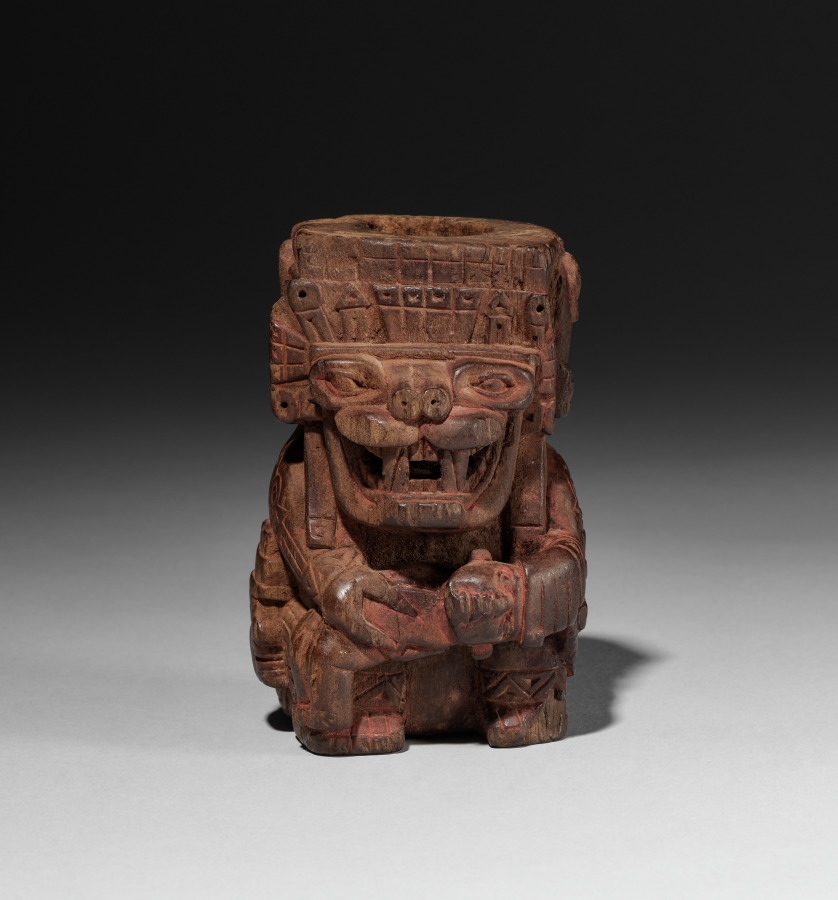
Sacrificer Container
- Date
- 770–890 (radiocarbon date, 95% probability)
- Medium
- wood and cinnabar
- Culture
- Central Andes, Wari style (600-1000)
- Department
- Art of the Americas
- Institution
- Cleveland Museum of Art
- Object ID
- 165256
From the Cleveland Museum of Art record
This container assumes the shape of a magnificent, feline-headed, supernatural sacrificer who draws a knife across the throat of the human it holds in its lap. Severed human heads hang from the feline's belt and dangle by the trachea at the back of its headdress. Sacrifice had a place in Wari religious practice, probably as an unusual and exceptionally precious offering made to entice the benevolence of cosmic forces. Indeed, colonial-period Andean people believed that death was a prerequisite for the renewal of the world. Traces of cinnabar, a toxic mercuric sulfide, are visible on the container's surface.
The authoritative record is held by Cleveland Museum of Art. LinkedCulture surfaces this object and its connections; it does not alter institutional metadata.
Get printable QR codesHide QR codes
Open QR codes for this object page and the museum record. They stay collapsed until needed.
Provenance & credit
As published by the source institution. Coverage varies — not every institution's open-data feed includes ownership history.
- Credit line
- John L. Severance Fund
- Provenance
- ?-1967: Erich Stumpf, Austria | 1967-2007: Anton Roeckl, Irschenberg, Germany | 2007: (David Bernstein Fine Art, sold to the Cleveland Museum of Art) | 2007-: The Cleveland Museum of Art, Cleveland, OH
Related across collections
Semantically similar works from Cleveland Museum of Art and other institutions.