Cleveland Museum of Art
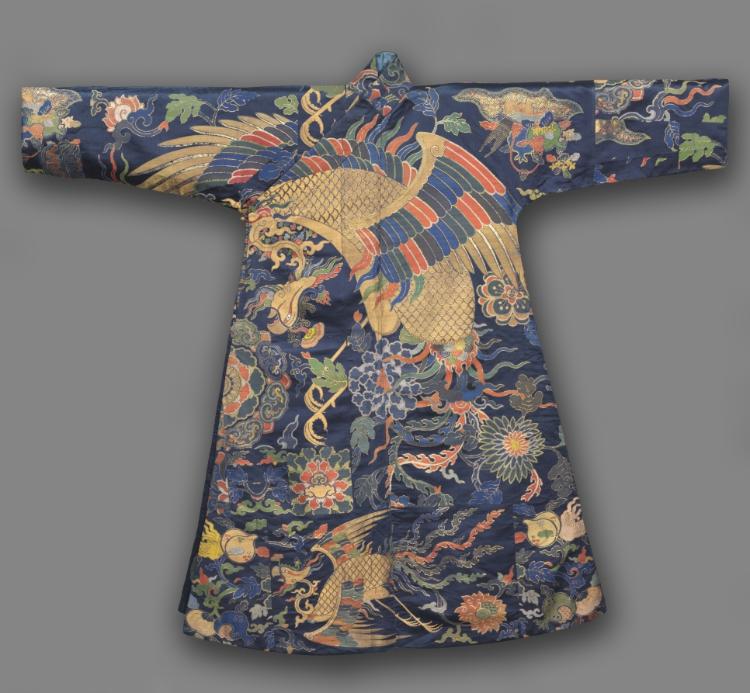
Tibetan Man's Robe, Chuba
- Date
- late 1600s
- Medium
- Silk, gilt-metal thread of two kinds: satin weave with supplementary weft patterning
- Culture
- China, Qing dynasty (1644-1911), Kangxi period (1662-1772)
- Department
- Textiles
- Institution
- Cleveland Museum of Art
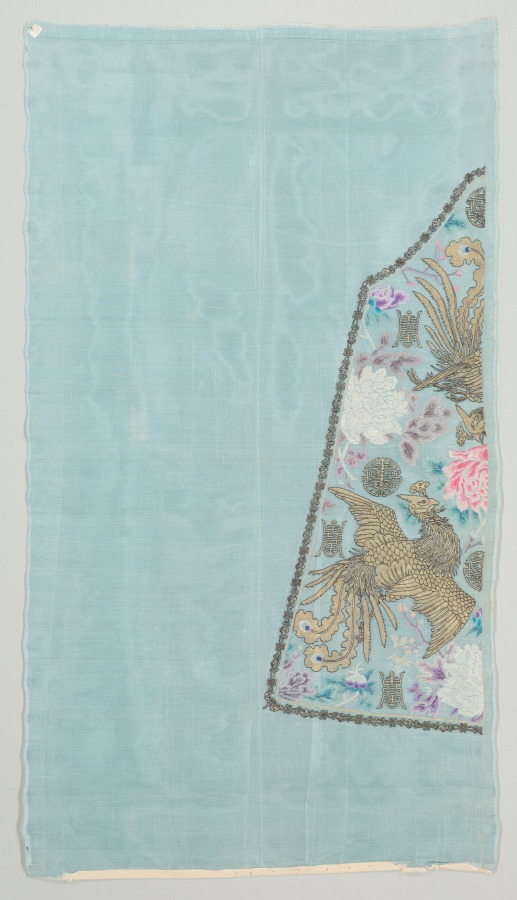
This magnificent robe for a Tibetan lama or an aristocrat was originally a Chinese imperial wall hanging. Tibetan tailors cut it into 60 separate units, reassembling the fabric for a completely new and bold design. The wearer of such a garment must have impressed bystanders by his striking appearance. What you see here is the robe’s back side. Textiles played an important role in Chinese diplomacy with foreign governments. Diplomatic gifts of silk served to pacify border populations and to maintain balanced power relationships. Over centuries the Chinese court endeavored to keep a stable relationship with powerful Tibetan Buddhists. During the Qing dynasty (1644–1911) the Chinese court began to send gifts of court garments and furnishings to Tibet where they were altered to create Tibetan-style robes. Large, splendid gold-thread phoenixes have pride of place on the front and back of the robe, complemented by two smaller but equally resplendent phoenixes below.
The authoritative record is held by Cleveland Museum of Art. LinkedCulture surfaces this object and its connections; it does not alter institutional metadata.
Related across collections
Semantically similar works from Cleveland Museum of Art and other institutions.
Buddhist Priest's Ceremonial Robe
Cleveland Museum of Art

Formal court robe altered for Lamaist ritual dance
Minneapolis Institute of Art
Woman's Robe
Cleveland Museum of Art
Brocade with Phoenixes
Cleveland Museum of Art

Robe
Minneapolis Institute of Art
Uncut Robe
Cleveland Museum of Art

The Abbot Mkhas-grub Rje
Minneapolis Institute of Art
Thangka with the Seventh Bodhisattva
Cleveland Museum of Art

Buddhist priest's robe (kashaya)
Minneapolis Institute of Art

Buddhist priest's robe (kashaya)
Minneapolis Institute of Art

Buddhist priest's robe (kashaya)
Minneapolis Institute of Art

Buddhist priest's robe (kashaya)
Minneapolis Institute of Art