Cleveland Museum of Art
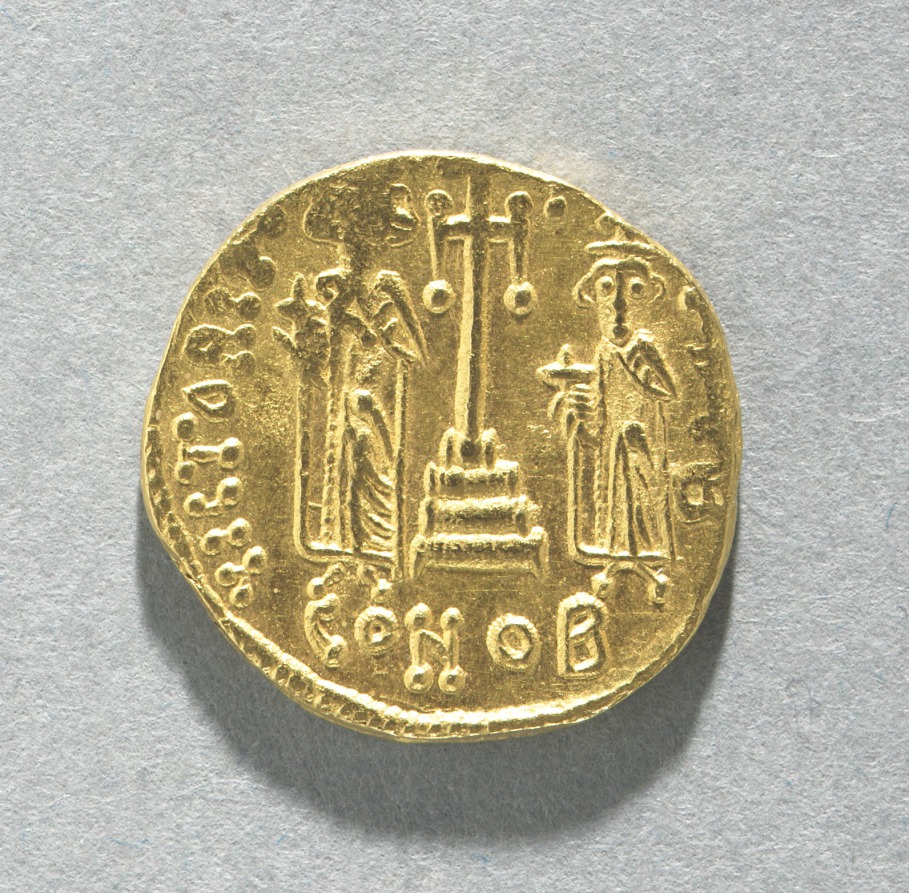
Solidus of Constans II and Constantine IV with a Cross Potent on Three Steps (reverse)
- Date
- 659–661
- Medium
- gold
- Culture
- Byzantium
- Department
- Medieval Art
- Institution
- Cleveland Museum of Art
The vast number of surviving Byzantine coins attests to the level of trade across the empire. Controlled and supervised by the emperor, the producers of coins took care to represent his authority and reflect his stature. Talented artists were recruited to engrave the dies (molds) used for the striking of coins. Emperors increasingly came to include their heirs and co-emperors on their coinage, as well as other family members or even earlier rulers. Coins were recognized, then as now, as small, portable works of art. With their inscriptions and images, Byzantine coins provide valuable documentation of historical events and a record of the physical appearance of the emperors. The coin shown here is the solidus, the basic gold coin of 24 karats. A cross potent is a form of the cross in which bars extend from each arm.
The authoritative record is held by Cleveland Museum of Art. LinkedCulture surfaces this object and its connections; it does not alter institutional metadata.
Related across collections
Semantically similar works from Cleveland Museum of Art and other institutions.

Unattributed Trebizond Coin
Getty Museum

Antoninianus of Probus
Getty Museum

Antoninianus of Gordian III
Getty Museum

Antoninianus of Philip I
Getty Museum
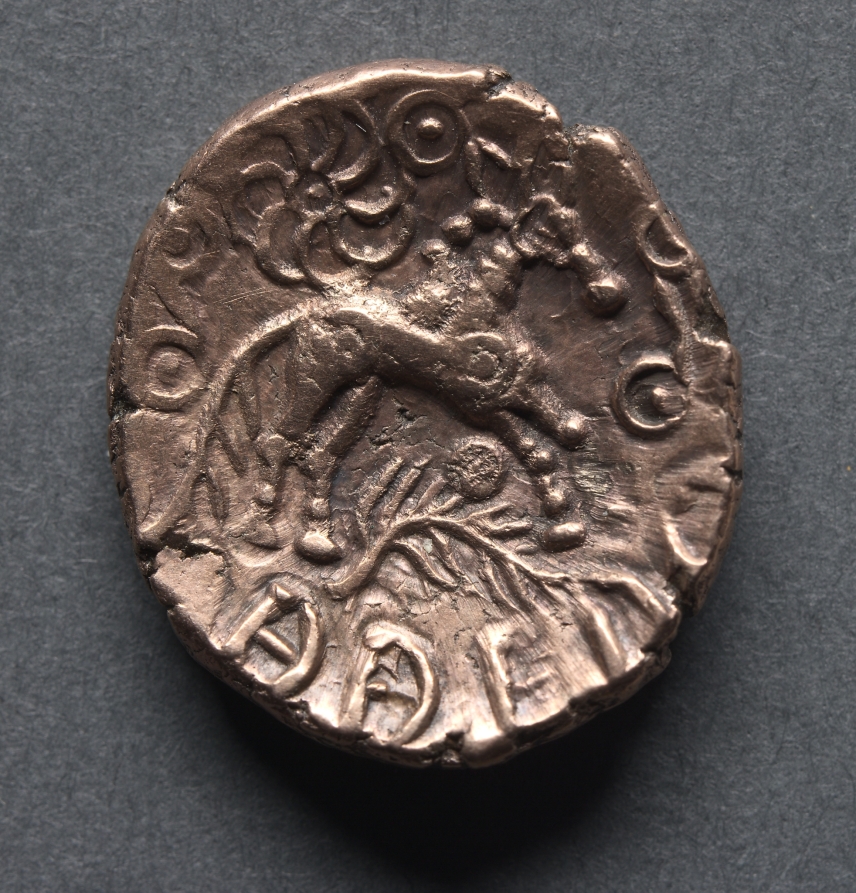
Addedomaros Stater: Crescents (obverse)
Cleveland Museum of Art

Antoninianus of Trebonianus Gallus
Getty Museum

Imperial Tetradrachm
Getty Museum
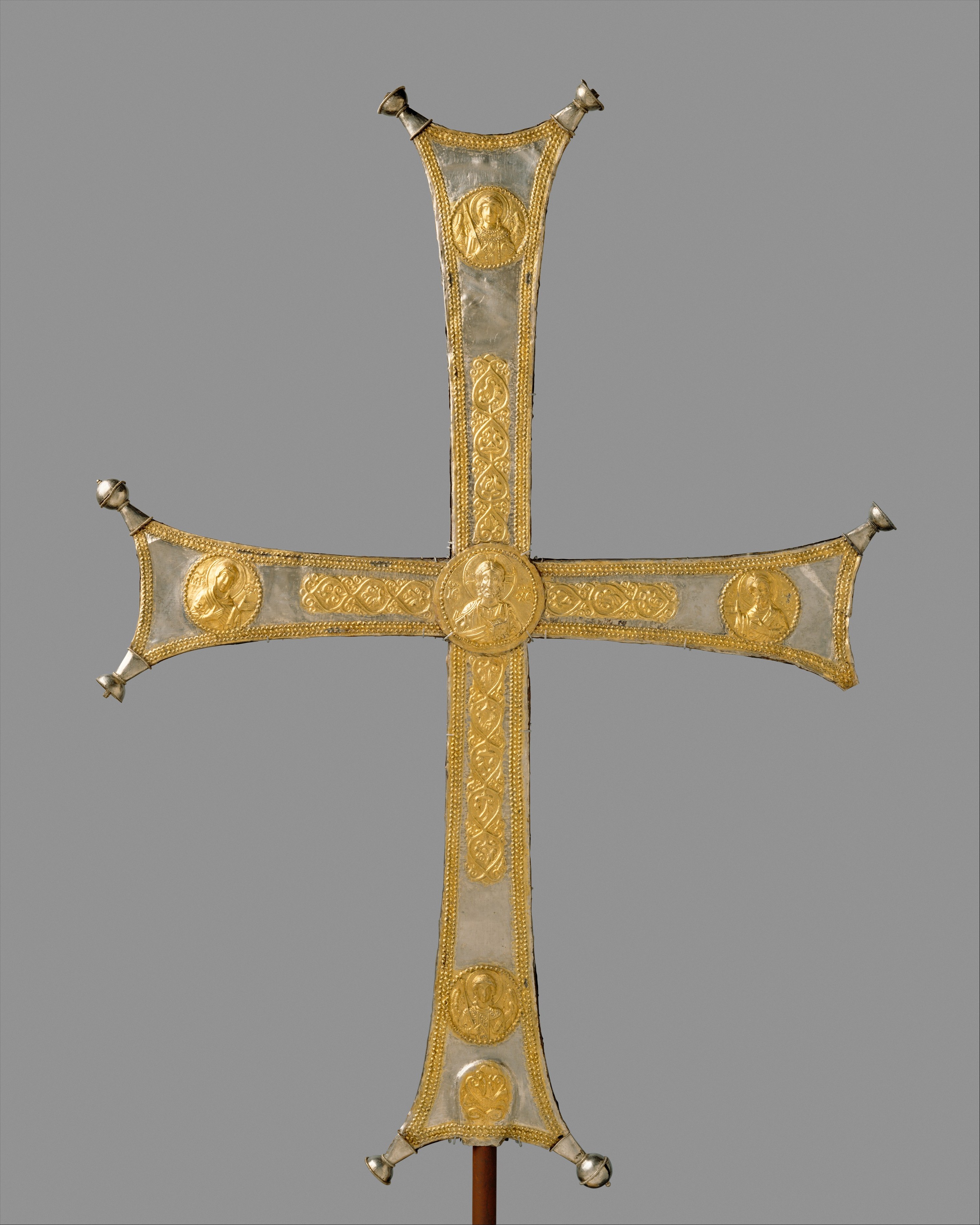
Processional Cross
The Metropolitan Museum of Art
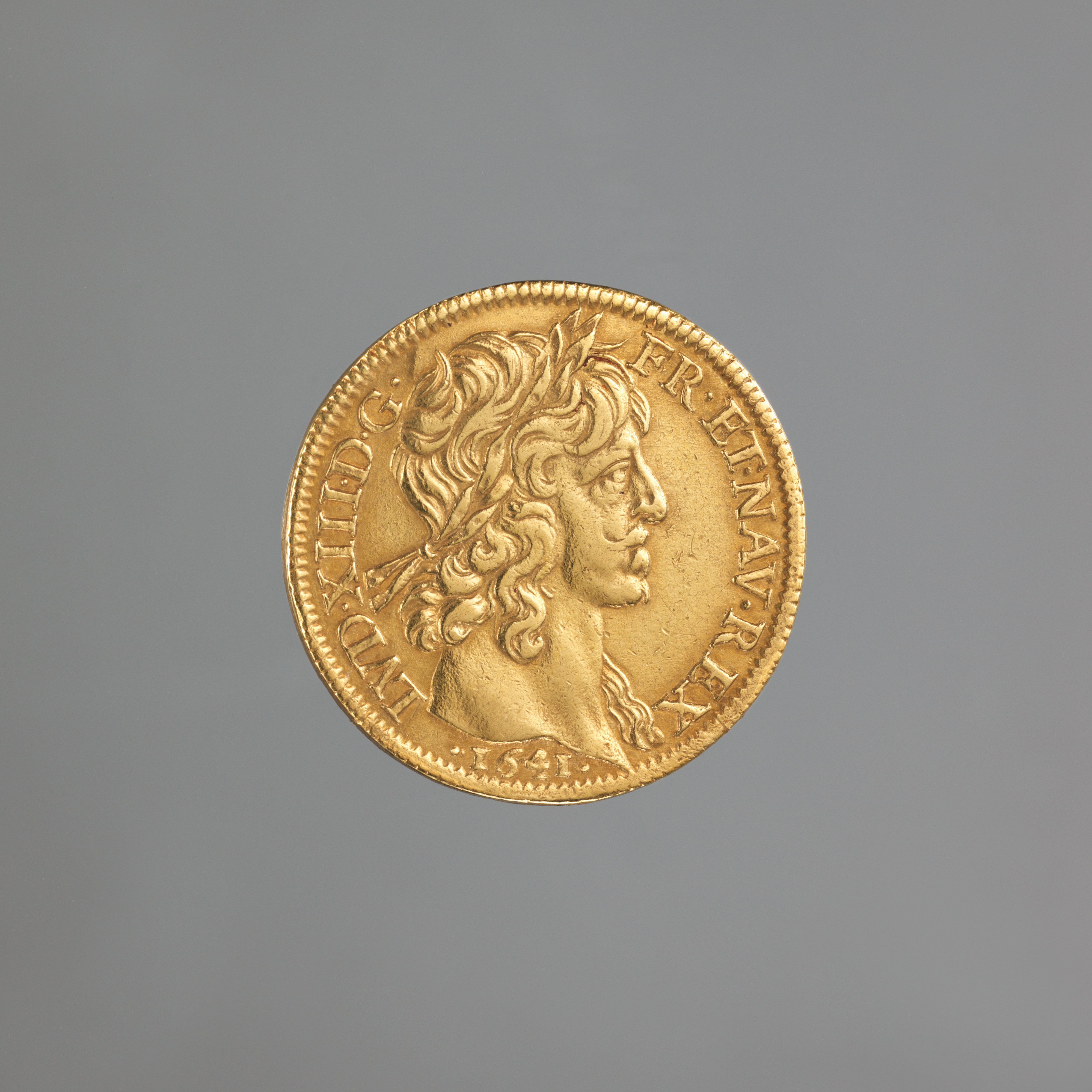
Double Louis d’or of Louis XIII of France (b. 1601; r. 1610-43)
The Metropolitan Museum of Art

Tetradrachm
Getty Museum

Coin
Getty Museum

Tetradrachm
Getty Museum