Cleveland Museum of Art
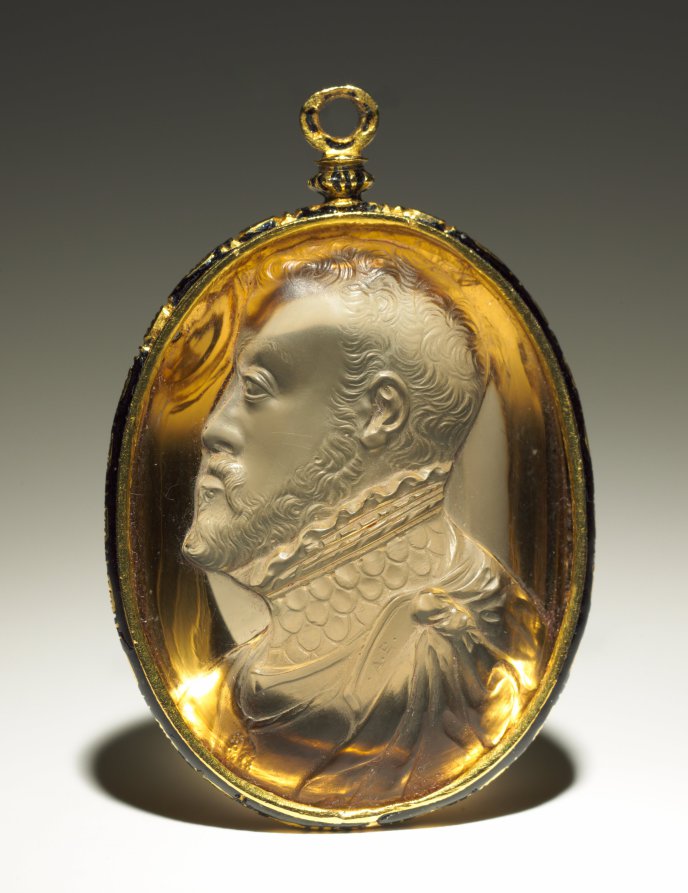
Portrait of Philip II, King of Spain
Alessandro Cesati
- Date
- mid-1550s
- Medium
- citrine, mounted in a gold and enamel pendant
- Culture
- Italy, 16th century
- Department
- European Painting and Sculpture
- Institution
- Cleveland Museum of Art
Clad in armor, Philip II wears a chain with the Order of Golden Fleece around his neck. The remarkably precise and varied cutting describes the textures of cloth, metal, skin, and hair while presenting the king’s features with striking naturalism—complete with receding hairline and prominent chin—as well as conveying his forceful character. Carved gems were luxury arts of the highest order in the Renaissance, hotly collected and used as diplomatic gifts. The original patron is not yet known, but cameos played a prominent role at the Spanish court, where the royal family often hold gems of Philip II in their portraits. The yellow quartz, rare in the 1500s, probably came from a newly opened source in South America; this object is thus both a natural marvel and a masterful portrait. One of only three known works signed by the artist (his initials appear at miniscule scale on the collar just below the knot of cloth), this stone is also likely in its original setting. The ancient Romans believed citrine, a type of quartz, offered protection against evil thoughts.
The authoritative record is held by Cleveland Museum of Art. LinkedCulture surfaces this object and its connections; it does not alter institutional metadata.
Related across collections
Semantically similar works from Cleveland Museum of Art and other institutions.
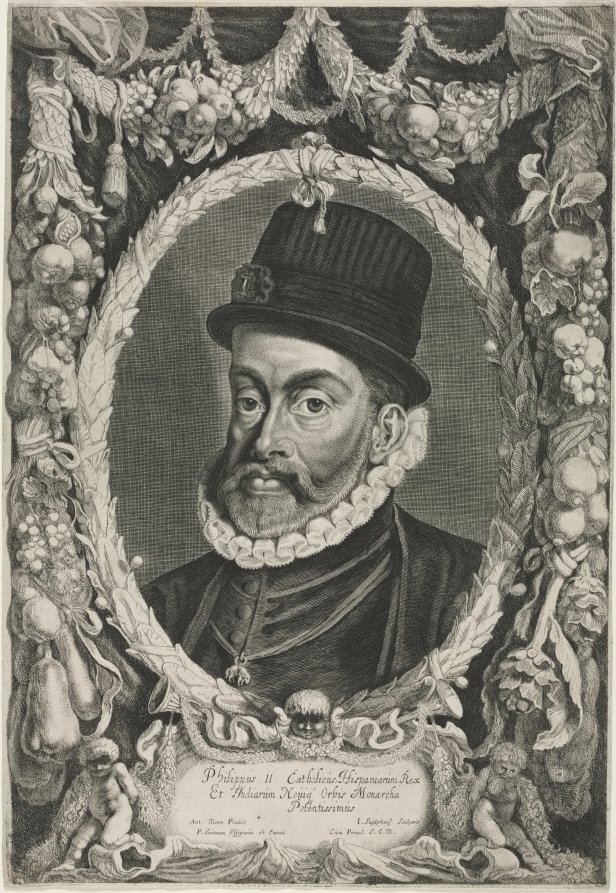
Portrait of Philip II, King of Spain
Cleveland Museum of Art
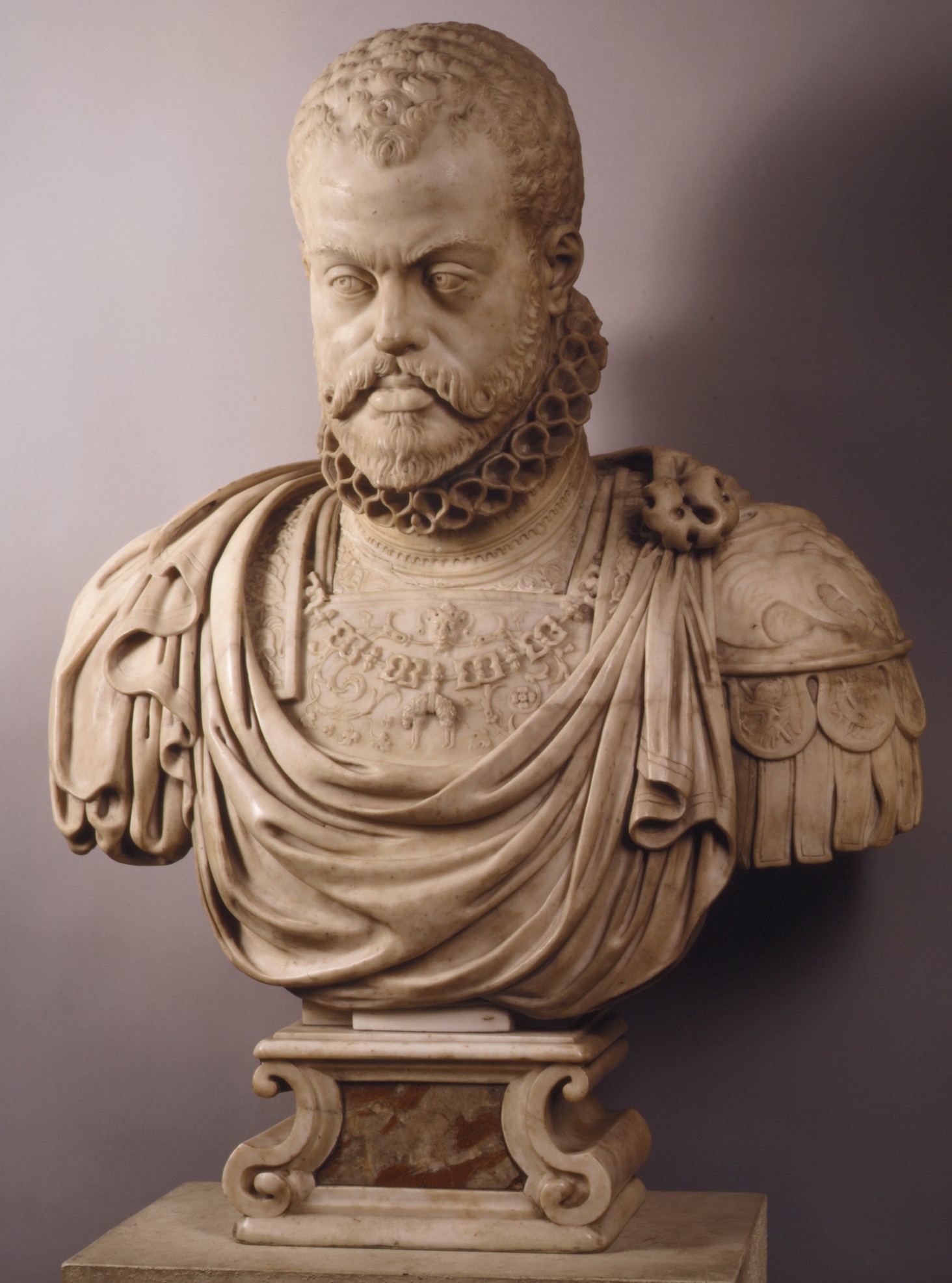
King Philip II of Spain
The Metropolitan Museum of Art
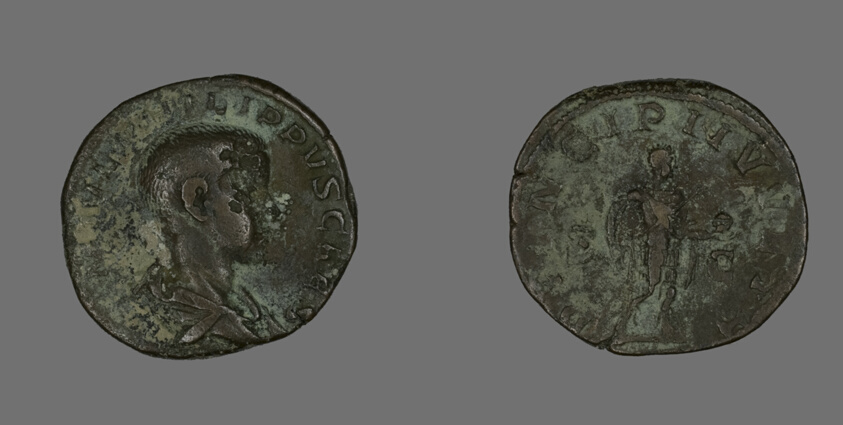
Sestertius (Coin) Portraying King Philip II
Art Institute of Chicago
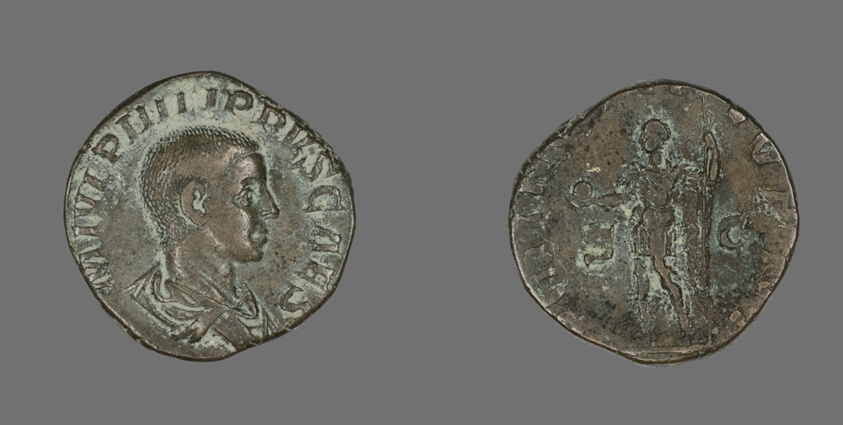
Sestertius (Coin) Portraying King Philip II
Art Institute of Chicago
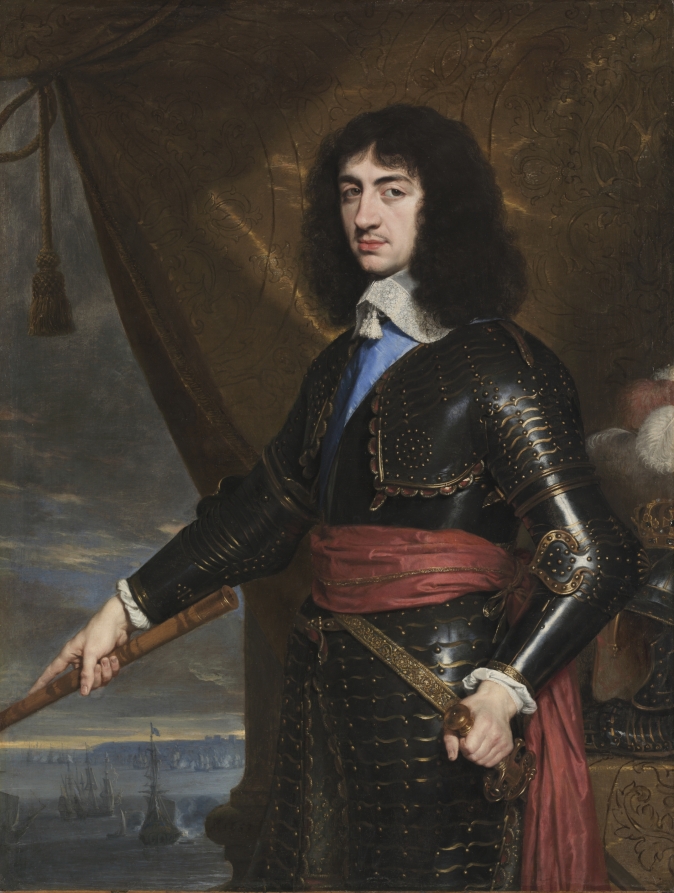
Portrait of King Charles II of England
Cleveland Museum of Art
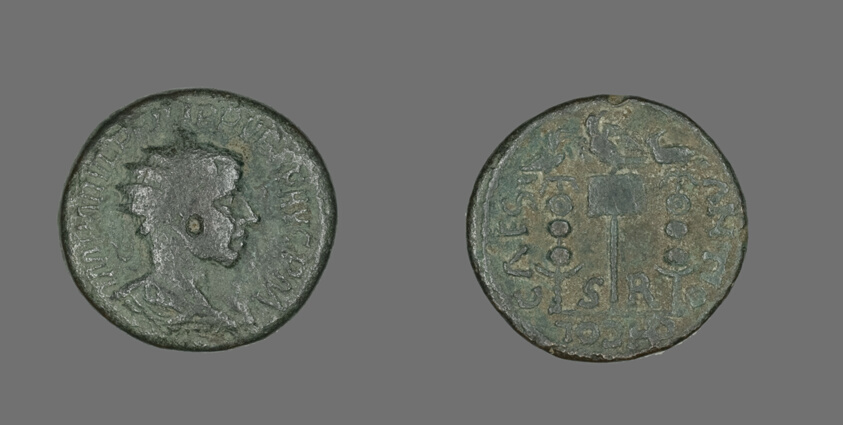
Coin Portraying King Philip II
Art Institute of Chicago
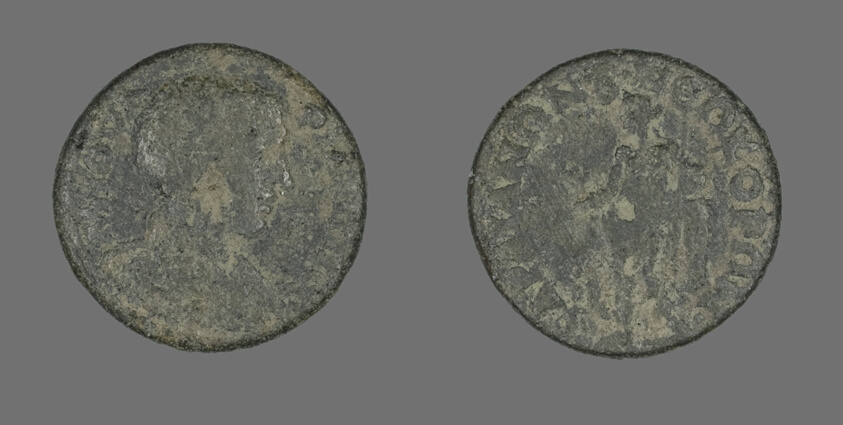
Coin Portraying King Philip II
Art Institute of Chicago
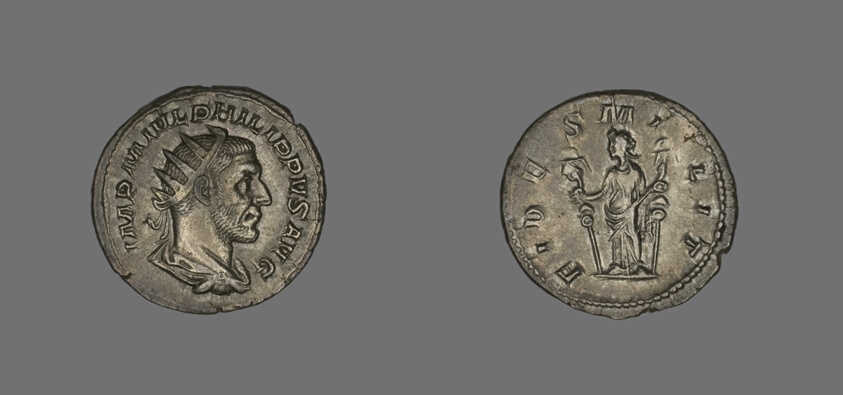
Denarius (Coin) Portraying King Philip II
Art Institute of Chicago
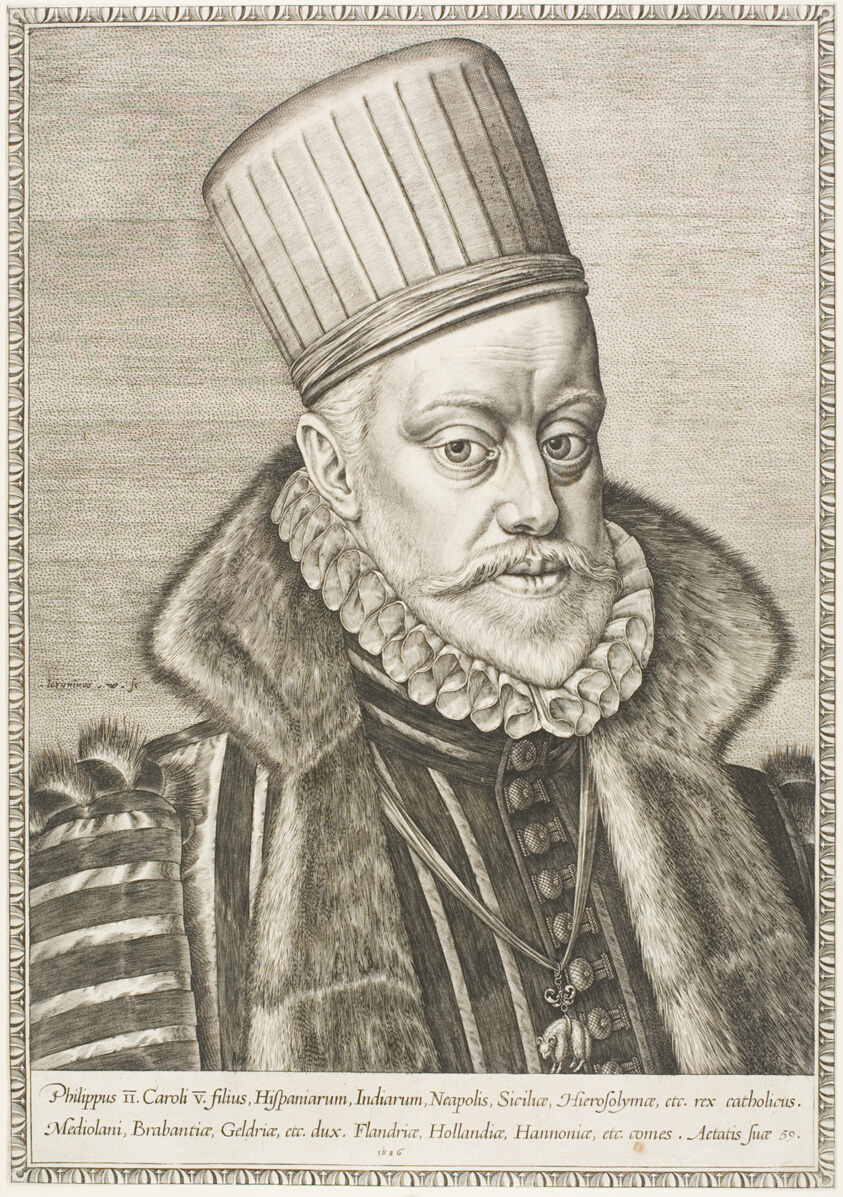
Phillip II, King of Spain
Art Institute of Chicago
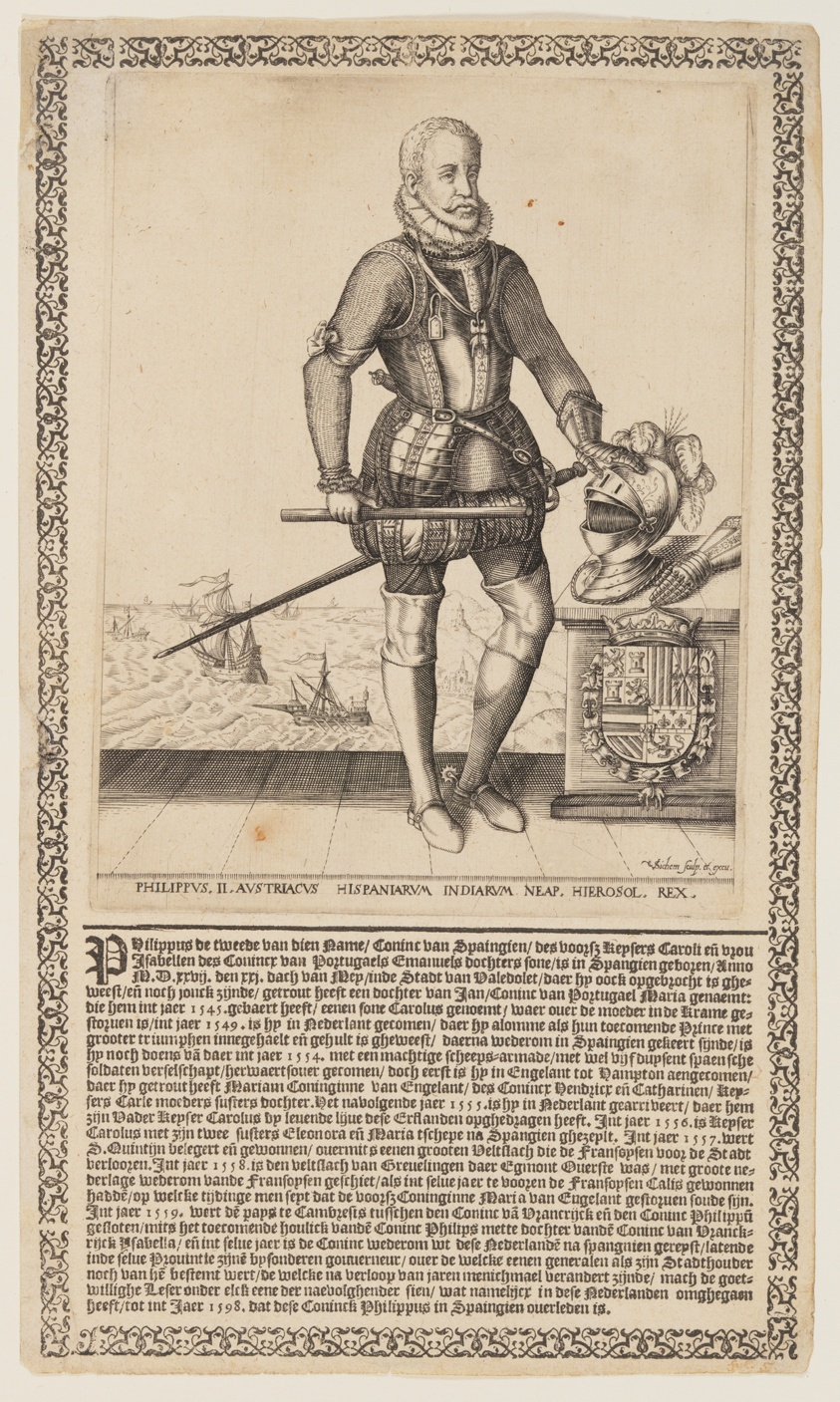
Phillip II, King of Spain
Art Institute of Chicago
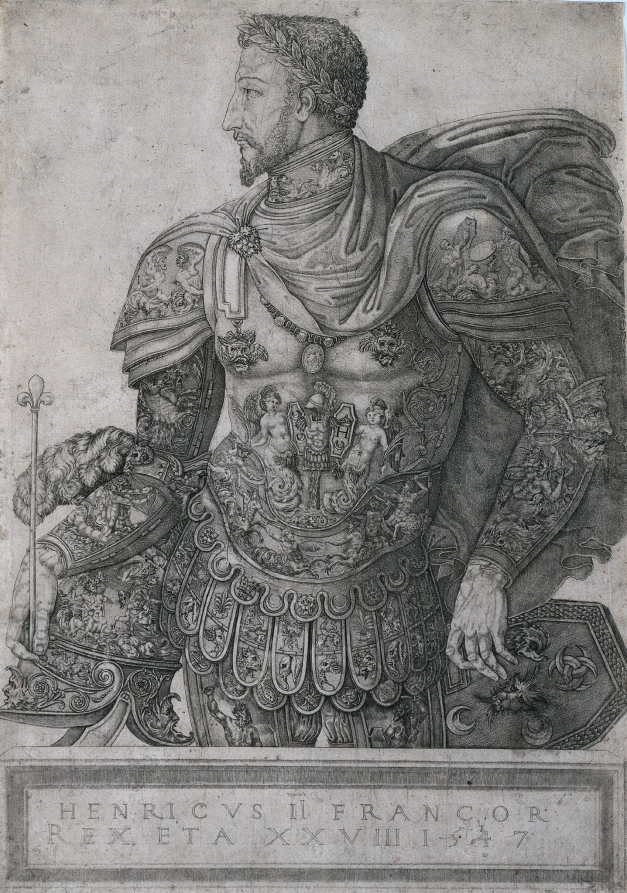
Henri II, King of France, at the age of 28
Cleveland Museum of Art
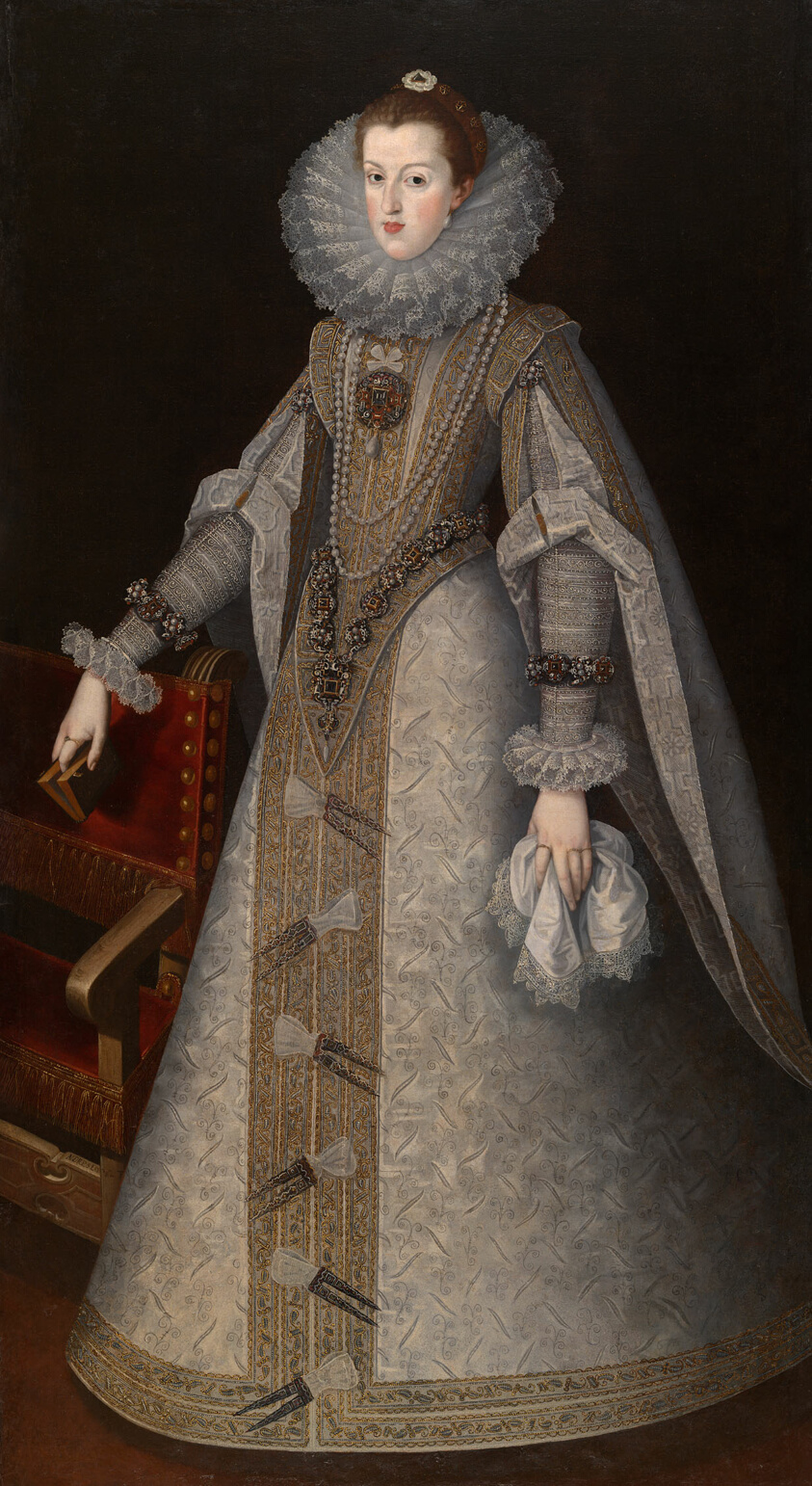
Margaret of Austria, Queen of Spain
Art Institute of Chicago