Cleveland Museum of Art
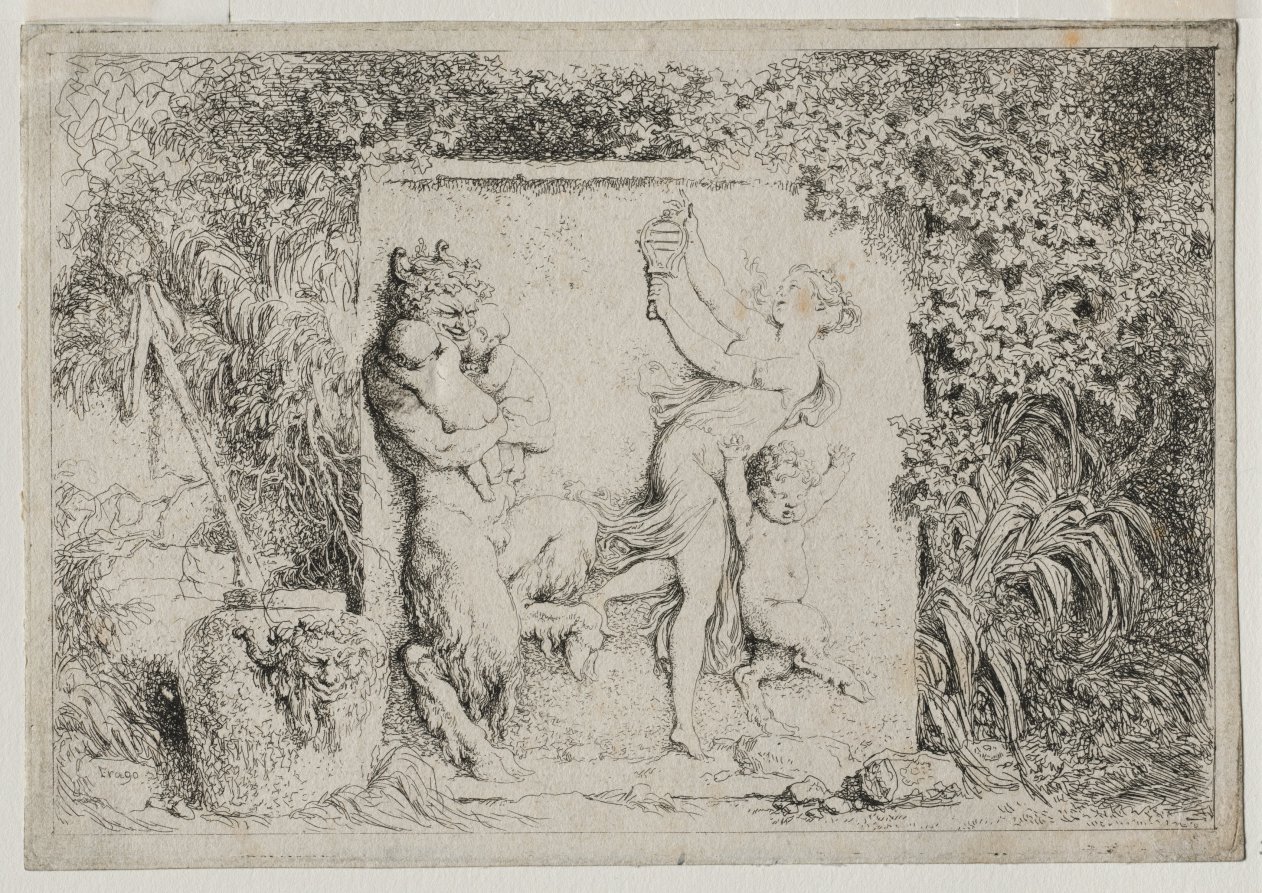
Bacchanales: The Satyr's Dance
Jean-Honoré FragonardLinkedCulture matchlcp-3d28f78fe6aa
- Date
- 1763
- Medium
- etching
- Culture
- France, 18th century
- Department
- Prints
- Institution
- Cleveland Museum of Art
- Object ID
- 170459
What the image shows
A classical figure holding a torch stands beside a seated figure in a lush garden setting.
Generated by LinkedCulture from the photograph alone, without the museum’s catalogue text (Qwen/Qwen2.5-VL-7B-Instruct), and not yet reviewed by a person. It describes the picture, not the object’s history, and it is not part of the museum’s record.
From the Cleveland Museum of Art record
Jean-Honoré Fragonard made these four etchings shortly after returning to Paris from Italy, where he studied antique subjects and sculpture. He may have also looked at other sources for inspiration, such as Jacques François Joseph Saly’s suite of vase designs. Though the prints feature the followers of Bacchus, the wine god does not make an appearance. Instead, Fragonard highlighted the playfully erotic frolics, conflicts, and even family life of a group of bacchants, conceiving them as low-relief sculptures on stone fragments within abundant foliage. Fragonard’s creations helped to popularize revelries in nature in French art, architecture, and garden design during the later 1700s. On the left side of the composition, standing inside a large vessel like an umbrella in a vestibule, is a pinecone-topped staff called a thyrsus. Thyrsi were carried by Bacchus and his followers.
The authoritative record is held by Cleveland Museum of Art. LinkedCulture surfaces this object and its connections; it does not alter institutional metadata.
Get printable QR codesHide QR codes
Open QR codes for this object page and the museum record. They stay collapsed until needed.
Provenance & credit
As published by the source institution. Coverage varies — not every institution's open-data feed includes ownership history.
- Credit line
- Severance and Greta Millikin Trust
- Provenance
- Mr. and Mrs. R. Stanley Johnson, Chicago | ?–2012: (Susan Schulman, Printseller, New York, NY, sold to The Cleveland Museum of Art, Cleveland, OH) | September 4, 2012–: The Cleveland Museum of Art, Cleveland, OH
Related across collections
Semantically similar works from Cleveland Museum of Art and other institutions.