Cleveland Museum of Art
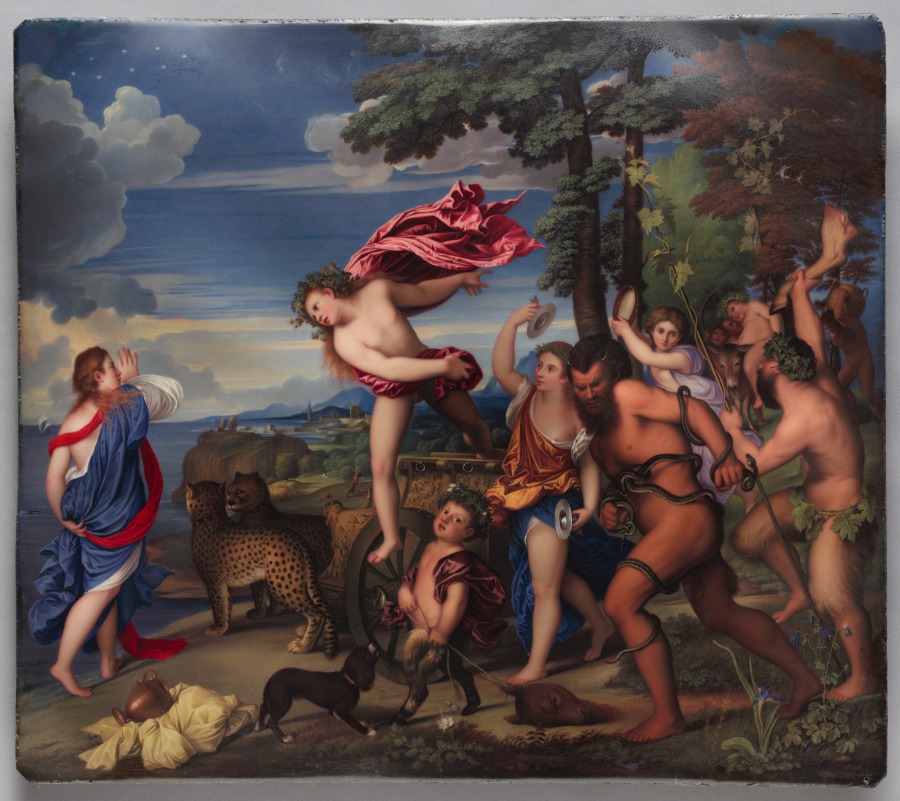
Bacchus and Ariadne
Henry Bone- Date
- 1808–11
- Medium
- enamel, in original gilt-wood and gesso carved frame
- Culture
- England, 19th century
- Department
- Modern European Painting and Sculpture
- Institution
- Cleveland Museum of Art
Henry Bone devoted three years to creating this work, a tremendous technical achievement and the largest enamel on copper that had ever been made. The painstaking process required each application of color to be fired at a different temperature in the kiln. The enamel exactly reproduces Titian’s Bacchus and Ariadne (now in the National Gallery, London), an early sixteenth-century Italian masterpiece that had recently come into an English collection. The elaborate carved and gilded wood frame was specially designed for the work, an indication of the cultural value placed on great enamel reproductions of famous paintings. Bone was unable to show his masterwork at the annual Royal Academy exhibition in 1811 because the Prince of Wales had asked to see it. When the prince decided not to purchase it, Bone issued more than 4,000 tickets for visitors to view the work in his studio. Henry Bone was known for his enamel paintings created through a laborious process of fusing painted glass to copper and firing at controlled temperatures.
The authoritative record is held by Cleveland Museum of Art. LinkedCulture surfaces this object and its connections; it does not alter institutional metadata.
Get printable QR codesHide QR codes
Open QR codes for this object page and the museum record. They stay collapsed until needed.
Related across collections
Semantically similar works from Cleveland Museum of Art and other institutions.