Cleveland Museum of Art
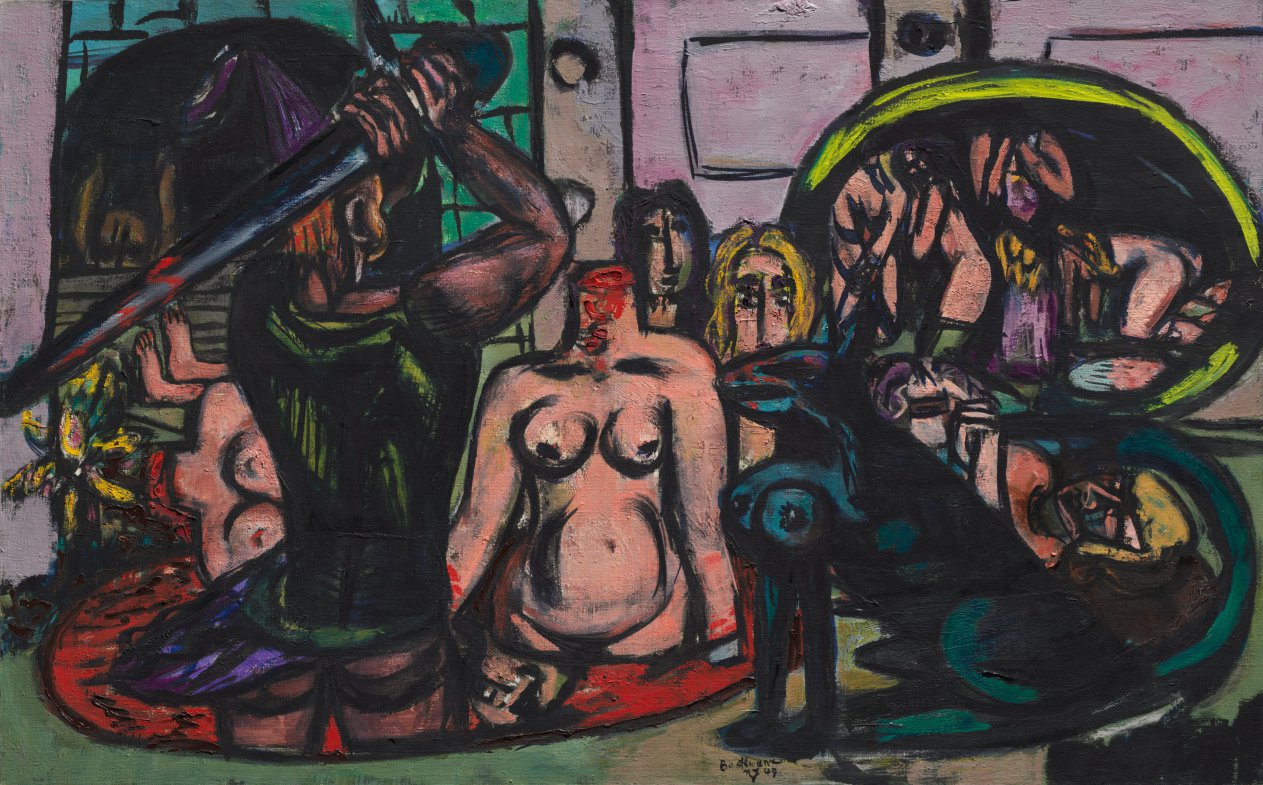
Perseus's Last Duty
Max BeckmannLinkedCulture matchlcp-07480b47796e
- Date
- 1949
- Medium
- oil on canvas
- Culture
- Germany, 20th century
- Department
- Modern European Painting and Sculpture
- Institution
- Cleveland Museum of Art
- Object ID
- 171157
From the Cleveland Museum of Art record
This painting depicts Perseus, a celebrated warrior from Greek mythology whose name derives from the Greek word "to waste, ravage, sack, destroy." Perseus’s most famous feat was cutting off Medusa’s head. Yet, the mass slaughter depicted here is not found in the ancient myth, but instead suggests a nightmarish allegory filled with private, enigmatic symbols, perhaps reflecting Beckmann’s experience of barely surviving two world wars. Traumatized while serving as a medical orderly during WWI, Beckmann later became the target of Nazi persecution. In 1947 he immigrated to the United States. Created in the aftermath of the Holocaust and under the Cold War threat of nuclear annihilation, this painting suggests a bitter critique of mankind’s propensity for destruction. Presenting Perseus in female dress subverts the hypermasculine glamorization of military heroes common to national historical myths. The reclining figure encircled by the griffin's tail at the far right may be the artist's self-portrait.
The authoritative record is held by Cleveland Museum of Art. LinkedCulture surfaces this object and its connections; it does not alter institutional metadata.
Get printable QR codesHide QR codes
Open QR codes for this object page and the museum record. They stay collapsed until needed.
Provenance & credit
As published by the source institution. Coverage varies — not every institution's open-data feed includes ownership history.
- Credit line
- Gift of Mrs. Henry White Cannon by exchange
- Provenance
- Estate of the Artist, sold to Catherine Viviano Gallery | 1962: (Catherine Viviano Gallery, New York, NY, 1962, sold to Stanley J. Seeger) | 1962-2001: Stanley J. Seeger [1930-2011], New York, NY and London, United Kingdom, consigned to Sotheby's NY for sale | 2001: (Sotheby's, New York, NY, May 8, 2001, sold to Private Collection) | 2013: (French & Co., New York, NY, 2013, sold to the Cleveland Museum of Art ) | 2013-: The Cleveland Museum of Art, Cleveland, OH
Related across collections
Semantically similar works from Cleveland Museum of Art and other institutions.